Air Fryer vs Microwave Oven Electricity Cost in Pakistan 2026: Wattage, Cooking Speed & Bill Comparison | BillsOnlinePk
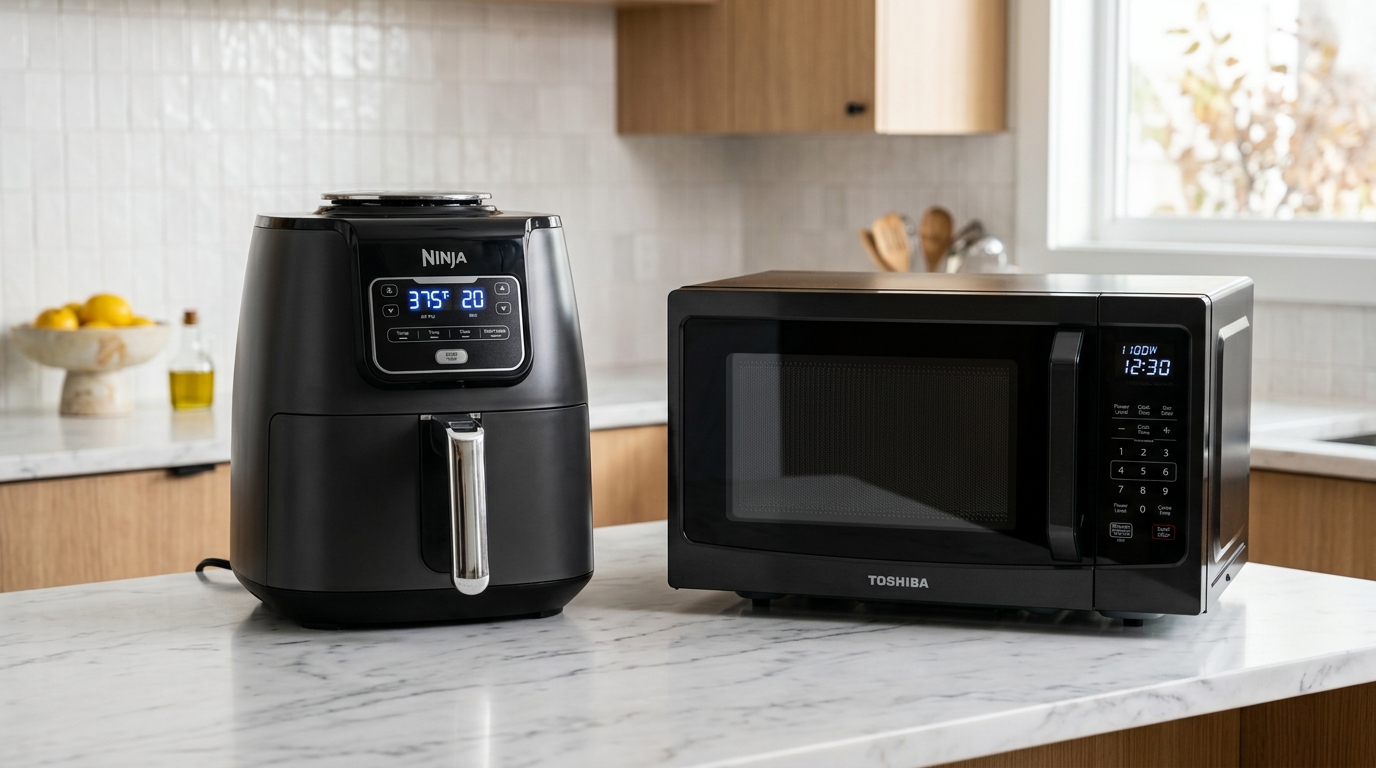
Executive Summary: As air fryers explode in popularity across Pakistani urban households for healthy, oil-free cooking, a heated debate has emerged regarding their impact on domestic electricity bills. Many homeowners worry that replacing traditional gas stoves and microwave ovens with 1,500W to 2,200W air fryers will cause catastrophic jumps in their monthly MEPCO, LESCO, or K-Electric bills. Does an air fryer consume more electricity than a microwave oven? Which appliance offers the lowest operating cost per meal? This comprehensive 2026 engineering study breaks down magnetron electromagnetic physics versus forced-convection thermal resistance heating, calculates exact per-minute unit costs under current Pakistani electricity tariff slabs, and provides a clear decision guide for cost-conscious families.
Table of Contents (Jump to Section)
- 1. Thermodynamic Principles: Convection Heating vs Microwave Radiation
- 2. Wattage & Power Consumption Breakdown
- 3. Task-by-Task Energy Face-Off: Reheating vs Cooking vs Baking
- 4. Monthly Electricity Bill Impact: Real Pakistani Household Model
- 5. Peak Hour Strategies & Inverter / Solar Compatibility
- 6. Kitchen Circuit Wiring, Socket Safety & Extension Lead Hazards
- 7. Frequently Asked Questions (FAQ)
1. Thermodynamic Principles: Convection Heating vs Microwave Radiation
To understand the electricity consumption of these two kitchen appliances, we must examine their underlying thermodynamic mechanisms:
- Microwave Oven (Dielectric Heating): A microwave oven uses a high-voltage cavity magnetron to emit non-ionizing electromagnetic waves at a frequency of 2.45 GHz. These waves pass through food containers and cause polar water, fat, and sugar molecules within the food to oscillate billions of times per second. Molecular friction generates heat directly inside the food mass. Because energy is deposited only into moisture molecules rather than heating the entire air volume or steel cavity walls, microwave heating is extraordinarily rapid and energy-efficient for water-rich foods.
- Air Fryer (Superheated Forced Convection): An air fryer is essentially a high-intensity, miniaturized countertop convection oven. It features a heavy coiled Nichrome electric heating element (1,400W to 2,000W) positioned directly above a high-speed centrifugal convection fan spinning at 2,000 to 2,500 RPM. The fan forces superheated dry air downward around food suspended in a perforated basket. The intense dry heat evaporates surface moisture rapidly, triggering the Maillard reaction (browning and crisping) similar to deep-frying, but requires substantial continuous electrical power to maintain air temperatures between 180°C and 200°C.
2. Wattage & Power Consumption Breakdown
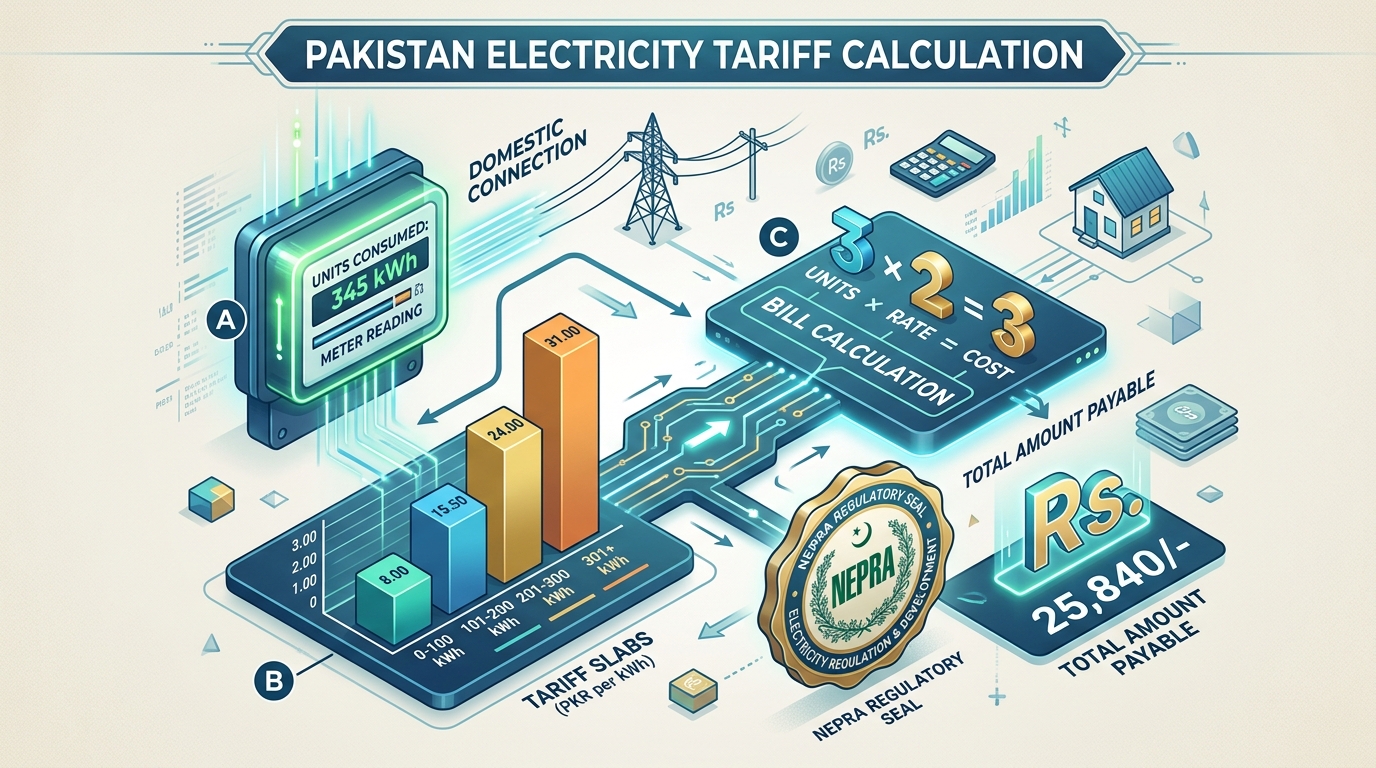
A common error among consumers is comparing nameplate wattage alone without factoring in operating duration. An appliance with higher wattage that completes a task in a fraction of the time often consumes fewer total electricity units (kilowatt-hours) than a lower-wattage appliance running for extended periods:
| Appliance Type | Nominal Power Rating (Watts) | Duty Cycle & Power Draw | Electricity Units per 30 Minutes | Cost for 30 Mins (@ Rs. 58/Unit) |
|---|---|---|---|---|
| Standard Microwave Oven | 1,100W - 1,400W Input (800W Cooking) | Pulsed duty cycle (cycles on/off) | 0.55 - 0.70 kWh | Rs. 31.90 - Rs. 40.60 |
| Compact Air Fryer (3.5L) | 1,400W - 1,500W | Thermostatic cycling (~85% on) | 0.60 - 0.65 kWh | Rs. 34.80 - Rs. 37.70 |
| Dual-Basket Air Fryer (8L - 10L) | 2,000W - 2,400W | Twin heating elements (~80% on) | 0.80 - 0.95 kWh | Rs. 46.40 - Rs. 55.10 |
| Built-in Electric Oven | 2,800W - 3,500W | Large thermal mass heating | 1.40 - 1.75 kWh | Rs. 81.20 - Rs. 101.50 |
3. Task-by-Task Energy Face-Off: Reheating vs Cooking vs Baking
The choice between an air fryer and a microwave comes down to the specific culinary task:
- Task 1: Reheating Cooked Food (Curry, Rice, Daal): Reheating a bowl of curry or plate of biryani takes 2 minutes in a microwave oven, consuming only 0.04 units of electricity (cost: ~Rs. 2.30). Attempting to reheat that same dish in an air fryer requires 10 to 12 minutes of convection heating, consuming 0.28 units (cost: ~Rs. 16.20). Verdict: Microwave is 7x cheaper and superior.
- Task 2: Crisping Fried Snacks (Samosas, Rolls, Nuggets): Reheating refrigerated samosas in a microwave makes the pastry soggy and rubbery. An air fryer restores total crispness in 5 minutes at 180°C, consuming 0.12 units (cost: ~Rs. 7.00). Verdict: Air fryer wins decisively on culinary texture with negligible electrical cost.
- Task 3: Roasting & Cooking Raw Meat (Chicken Tikka, Fish): Cooking 500g of marinated chicken tikka in an air fryer takes 18 minutes, consuming approximately 0.45 units (cost: ~Rs. 26.00). A traditional electric built-in kitchen oven takes 15 minutes just to preheat and 30 minutes to bake, consuming 1.8 units (cost: ~Rs. 104.00). Verdict: Air fryer is 4x cheaper than a conventional electric oven!

4. Monthly Electricity Bill Impact: Real Pakistani Household Model
Let us model a standard Pakistani family of 4 using their kitchen appliances daily throughout a 30-day billing cycle under 2026 NEPRA non-protected domestic tariff rates:
- Microwave Daily Use: 4 reheating cycles (total 10 mins/day) = 0.20 kWh/day = 6.0 electricity units per month. Cost: Rs. 348 per month.
- Air Fryer Daily Use: 1 snack/baking cycle (20 mins/day at 1,700W) = 0.48 kWh/day = 14.4 electricity units per month. Cost: Rs. 835 per month.
- Combined Impact: Running both appliances every single day adds approximately 20.4 units to your monthly utility bill, representing a total financial expenditure of approximately Rs. 1,180 per month.
This proves that the fear of air fryers adding Rs. 5,000+ to electricity bills is completely unfounded. Air fryers are extraordinarily energy-efficient because their small cooking chambers require zero pre-heating time.
5. Peak Hour Strategies & Inverter / Solar Compatibility
In Pakistan, Time of Use (TOU) 3-phase meters apply peak hour surcharges (typically between 5:00 PM and 10:00 PM or 6:00 PM to 11:00 PM depending on the season) where electricity rates increase substantially:
- Avoid Cooking Snacks During Peak Hours: Running a 2,000W air fryer during peak evening hours costs over Rs. 75 per unit in certain DISCOs. Schedule your evening air frying 30 minutes before official peak hours begin to save 25% on unit rates.
- Solar UPS Compatibility: A microwave oven draws sudden inductive magnetron startup spikes (up to 2,200W instantaneous). A 1,500W air fryer draws a pure resistive heating load with zero motor spike. However, running either appliance on a small 1kVA/1.2kVA UPS will cause instant overload tripping. You require at least a 3kW hybrid solar inverter with a 24V or 48V battery bank to safely power an air fryer or microwave during daytime loadshedding.
6. Kitchen Circuit Wiring, Socket Safety & Extension Lead Hazards
Due to the continuous high wattage drawn by air fryers and microwave ovens, proper kitchen electrical distribution is critical for fire prevention:
- Dedicated 16A Power Sockets: Never plug a 1,800W air fryer or microwave into a standard 5A or 6A domestic wall outlet using cheap multi-plug adapters. High continuous current heats up adapter pins, melting plastic faceplates and creating dangerous electrical fire hazards. Always use a dedicated 16-Amp socket wired with minimum 2.5mm² (7/29) pure copper conductors.
- Avoid Cheap Chinese Extension Strips: Most multi-outlet extension strips sold in Pakistan are rated for a maximum of 1,000W. Connecting both a microwave and an air fryer to the same extension strip will instantly melt internal copper tracks and trip main circuit breakers.
- Clearance and Ventilation: Air fryers vent superheated exhaust air (up to 180°C) from the rear vent port. Maintain at least 6 inches of clearance between the back of the air fryer and kitchen wall tiles or electrical cords to prevent heat damage.
7. Commercial Cafe & Fast Food Sizing Economics in Pakistan
For small commercial bakeries, roadside burger joints, and cloud kitchens across Pakistan, choosing between commercial dual-tank electric deep fryers and bank-array air fryers carries profound monthly operating cost implications. An industrial 10-liter oil deep fryer draws 3,000W to 5,000W continuously to keep vegetable ghee at 180°C throughout 8-hour daily shifts. Furthermore, commercial cooking oil replacement costs have risen to over Rs. 550 per liter.
By switching to high-capacity 12-liter commercial air fryers operating under commercial A-2 electricity tariffs (@ Rs. 68 to Rs. 75/unit), small food business operators reduce daily electricity consumption by 35% while slashing monthly edible oil purchases by over 70%. When cooking frozen samosas, chicken patties, and fries on demand rather than keeping open oil vats heated for hours, commercial food startups recover the upfront capital cost of commercial air fryer arrays within 90 days of commercial kitchen operation.
7. Frequently Asked Questions (FAQ)
Does an air fryer use more electricity than an electric oven?
No. An air fryer uses 65% to 75% less electricity than a standard full-size electric built-in oven because it has a tiny cooking chamber that requires zero preheating time and cooks food in half the time.
How many electricity units does an air fryer use in 1 hour in Pakistan?
A typical 1,500W air fryer running continuously for 1 hour consumes approximately 1.2 to 1.4 electricity units (kWh) after accounting for the thermostat cycling off when target temperature is reached. At Rs. 58/unit, this costs around Rs. 70 to Rs. 80 per hour.
Can I use an air fryer to reheat food instead of a microwave?
For crispy foods like samosas, patties, and fries, an air fryer is far superior. But for curries, rice, soups, and tea, a microwave is 5 times faster and consumes 80% less electricity.
Can a 1kW solar UPS run an air fryer?
No. Most air fryers draw 1,400W to 2,000W of electrical power. A 1kW (1,000W) UPS will instantly trip with an overload alarm (Error 07). You need at least a 2.5kW or 3kW inverter to operate an air fryer.
Need to check or calculate your current utility bill?
Verify your electricity duplicate bill with instant photo-reading verification or calculate slab costs accurately.