Earth Leakage Circuit Breaker (RCCB/ELCB) Wiring & Safety Guide Pakistan 2026 | BillsOnlinePk
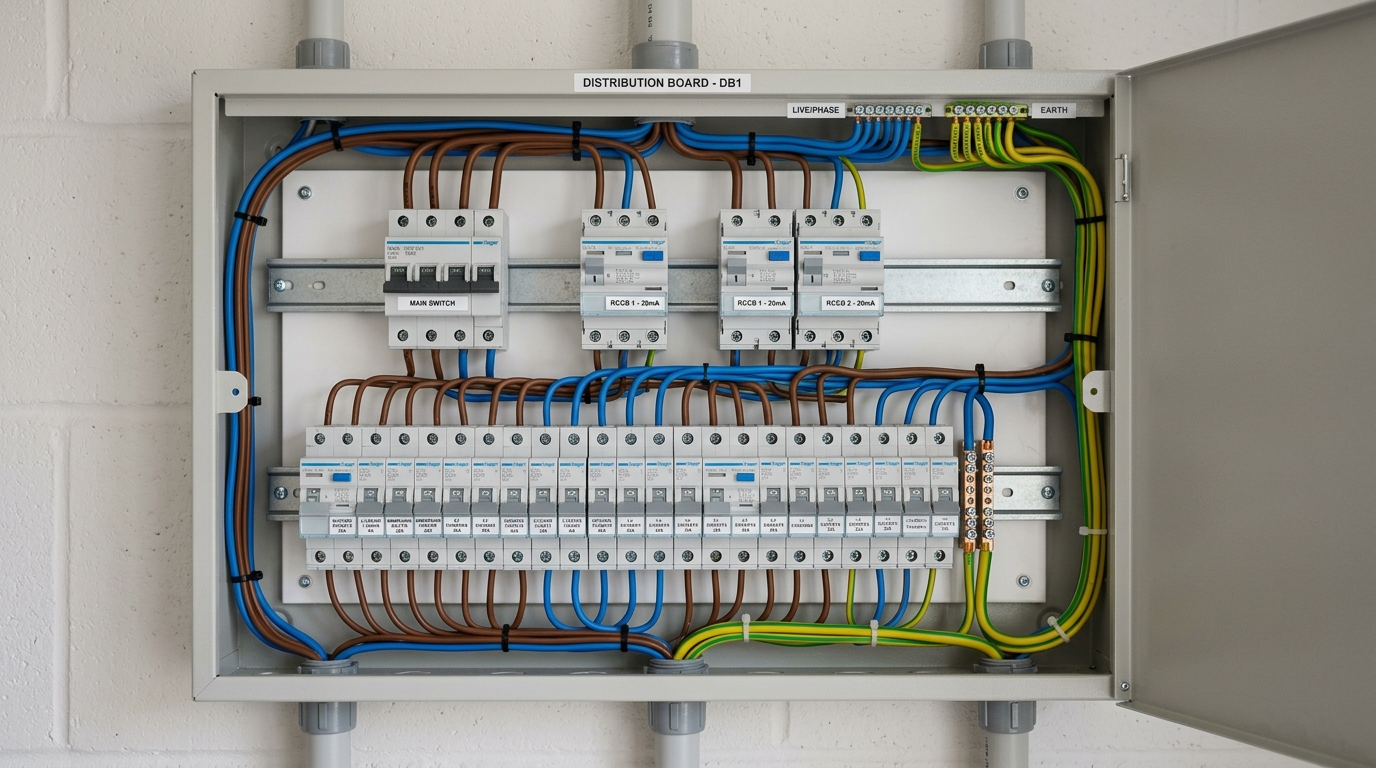
Executive Summary: In Pakistan, domestic electrical accidents claim hundreds of innocent lives every single year. The vast majority of these fatal tragedies occur in wet environments—such as bathroom showers, metal water washing machines, rooftop electric water pumps, and kitchen sink areas. Tragically, most Pakistani homes are constructed with standard Miniature Circuit Breakers (MCBs) alone, without a Residual Current Circuit Breaker (RCCB, previously called ELCB). While a standard 16A MCB protects copper wiring from burning during an overload or dead short circuit, it requires at least 40 to 80 Amperes of current to trip instantaneously. Because a human being can be fatally electrocuted by as little as 0.05 Amperes (50 milliamperes), a standard MCB will NEVER trip during an electrocution event! Installing a certified 30mA RCCB is the single most important life-saving investment any Pakistani family can make. This 2026 technical manual details RCCB operating physics, wiring diagrams, earth pit impedance testing, and how to eliminate nuisance tripping in damp Pakistani homes.
Table of Contents (Jump to Section)
- 1. Operating Physics: Why Standard MCBs Cannot Save a Human Life
- 2. Sensitivity Sizing: 30mA vs 100mA vs 300mA Ratings in Pakistan
- 3. Troubleshooting Nuisance Tripping in Pakistani Homes
- 4. Dedicated Protection for Water Motors & Submersible Pumps
- 5. Testing Your RCCB: The Monthly "Push to Test" Routine
- 6. Preventing Parasitic Earth Leakage from Inflating Electricity Bills
- 7. Frequently Asked Questions (FAQ)
1. Operating Physics: Why Standard MCBs Cannot Save a Human Life
To grasp the life-or-death necessity of an RCCB, we must examine how standard circuit breakers differ from residual current devices:
- Miniature Circuit Breaker (MCB) Function: An MCB is an overcurrent protection device containing a bimetallic strip (for thermal overload) and an electromagnetic solenoid (for dead short circuits). A typical 16-Amp Type C MCB requires 80 to 160 Amps of instantaneous fault current to trip magnetically. If a child touches a live wire or a wet water motor chassis, their body resistance limits current flow to between 100mA and 300mA. The MCB considers this tiny current completely normal and continues feeding power while the victim suffers fatal cardiac fibrillation!
- Residual Current Circuit Breaker (RCCB) Function: An RCCB does not measure total current; it measures current differential using a high-permeability toroidal Current Transformer (Core Balance CT). Both the Phase and Neutral conductors pass through the center of the toroid. Under normal safe conditions, current entering on the live wire strictly equals current returning on the neutral wire (I_live = I_neutral), producing zero net magnetic flux in the ring core. If even a fraction of current leaks through a person's body to ground, a flux imbalance is induced in the secondary detection coil, causing a sensitive polarized relay to trip and physically disconnect power in less than 30 milliseconds (0.03 seconds)!
2. Sensitivity Sizing: 30mA vs 100mA vs 300mA Ratings in Pakistan
Selecting the correct milliampere (mA) trip sensitivity is critical for human safety and nuisance-free operation:
| RCCB Trip Sensitivity | Primary Protection Objective | Permissible Application in Pakistani Homes |
|---|---|---|
| 30mA (0.03 Amps) High Sensitivity | Personal Life Safety (Direct Touch) | Mandatory for all bedroom, bathroom, kitchen, water pump, and washing machine circuits. Trips before ventricular fibrillation can occur in human cardiac tissue. |
| 100mA (0.10 Amps) Medium Sensitivity | Indirect Touch & Small Commercial Equipment | Suitable for main incomer on large multi-story houses where cumulative cable capacitance causes nuisance trips on 30mA units. Downstream circuits must still use 30mA. |
| 300mA (0.30 Amps) Low Sensitivity | Fire Prevention (Electrical Arcing) | Used in industrial plants and commercial distribution boards to prevent low-level earth leakage arcs from igniting combustible building insulation. Does NOT protect human life against fatal shocks! |
3. Troubleshooting Nuisance Tripping in Pakistani Homes
The #1 reason Pakistani electricians resist installing RCCBs is "nuisance tripping"—the breaker tripping immediately upon installation. In 99% of cases, nuisance tripping is not a breaker defect; it exposes dangerous wiring faults hidden inside the walls:
- Neutral-to-Earth Bootleg Bonding: In many older homes, lazy electricians bonded neutral wires to metal switchboard backboxes or water pipes. In an RCCB-protected system, Neutral and Earth must remain strictly isolated everywhere downstream of the breaker. Any contact between neutral and ground immediately creates a current imbalance that trips the RCCB.
- Shared Neutral Circuits Across Rooms: If an electrician ran a single neutral wire to serve two separate rooms powered from different circuit breakers, current flowing out on one breaker returns through another, instantly tripping an RCCB. Each branch circuit must have its own dedicated, unshared neutral wire.
- Damaged Underground Conduit Insulation: In older houses where conduit pipes were flooded with groundwater or rainwater, deteriorating PVC insulation allows 15mA of continuous leakage to damp brickwork. An electrician must isolate branch circuits one by one using an insulation resistance tester (Megger) to pinpoint the leaking wire.

4. Dedicated Protection for Water Motors & Submersible Pumps
Water lifting pumps and agricultural monoblock motors represent the leading cause of domestic electrocution in Pakistan:
- Vibration-Induced Insulation Wear: Submersible pumps and electric monoblock pumps vibrate continuously. Over time, motor winding enamel insulation chafes against stator laminations, electrifying the motor metal housing. Because the motor is plumbed with galvanized iron (GI) pipes, the entire household plumbing network—including bathroom shower taps and kitchen sinks—becomes energized at 220V AC!
- Dedicated 30mA Protection + Motor Earth Bonding: Always wire water pump circuits through their own dedicated 16A 30mA RCCB. Furthermore, run a heavy 4mm² copper grounding wire directly from the motor frame to your external earth pit, ensuring any internal winding fault trips the breaker instantly before someone touches a bathroom tap.

5. Testing Your RCCB: The Monthly "Push to Test" Routine
Every certified RCCB features a small mechanical test button labeled "T" or "Test" on its front faceplate:
- The Monthly Test Protocol: Once every month, press the "T" button firmly. This connects an internal precision resistor across the live and neutral lines, creating an artificial 30mA leakage current. The breaker lever should immediately snap downward with a loud click, cutting power.
- If the Breaker Fails to Trip: If pressing the test button does not trip the lever, the internal trip solenoid or mechanical spring latch has failed. The breaker must be replaced immediately, as it will not protect your family during a real electrical accident.
6. Preventing Parasitic Earth Leakage from Inflating Electricity Bills
An un-repaired earth leakage fault not only threatens human life—it quietly inflates your monthly electricity bill:
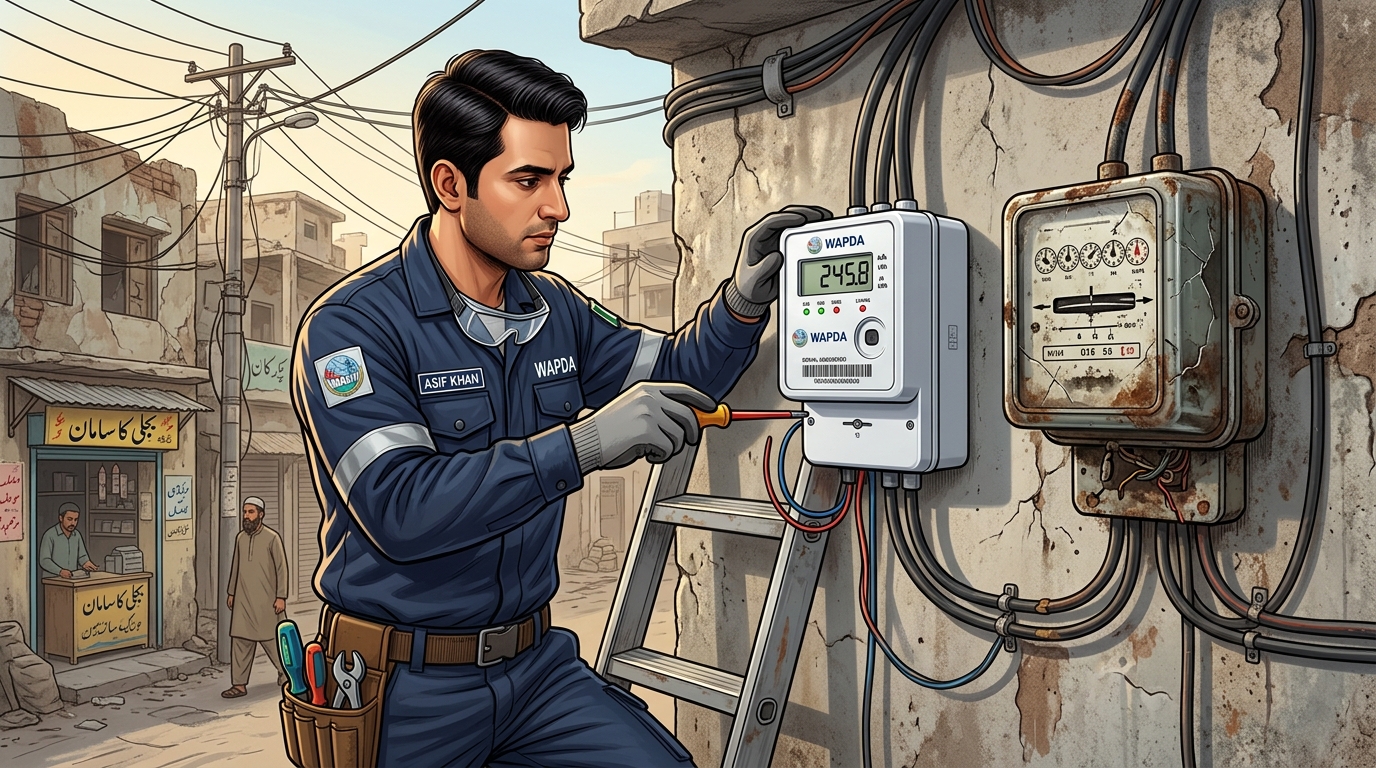
- The Metered Leakage Phenomenon: Modern electronic utility meters measure current flowing through the live phase. If a damp wall or leaking water geyser element allows 1.5 Amperes of current to leak into the building structure continuously 24/7, that leakage consumes 250 electricity units (kWh) per month without powering a single light or fan!
- Instant Financial Recovery: Installing an RCCB forces the immediate identification and repair of all hidden leakage paths, permanently eliminating phantom electricity unit consumption on your utility bills.
7. Generator & Solar Inverter Neutral Earthing Bonding Architecture
A frequent and dangerous wiring hazard in Pakistani homes occurs when switching between utility grid power and backup sources (diesel generator or off-grid solar inverter). In standard grid mode, neutral is referenced to ground at the utility distribution substation. However, when the main changeover switch transfers the house to a backup generator or inverter, the neutral line often becomes "floating" (disconnected from ground reference).
In a floating neutral system, an RCCB cannot detect a ground fault because leakage current cannot return to the source to complete the circuit loop, leaving occupants completely unprotected! Every professional solar inverter and backup generator installation must incorporate an automatic Neutral-to-Earth bonding contactor that bonds the generator or inverter neutral terminal to the household earth pit during islanded off-grid operation, guaranteeing that 30mA RCCB protection remains 100% active during utility blackouts.
7. Frequently Asked Questions (FAQ)
What is the difference between an MCB and an RCCB?
An MCB protects electrical wiring against high-current overloads and short circuits (e.g. 16A to 100A), but cannot protect humans against electrocution. An RCCB detects tiny earth leakage currents (30mA) and trips in 30 milliseconds to save human lives.
Why does my RCCB trip immediately when I turn it on?
This indicates a wiring fault inside your home—most commonly a neutral wire touching an earth wire, a shared neutral across different circuits, or moisture inside an outdoor junction box.
What sensitivity RCCB is needed for a house in Pakistan?
A 30mA (0.03 Amp) sensitivity RCCB is mandatory for residential life protection. Never use a 300mA breaker for household living areas, as 300mA is designed purely for fire prevention and will not prevent fatal electric shocks.
Does an RCCB work without an earth wire?
Yes! An RCCB operates by detecting the difference between live and neutral current. Even in homes with zero grounding wires, if a person touches a live wire and current leaks through their body into the floor, the RCCB detects the imbalance and trips in 30 milliseconds.
Q5: Can I install an RCCB on a single-phase 2-wire domestic connection?
Yes. Double-pole (2-pole) 30mA RCCBs are specifically engineered for single-phase installations, monitoring the phase and neutral conductors simultaneously.
Q6: What is the recommended trip time for a residential RCCB?
International standard IEC 61008 mandates that a 30mA RCCB must trip in less than 300 milliseconds at rated residual current, and within 40 milliseconds at 5x rated current.
Need to check or calculate your current utility bill?
Verify your electricity duplicate bill with instant photo-reading verification or calculate slab costs accurately.