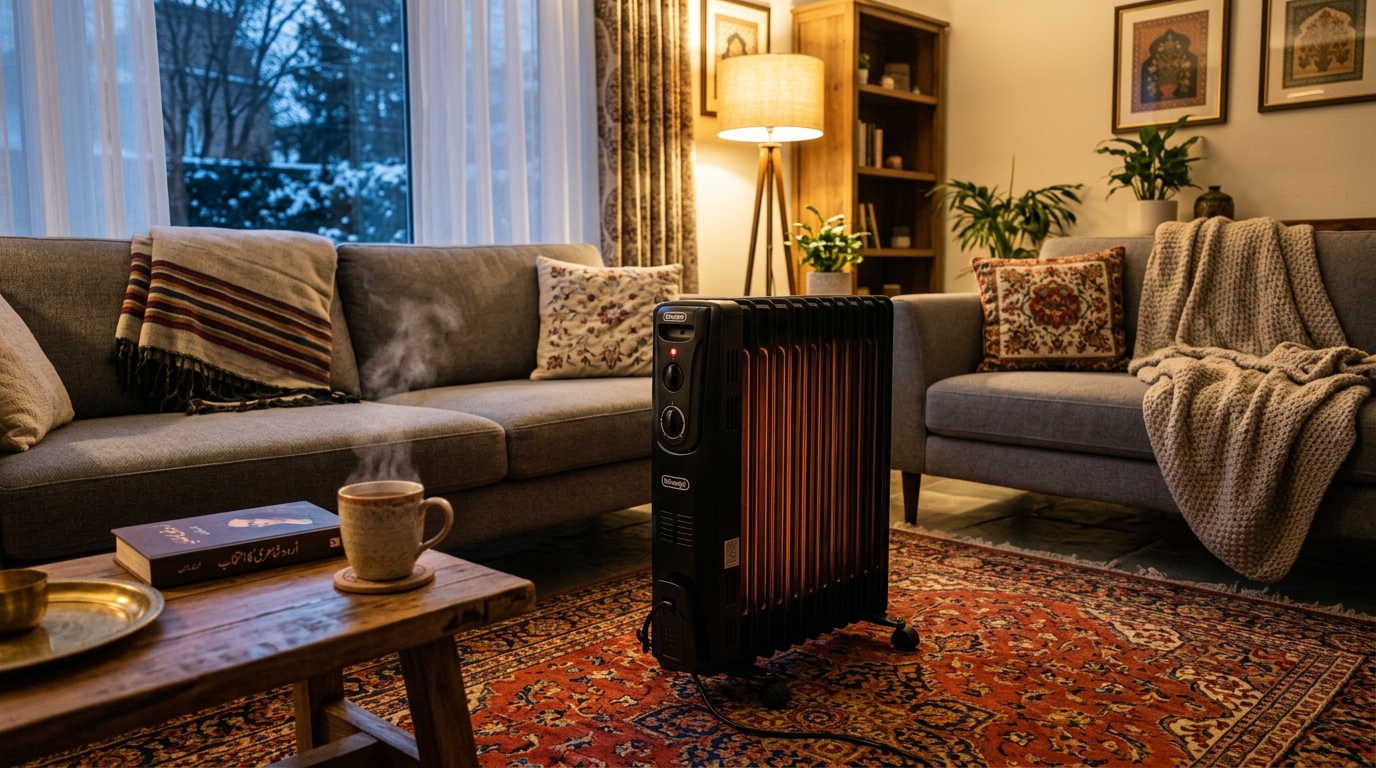
1. The Winter Heating Crisis in Pakistan: Gas Shortages & Soaring Power Tariffs
As winter temperatures descend across Pakistan from late November through February—plunging overnight lows to near freezing in Islamabad, Rawalpindi, Quetta, Peshawar, and northern Punjab, and creating brisk, chilly conditions in Lahore, Faisalabad, and Multan—Pakistani households face an acute domestic heating dilemma. Historically, families relied on cheap natural gas supplied by Sui Northern Gas Pipelines Limited (SNGPL) and Sui Southern Gas Company (SSGC) to fuel traditional gas room heaters. However, severe natural gas reservoir depletion, strict winter gas rationing (often providing low pressure for only a couple of hours daily), and steep upward revisions in gas tariffs have rendered conventional gas heating nearly obsolete for millions of urban residents.
Consequently, households have turned en masse to electrical heating solutions. At the same time, retail electricity tariffs established by the National Electric Power Regulatory Authority (NEPRA) have escalated to historic highs, with non-protected domestic billing slabs exceeding 58 to 65 Pakistani Rupees per kilowatt-hour (kWh) when inclusive of Fuel Price Adjustments (FPA), Electricity Duty, and General Sales Tax (GST). In this high-tariff environment, plugging in an inefficient electric space heater can easily trigger a staggering monthly electricity bill exceeding PKR 45,000 to PKR 80,000 for a modest three-bedroom home.
Yet, tens of thousands of Pakistani homeowners already have the world's most energy-efficient heating appliance permanently mounted on their bedroom walls: the Inverter Air Conditioner in Heat Mode. Misconceptions persist among consumers that running an inverter AC for winter heating consumes massive amounts of electricity comparable to summer cooling. In this data-driven engineering analysis, BillsOnlinePk calculates the exact thermodynamic performance, hourly power consumption, and monthly monetary cost of electric heaters versus inverter AC heating in Pakistan.
Thermodynamic Fact: An electric room heater uses 1,000 Watts of electricity to generate exactly 1,000 Watts of heat (Efficiency = 100%, COP = 1.0). An inverter AC operating in heat mode acts as a reverse heat pump, using 1,000 Watts of electricity to extract and pump 3,500 Watts of thermal energy from outside air into your room (Efficiency = 350%, COP = 3.5). The inverter AC delivers 3.5 times more heat per Rupee spent!
2. Thermodynamics: Heat Pump (COP 3.5) vs Resistive Heating (COP 1.0) Explained
The stark difference in electricity consumption between an electric space heater and an inverter AC stems from fundamental laws of thermodynamics:
- Electric Resistive Heating (Joule Heating): Every traditional electric heater—whether a quartz infrared bar, ceramic tower, fan-forced blower, or oil-filled radiator—works by passing high electric current through a resistive nichrome wire coil. By Ohm’s Law and Joule’s First Law ($Q = I^2 imes R imes t$), electrical energy is converted directly into heat through molecular resistance. Because energy cannot be created from nothing, 1.0 kWh of electrical input yields exactly 1.0 kWh (3,412 BTUs) of thermal output. The Coefficient of Performance (COP) is locked at exactly COP = 1.0.
- Reverse-Cycle Heat Pump Heating: An inverter air conditioner does not create heat through resistive wire elements. Instead, it activates a 4-way reversing valve that inverts the flow of refrigerant (R410A or R32). The outdoor unit’s heat exchanger acts as an evaporator, absorbing latent ambient heat from the outside air (even when outside air temperature is as low as 2°C or 5°C). The variable-speed inverter compressor pressurizes the refrigerant vapor, raising its temperature to over 65°C, and pumps it into the indoor unit’s condenser coil, blowing luxuriant warm air into the room. Because electrical power is utilized only to run the compressor and circulation fans rather than generate the heat directly, a modern DC inverter AC delivers a COP of 3.2 to 3.8.
In simple economic terms: to produce 3.5 kW of heat, an electric space heater must consume 3.5 units of electricity per hour. An inverter AC produces that exact same 3.5 kW of heat while consuming only 1.0 unit of electricity per hour!
3. Detailed Wattage Breakdown: Quartz, Halogen, Fan Blower & Oil-Filled Radiators
To accurately compute operational costs, consumers must understand the exact power draw of various electric heaters available in Pakistani bazaars:
| Heating Appliance Category | Heating Mechanism | Typical Power Settings (Watts) | Continuous Power Draw (kW) | Heat Retention & Spread |
|---|---|---|---|---|
| Quartz / Halogen Radiant Heater (2-Rod / 3-Rod) | Infrared glow tubes direct radiant heat onto immediate objects. | Low: 400W Medium: 800W High: 1,200W |
0.80 kW - 1.20 kW | Zero heat retention; room goes ice cold within 60 seconds of turning off. |
| Electric Fan Heater / Blower | Nichrome wire coil with high-speed axial air blower fan. | Setting 1: 1,000W Setting 2: 2,000W |
1.00 kW - 2.00 kW | Rapid localized warm airflow, but burns ambient oxygen and creates drying noise. |
| Oil-Filled Radiator (OFR) (9 to 13 Fins) | Electric element heats diathermic oil circulating sealed metal fins. | Low: 1,000W Med: 1,500W High: 2,500W |
1.50 kW - 2.50 kW | Slow to warm up (30 mins), but provides gentle, radiant, long-lasting heat. |
| 1.0-Ton Inverter AC (Heat Mode) | DC Twin-Rotary Inverter Compressor Heat Pump (R32 / R410A). | Initial Startup: 1,100W Stabilized Cruise: 350W - 550W |
Avg: 0.45 kW - 0.65 kW | Thermostatically regulated; heats entire room volume uniformly. |
| 1.5-Ton Inverter AC (Heat Mode) | High-efficiency DC Inverter Heat Pump with electronic expansion valve. | Initial Startup: 1,600W Stabilized Cruise: 500W - 850W |
Avg: 0.65 kW - 0.95 kW | Uniform whole-room warmth with automated intelligent climate sensing. |
4. Mathematical Formulas: Exact Hourly Electricity Unit (kWh) Consumption
To calculate the electricity units consumed by any heating appliance, use the fundamental electrical energy formula:
Electricity Units (kWh) = [Power Draw (Watts) × Operating Hours] / 1,000
Let us compare the hourly unit consumption over an 8-hour winter evening (8:00 PM to 4:00 AM) in a standard 14×16 foot master bedroom:
- Standard 2000W Fan Heater: Running at high setting (2,000 Watts) continuously for 8 hours:
$$ ext{Units} = rac{2,000 imes 8}{1,000} = mathbf{16.0 ext{ kWh (Units) per night!}}$$ - 13-Fin Oil-Filled Radiator: Running at medium-high thermostat cycling (effective average draw 1,600 Watts):
$$ ext{Units} = rac{1,600 imes 8}{1,000} = mathbf{12.8 ext{ kWh (Units) per night!}}$$ - 1.5-Ton Inverter AC (Set to 24°C in Heat Mode): The inverter draws 1,500W for the first 30 minutes to bring room temperature from 12°C up to 24°C. Once the room stabilizes, the smart inverter compressor throttles down to its ultra-efficient low-frequency cruise mode, drawing only 550 to 650 Watts. The average 8-hour continuous power draw is approximately 700 Watts:
$$ ext{Units} = rac{700 imes 8}{1,000} = mathbf{5.6 ext{ kWh (Units) per night!}}$$
The inverter AC consumes less than half the units of an oil heater, and nearly one-third the units of a fan blower, while providing far superior temperature stability!
5. Comprehensive 30-Day Cost Matrix: Inverter AC vs Electric Heaters at 60 Rs/Unit
To see the financial reality on your monthly utility bill, let us project a 30-day winter billing period (December 15 to January 15) with an appliance operating 8 hours nightly, evaluated under typical NEPRA non-protected domestic tariff rates (assumed all-inclusive rate of PKR 60.00 per unit):
| Heating Appliance | Daily Units (8 Hrs) | Monthly Units (30 Days) | Monthly Electricity Cost (@ 60 Rs/Unit) | Cost Variance vs 1.5-Ton Inverter AC |
|---|---|---|---|---|
| 1.5-Ton Inverter AC (Heat Mode) | 5.6 kWh | 168 kWh | PKR 10,080 | Baseline (Lowest Cost!) |
| 1.0-Ton Inverter AC (Heat Mode) | 4.4 kWh | 132 kWh | PKR 7,920 | - PKR 2,160 (Cheaper for smaller rooms) |
| 2-Rod Quartz Radiant Heater (800W) | 6.4 kWh | 192 kWh | PKR 11,520 | + PKR 1,440 (+14% more expensive) |
| 13-Fin Oil-Filled Radiator (OFR) | 12.8 kWh | 384 kWh | PKR 23,040 | + PKR 12,960 (+128% more expensive!) |
| Standard Electric Fan Blower (2000W) | 16.0 kWh | 480 kWh | PKR 28,800 | + PKR 18,720 (+185% more expensive!) |
Using a 2,000W fan heater or oil radiator costs an extra PKR 13,000 to PKR 18,700 every single month per room! If a household operates two electric heaters in separate bedrooms throughout winter, the family needlessly wastes over PKR 75,000 in excess electricity bills across a 60-day winter season compared to running inverter air conditioners.
6. Winter Slab Defense: How Electric Heating Breaches the 300-Unit Threshold
Under NEPRA's tariff structure, domestic electricity rates are heavily progressive. In summer, households consume 600 to 1,200 units. In winter, baseline domestic consumption drops naturally to 180 to 250 units (only lighting, refrigerator, and LED TVs). If a consumer stays under 200 units consecutively for six months, they qualify for Protected Category Tariffs, paying approximately 14 to 22 PKR per unit.
Plugging in a 2,000W fan heater adds 480 units in a single month! This instantly catapults the household out of the protected category and into the non-protected 500+ unit tier. Once pushed into the top slab, the entire bill—including your baseline lighting and refrigerator units—is recalculated at the punitive maximum rate, triggering unexpected fuel price adjustment surcharges and double taxes.
7. Optimal Inverter AC Heating Settings: Vane Angles, Fan Speeds & Defrost Cycles
To maximize heating efficiency and prevent unnecessary compressor strain, configure your inverter AC remote control according to these engineering guidelines:
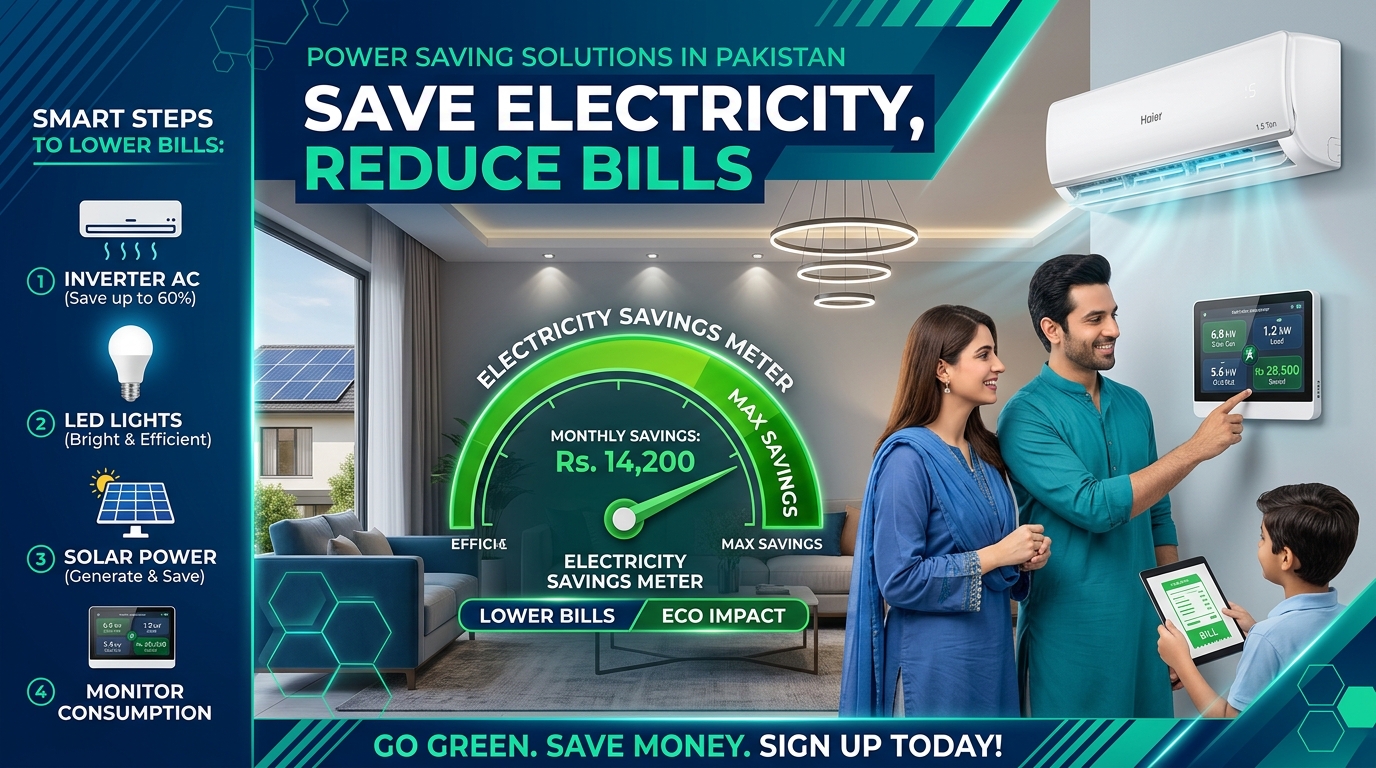
- Set Temperature to 23°C - 24°C: Never set the heating mode to 28°C or 30°C! Hot air rises naturally. Setting an unrealistic target of 30°C forces the inverter compressor to run at maximum high-frequency redline continuously, doubling unit consumption. A setting of 23°C creates a cozy, comfortable environment while allowing the compressor to settle into its ultra-low 350W cruise frequency.
- Direct Airflow Louvers Downward: In summer cooling mode, louvers should blow cold air horizontally or upward (since cold air sinks). In winter heating mode, direct louvers straight down toward the floor! Warm air naturally rises; directing it to the floor forces full convective circulation across the living space.
- Set Fan Speed to "Auto": Let the micro-controller adjust fan velocity. When first started, the fan stays off until the indoor coil warms up (preventing cold draft blow), then ramps up to distribute heat, and slows down when the target temperature is reached.
- Understanding Defrost Mode (H1 / dF Code): On cold, humid nights when ambient temperatures drop below 5°C, frost can form on the outdoor unit coil. Every 45 to 60 minutes, the inverter enters automatic Defrost Cycle (displaying "dF" or "H1" on the screen). The indoor fan pauses for 5 to 8 minutes while heat melts the outdoor frost. Do not turn off the AC during defrost! It is a normal self-clearing process.
8. Indoor Air Quality & Safety: Carbon Monoxide, Oxygen Depletion & Burn Risks
Beyond massive financial savings, inverter AC heating delivers substantial health and safety advantages over traditional heaters:
- Zero Carbon Monoxide & Oxygen Depletion: Gas heaters consume room oxygen and emit lethal Carbon Monoxide (CO) if unvented, causing tragic asphyxiation deaths every winter across Pakistan. Electric fan heaters and glowing radiant quartz rods do not emit CO, but they scorch ambient airborne dust particles at 300°C, emitting acrid odors and triggering severe asthma, nasal congestion, and dry eye irritation. In contrast, an inverter AC maintains pristine indoor air quality, passing air through electrostatic dust and anti-bacterial filters without scorching air molecules.
- Complete Burn & Fire Immunity: Traditional electric radiant heaters and fan blowers pose severe burn hazards for crawling infants and pets, and can easily ignite nearby blankets, curtains, or carpets if accidentally knocked over. An inverter AC is securely mounted 8 feet high on the wall, completely eliminating physical burn hazards.