Hybrid vs Off-Grid Solar System for 5 Marla & 10 Marla Homes: System Sizing, Battery Storage, Load Calculation & Cost 2026
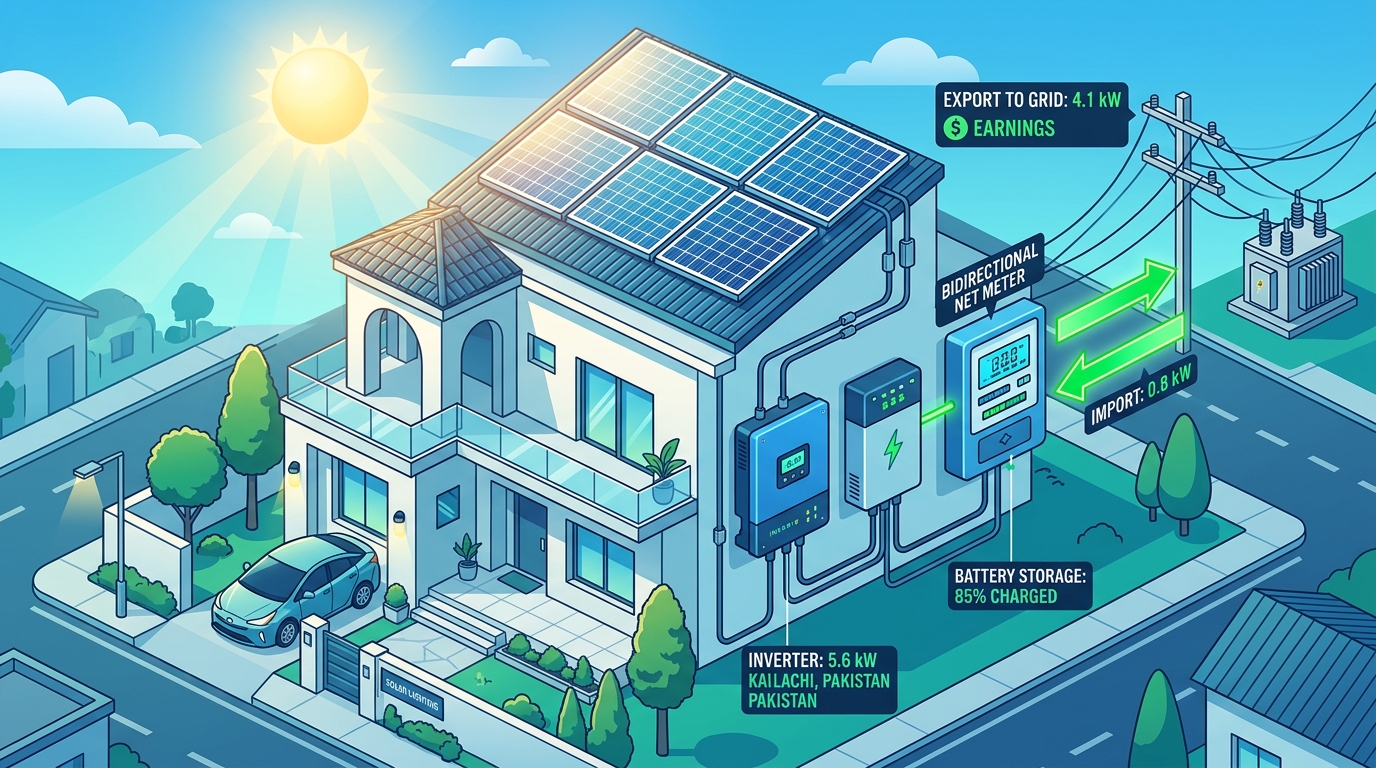
Executive Summary: Deciding between a Hybrid and an Off-Grid solar system is the single most important architectural decision for Pakistani homeowners. Sizing an undersized system leaves you suffering through midnight load shedding with dead batteries, while an oversized system wastes capital on surplus storage you cannot utilize. For the typical Pakistani residential plot sizes—**5 Marla (approx. 1,125 sq ft)** and **10 Marla (approx. 2,250 sq ft)**—rooftop space, structural load constraints, and electrical demand follow predictable patterns. This comprehensive 2026 engineering and sizing handbook details appliance load audits, daily kWh requirements, inverter sizing, and turnkey budget breakdowns.
Table of Contents (Jump to Section)
- 1. Hybrid vs Off-Grid: The Fundamental Operational Breakdown
- 2. Sizing a 5 Marla Home Solar System (3 kW to 5 kW Configuration)
- 3. Sizing a 10 Marla Home Solar System (8 kW to 12 kW Configuration)
- 4. Turnkey System Cost Breakdown (2026 Market Pricing)
- 5. Return on Investment (ROI) & Payback Timeline
- 6. Sub-Distribution Board Engineering: Critical Load Splitting & Neutral-Earth Bonding
- 7. Frequently Asked Questions (FAQ)
1. Hybrid vs Off-Grid: The Fundamental Operational Breakdown
- Hybrid Solar System (Recommended for 90% of Urban Homes): Connects simultaneously to solar panels, battery storage, and the WAPDA grid. During sunny daytime hours, solar powers indoor loads and charges batteries; excess power is exported via Net Metering to eliminate electricity bills. During grid outages, it switches instantly to battery backup. If batteries deplete during rainy spells, it seamlessly falls back to WAPDA without blackout.
- Off-Grid Solar System (Strictly for Remote Locations): 100% disconnected from the national grid. All power must be generated by solar panels and stored in massive battery banks. If your batteries drain during three consecutive foggy winter days, your house loses power entirely unless a backup diesel/gas generator is ignited. Off-grid systems require 3 times larger battery banks and provide zero net metering financial credit.
2. Sizing a 5 Marla Home Solar System (3 kW to 5 kW Configuration)
| Appliance Description | Quantity & Wattage | Daily Operational Hours | Daily Energy Consumption (kWh / Units) |
|---|---|---|---|
| 1.5 Ton Inverter AC (Summer) | 1 Unit (1,100W avg) | 8 Hours / Day | 8.8 Units |
| Inverter Refrigerator | 1 Unit (150W avg) | 24 Hours (Duty Cycle) | 2.2 Units |
| BLDC Inverter Ceiling Fans | 4 Fans (35W each) | 14 Hours / Day | 1.96 Units |
| LED Lights (Living & Bedrooms) | 10 Lights (12W each) | 6 Hours / Day | 0.72 Units |
| Automatic Washing Machine | 1 Unit (450W) | 1 Hour / Day | 0.45 Units |
| 0.5 HP Water Booster Pump | 1 Unit (400W) | 1.5 Hours / Day | 0.60 Units |
| Total Daily Energy Consumption | Standard Summer Demand | ~14.7 to 16.5 Units / Day | |
Recommended 5 Marla Setup:
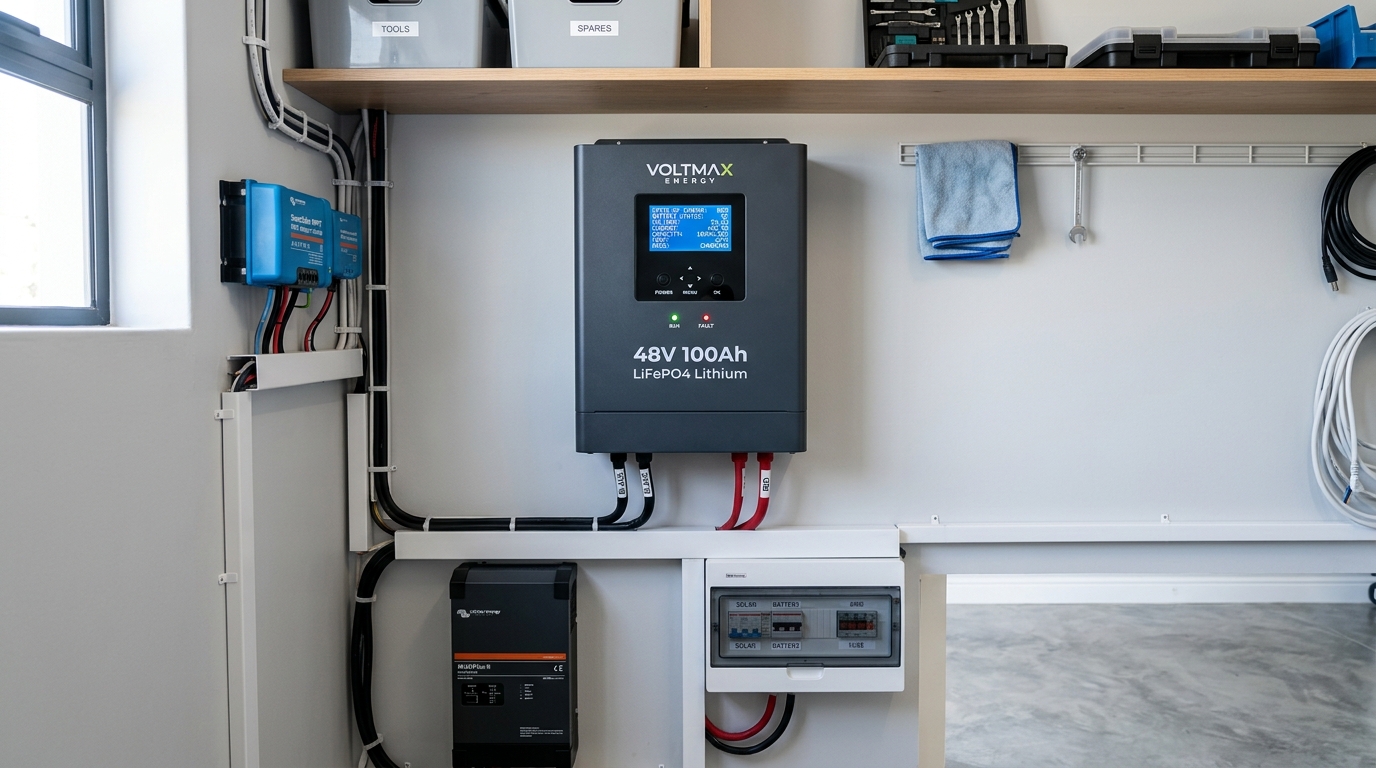
- Inverter: 5 kW or 6 kW Single-Phase / Three-Phase Hybrid Inverter (e.g., Inverex Nitrox 6kW).
- Solar Panels: 8 to 10 Panels of 580W N-Type TOPCon (Total capacity: 4.64 kW to 5.8 kW).
- Rooftop Space Required: Approximately 280 to 350 sq ft of unshaded roof.
- Battery Storage: One 48V 100Ah LiFePO4 Lithium Battery (5.12 kWh) or two deep-cycle tubular batteries for nighttime backup of fans, fridge, and lights.
3. Sizing a 10 Marla Home Solar System (8 kW to 12 kW Configuration)
- Daily Consumption Profile: 35 to 48 Units (kWh) per day in summer (running two to three 1.5-ton inverter ACs, deep freezer, 1 HP water pump, and entertainment systems).
- Recommended Inverter: 10 kW or 12 kW Three-Phase Hybrid Inverter (e.g., Inverex Nitrox 10kW or Growatt SPH 10000).
- Solar Panels: 18 to 22 Panels of 580W / 600W TOPCon (Total capacity: 10.4 kW to 12.8 kW).
- Rooftop Space Required: 650 to 800 sq ft. Elevated galvanized iron (GI) pergola structures are recommended so that rooftop recreational space remains fully usable underneath.
- Battery Storage: Two 48V 100Ah LiFePO4 Lithium Batteries in parallel (Total storage: 10.24 kWh) capable of powering one 1.5-ton inverter AC continuously for 6 hours during nighttime load shedding.
4. Turnkey System Cost Breakdown (2026 Market Pricing)
| System Package & Specs | 5 Marla Hybrid System (5 kW) | 10 Marla Hybrid System (10 kW) |
|---|---|---|
| Tier-1 TOPCon Solar Panels (580W) | Rs. 235,000 – Rs. 265,000 | Rs. 510,000 – Rs. 560,000 |
| Hybrid Smart Inverter | Rs. 210,000 – Rs. 240,000 | Rs. 380,000 – Rs. 440,000 |
| LiFePO4 Lithium Battery (48V) | Rs. 290,000 (One 5.12 kWh Pack) | Rs. 580,000 (Two 5.12 kWh Packs) |
| Custom Elevated Structure (GI L3/L2) | Rs. 75,000 – Rs. 95,000 | Rs. 165,000 – Rs. 210,000 |
| DC/AC DB Box, SPDs, Wiring & Earthing | Rs. 65,000 – Rs. 85,000 | Rs. 130,000 – Rs. 165,000 |
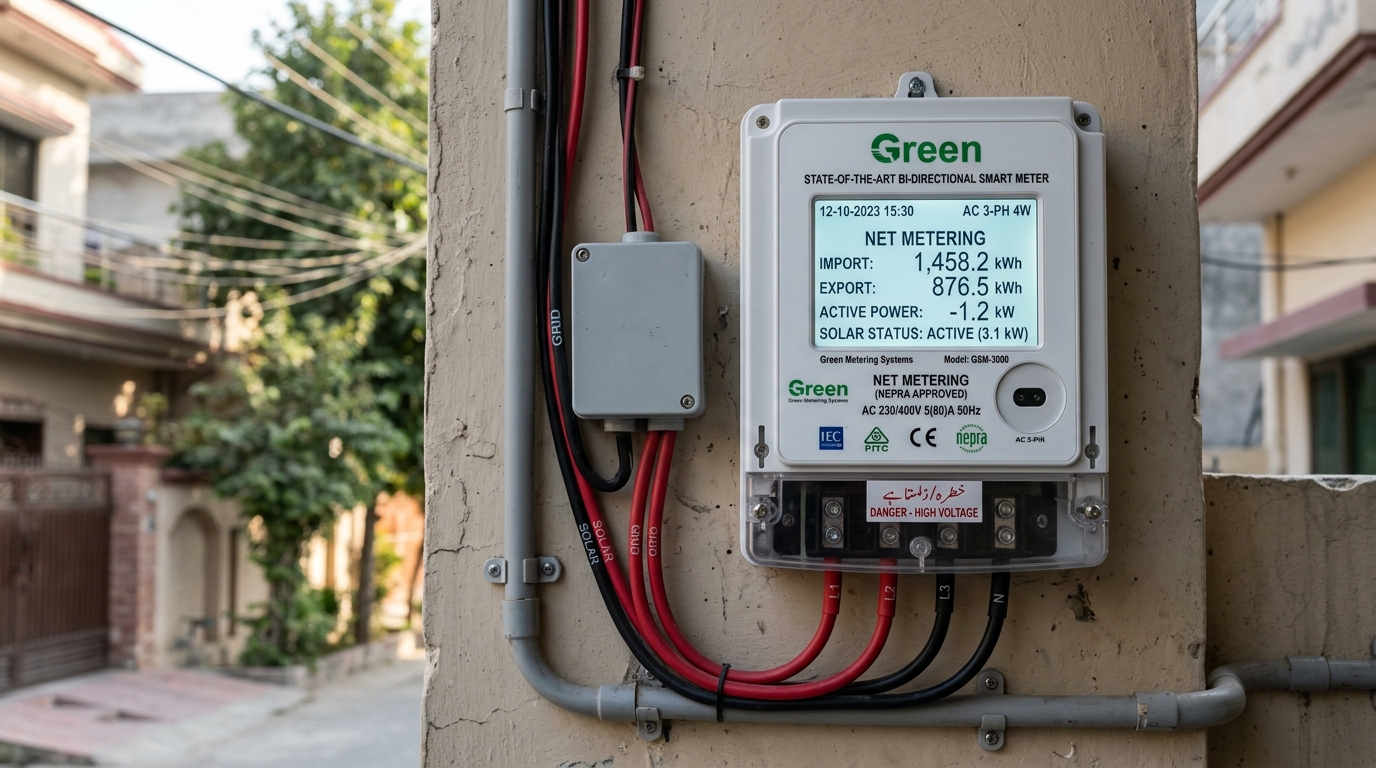
| Net Metering Green Meter & Processing | Rs. 70,000 – Rs. 90,000 | Rs. 75,000 – Rs. 95,000 |
| Total Turnkey Investment | Rs. 945,000 – Rs. 1,065,000 | Rs. 1,840,000 – Rs. 2,060,000 |
5. Return on Investment (ROI) & Payback Timeline
- 5 kW System Monthly Generation: ~600 to 700 Units (Monthly bill savings: ~Rs. 32,000 to Rs. 38,000). Full capital recovery achieved in 2.4 to 2.8 Years!
- 10 kW System Monthly Generation: ~1,350 to 1,550 Units (Monthly bill savings: ~Rs. 68,000 to Rs. 82,000). Full capital recovery achieved in 2.1 to 2.5 Years!
6. Sub-Distribution Board Engineering: Critical Load Splitting & Neutral-Earth Bonding
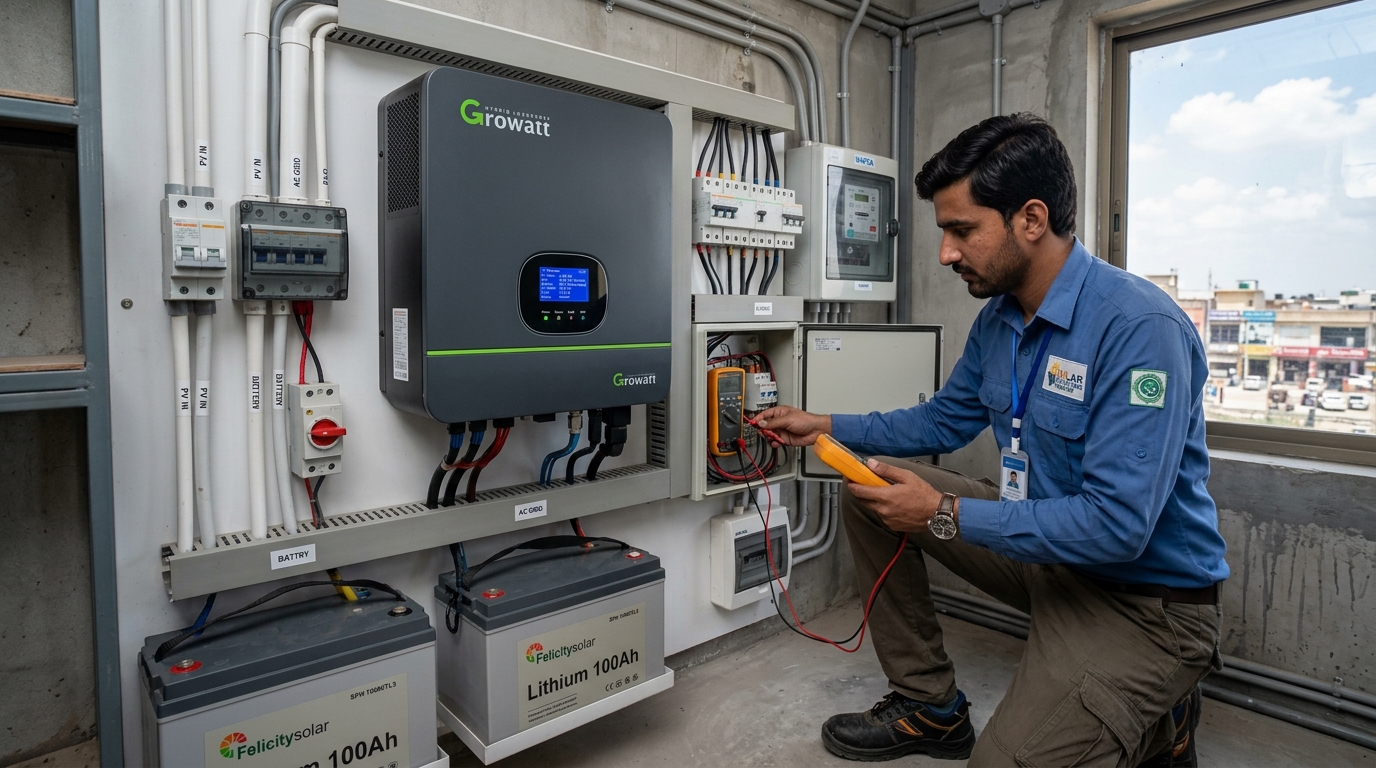
A widespread installation flaw in Pakistani residential solar systems is wiring all household electrical circuits directly into the backup port of a hybrid or off-grid inverter. Subjecting the inverter to unsegregated heavy inductive loads (such as multiple air conditioners, water pumps, and electric geysers simultaneously) during sudden grid blackouts causes severe overload tripping and inverter shutdown.
Design a safe and robust alternating-current (AC) distribution setup using the following principles:
- Isolated Essential vs Non-Essential Busbars: In your home's main electrical panel, install dual busbars. Route essential circuits (LED lighting, ceiling fans, refrigeration, Wi-Fi routers, television, and one energy-efficient inverter AC) to the inverter's "Backup / EPS" output port. Route high-draw secondary loads to the utility-grid input side or the inverter's programmable "Smart Load" terminal.
- Programmable Smart Load Port Utilization: Modern hybrid inverters allow the auxiliary smart load port to automatically power electric water heaters or secondary tube wells only when battery state-of-charge exceeds 90% and solar generation exceeds home demand. This converts free excess solar energy into thermal hot water without depleting nighttime battery storage.
- Neutral-to-Earth Bonding During Utility Outages: Under normal grid-tied conditions, neutral and ground are referenced at the DISCO distribution transformer. When utility power cuts off and the inverter transfers into islanded backup mode, an internal neutral-ground bonding relay must establish an isolated neutral reference to ensure that Residual Current Circuit Breakers (RCCBs / GFCI) trip instantly during a ground fault.
- Four-Pole Manual Bypass Switch: Always integrate an industrial 4-pole changeover bypass switch in parallel with the inverter. In the event of inverter maintenance, firmware updates, or hardware servicing, your home's electrical network can be transferred directly to utility power without interrupting household activities.
Proper electrical sub-board segregation prevents nuisance breaker trips, protects sensitive electronics from inductive voltage spikes, and ensures uninterrupted backup security.
7. Frequently Asked Questions (FAQ)
Q1: Can I install a 10 kW system without net metering?
Yes, by installing a Zero Export Device (Smart Limiter) that throttles solar production to match exact house consumption in real time, preventing illegal grid back-feeding.
Q2: Will solar panels damage my concrete roof or cause rainwater leaks?
No, provided the structure is mounted on raised concrete pedestal blocks (Civil Foundations) rather than drilling directly into the waterproof roof slab.
Need to check or calculate your current utility bill?
Verify your electricity duplicate bill with instant photo-reading verification or calculate slab costs accurately.