Lithium-ion (LiFePO4) Solar Batteries in Pakistan 2026: Narada, Pylontech, Dyness, Felicity Prices, Cycles & Savings vs Tubular
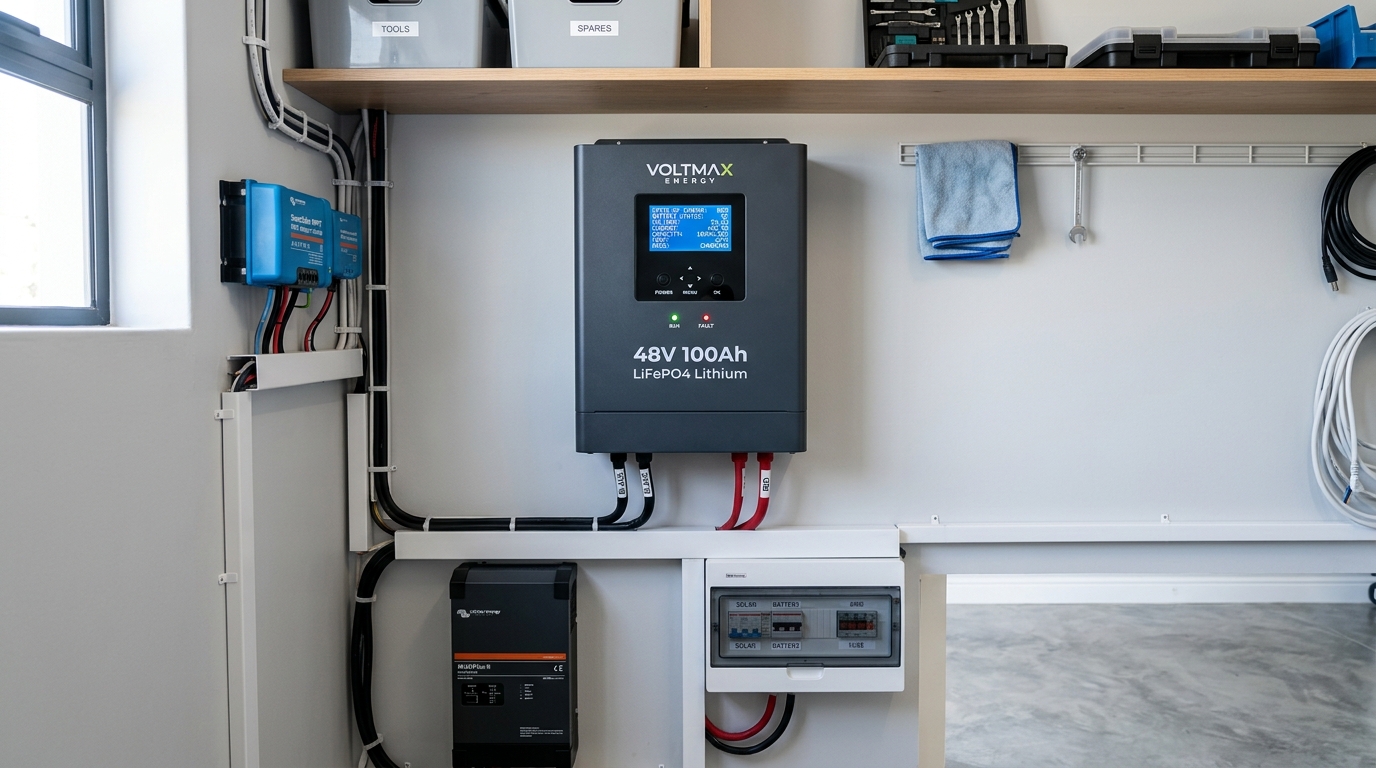
Executive Summary: For over three decades, Pakistani homes relied on heavy, acid-fuming flooded lead-acid and tubular batteries (such as Phoenix, AGS, Osaka, and Daewoo) for UPS and solar energy storage. However, between weekly distilled water topping, acid corrosion, toxic lead fumes, and premature battery failure every 18 to 24 months, lead-acid storage has become an expensive, high-maintenance relic. In 2026, **Lithium Iron Phosphate (LiFePO4)** batteries have revolutionized the domestic energy storage landscape. Offering over 6,000 charge-discharge cycles, zero maintenance, 10 to 15-year lifespans, and 95% depth of discharge, lithium batteries deliver dramatic long-term savings. This comprehensive engineering and financial analysis compares top brands and provides cost recovery timelines.
Table of Contents (Jump to Section)
- 1. Why LiFePO4 (Lithium Iron Phosphate) Is the Safest Chemistry
- 2. LiFePO4 vs Traditional Flooded Tubular: The Brutal Comparison
- 3. Top Lithium Battery Brands in Pakistan (2026 Prices & Specs)
- 4. Understanding BMS Protocol Communication (CAN / RS485)
- 5. Financial ROI Calculation: Why Tubular Is Twice as Expensive
- 6. Closed-Loop BMS Telemetry, Cell Balancing Protocols & High-Current DC Protection
- 7. Frequently Asked Questions (FAQ)
1. Why LiFePO4 (Lithium Iron Phosphate) Is the Safest Chemistry
Stationary home solar storage utilizes Lithium Iron Phosphate (LiFePO4 or LFP):
- Thermal & Chemical Stability: The chemical covalent bond between iron, phosphorus, and oxygen is virtually unbreakable up to 450°C. Even under direct short-circuits or severe physical crushing, LiFePO4 will not burst into flames.
- Eco-Friendly & Non-Toxic: Contains zero hazardous heavy metals (no toxic lead, cadmium, or cobalt).
- Constant Voltage Discharge: LiFePO4 delivers steady 48V–51V power down to its last 5% capacity, preventing low-voltage UPS tripping that plagues lead-acid batteries.

2. LiFePO4 vs Traditional Flooded Tubular: The Brutal Comparison
| Performance Parameter | Traditional Tubular Battery (e.g. 4 × 12V 200Ah) | Wall-Mount LiFePO4 (48V 100Ah / 5.12 kWh) |
|---|---|---|
| Usable Energy Storage | ~4.8 kWh (Limited to 50% Depth of Discharge) | ~4.86 kWh (95% Depth of Discharge) |
| Cycle Life (at 80% DOD) | 800 – 1,200 Cycles (1.5 to 2.5 Years) | 6,000 – 8,000 Cycles (12 to 15 Years) |
| Round-Trip Efficiency | 70% – 75% (25% power wasted as heat) | 95% – 98% (Near zero conversion loss) |
| Charging Speed | Slow (Requires 8 – 10 Hours to charge) | Ultra-Fast (0.5C / Fully charged in 2 Hours) |
| Physical Weight & Space | Heavy (~260 kg across 4 units / High floor space) | Compact (~48 kg / Wall mounted out of reach) |
| Routine Maintenance | Monthly distilled water checking & terminal greasing | 100% Zero Maintenance (Fit and forget) |
| Toxic Acid Fumes & Odors | Emits toxic hydrogen & sulfuric acid mist | Completely Sealed & Odorless (Safe indoors) |
3. Top Lithium Battery Brands in Pakistan (2026 Prices & Specs)
| Brand & Model | Nominal Voltage & Capacity | Cycle Life & Cell Grade | BMS Inverter Compatibility | Market Price Range (2026) |
|---|---|---|---|---|
| Narada (NESR Series) | 48V 100Ah (4.8 kWh) / 51.2V 100Ah | 6,000 Cycles (Tier-1 EVE / CATL Prismatic Cells) | Inverex, Growatt, Huawei, Solis, Deye | Rs. 290,000 – Rs. 340,000 |
| Pylontech (US3000C / US5000) | 48V 74Ah (3.55 kWh) / 48V 100Ah (4.8 kWh) | 6,000 Cycles (Industry gold standard BMS) | 100% Universal CAN/RS485 compatibility | Rs. 320,000 – Rs. 385,000 |
| Dyness (Powerbox Pro) | 51.2V 100Ah (5.12 kWh Wall Mount) | 6,000 Cycles (Sleek designer enclosure) | Direct protocol sync with Nitrox & Growatt | Rs. 310,000 – Rs. 365,000 |
| Felicity Solar (LPBF Series) | 48V 100Ah / 48V 200Ah (10 kWh) | 5,000 Cycles (High capacity budget champion) | Felicity, Inverex, Fronus, Crown | Rs. 260,000 – Rs. 315,000 |

4. Understanding BMS Protocol Communication (CAN / RS485)
To unlock maximum performance, your solar inverter and lithium battery must communicate directly via a CAN-bus or RS485 communication cable:
- The BMS tells the inverter its exact real-time State of Charge (SOC), maximum safe charging current, and cell temperature.
- If a cell gets too hot or reaches 100% saturation, the BMS orders the inverter to throttle back charging current dynamically.
- This eliminates guesswork voltage estimation, protecting cells and guaranteeing the full 10 to 15-year lifespan.
5. Financial ROI Calculation: Why Tubular Is Twice as Expensive
- Tubular Battery 10-Year Cost: Must be replaced every 2 years. Over 10 years, you will purchase 5 sets of tubular batteries (5 × Rs. 160,000 = Rs. 800,000) plus distilled water and terminal maintenance.
- LiFePO4 10-Year Cost: Exactly Rs. 310,000 once. Zero replacement, zero maintenance, and 20% lower electricity charging losses.
- Net Savings: Over Rs. 490,000 in direct cash savings over a 10-year window!
6. Closed-Loop BMS Telemetry, Cell Balancing Protocols & High-Current DC Protection
Unlocking the full 6,000-cycle operational lifespan of a LiFePO4 battery bank in Pakistan requires strict digital communication between the internal Battery Management System (BMS) and the hybrid solar inverter. Running lithium batteries in "lead-acid voltage emulation mode" forfeits advanced protective features and risks cell divergence under heavy load cycles.
Ensure your installation adheres to the following engineering best practices:
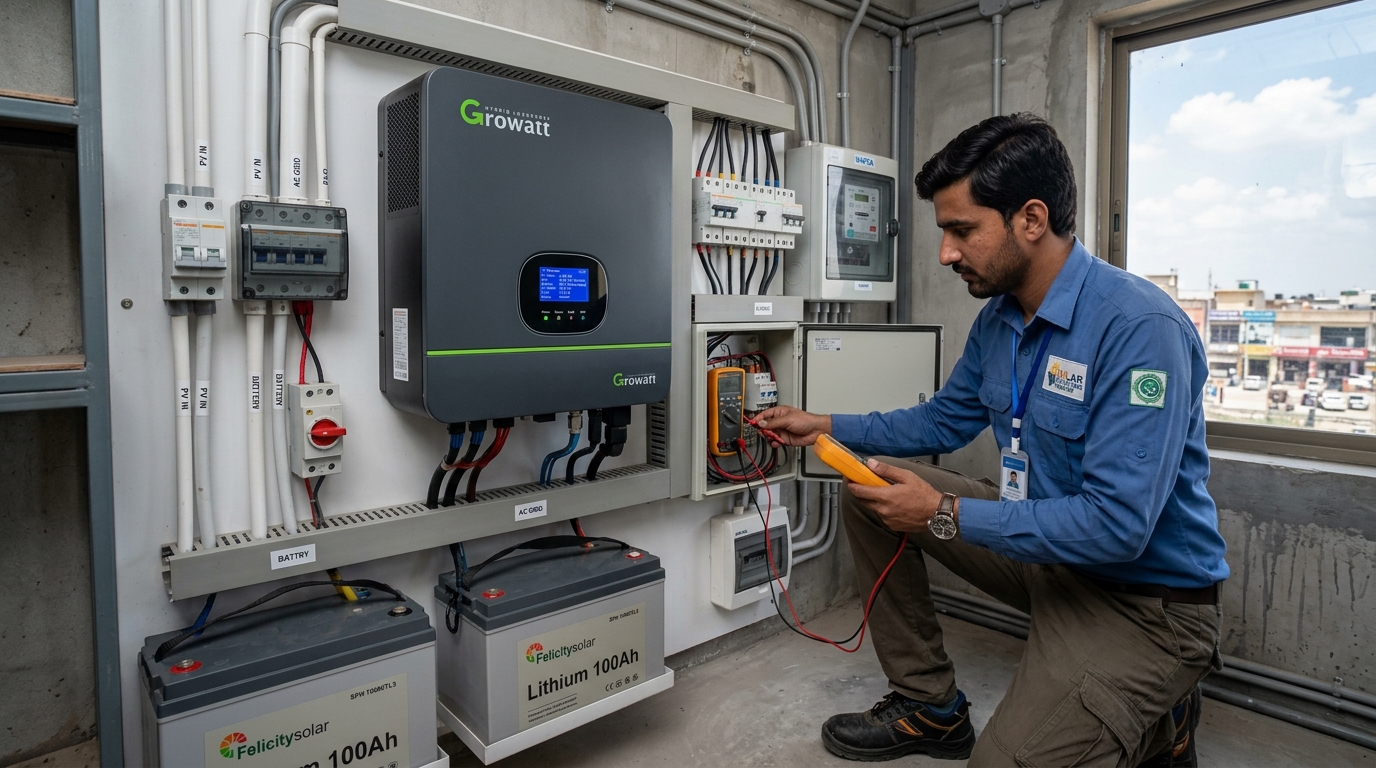
- Shielded CANbus / RS485 Protocol Handshake: Connect a twisted-pair shielded Cat6 cable between the BMS master comm port and the inverter's dedicated CAN/RS485 interface. Select the exact battery protocol code in the inverter setup menu (such as Protocol 00 for Pylontech, Protocol 02 for Deye/Sunsynk, or PACE BMS for Felicity and Narada).
- Dynamic BMS Charge Rate Regulation: Through closed-loop telemetry, the BMS continuously broadcasts permissible Charge Current Limits (CCL) and Discharge Current Limits (DCL). When room ambient temperatures surpass 42°C in peak summer, the BMS automatically dials back charging current, preventing lithium dendrite formation and thermal stress on individual pouch/prismatic cells.
- Cell Equalization & Float Saturation: High-precision BMS architectures initiate passive cell balancing once any individual prism cell reaches 3.45V to 3.50V. Periodically allow the battery bank to rest at 100% State of Charge (SOC) with float voltage for 2 to 3 hours, allowing balancing bleed resistors to eliminate micro-voltage differentials across the 16 series-connected cells.
- Molded-Case DC Breakers (MCCB) & Inrush Pre-Charge: Protect your 48V / 51.2V DC battery bus with an industrial 150A to 250A DC molded-case circuit breaker. Prior to energizing the primary DC breaker, activate the BMS soft-start or pre-charge resistor to prevent sudden capacitive inrush sparks that can pit breaker contacts and damage inverter capacitor banks.
With precise digital BMS pairing, proper thermal housing, and heavy-gauge copper busbars, your lithium energy storage system delivers reliable, round-the-clock backup power for over a decade.
7. Frequently Asked Questions (FAQ)
Q1: Can I add a second lithium battery module later to expand storage?
Yes. LiFePO4 batteries feature parallel modular scaling. You can connect up to 8 or 16 battery packs in parallel on the same DC busbar, multiplying storage from 5 kWh to 10 kWh, 15 kWh, or 20 kWh as your energy needs expand.
Q2: Can lithium batteries explode in Pakistani summer heat?
No. LiFePO4 chemistry will not explode. Furthermore, the BMS features automated high-temperature cutoffs that safely suspend charging if internal ambient temperatures exceed 55°C.
Q3: What is the optimal ambient temperature range for LiFePO4 batteries in Pakistan?
LiFePO4 cells operate with peak chemical stability between 15°C and 35°C. When ambient room temperatures climb past 42°C in Multan, Jacobabad, or Lahore, mount your battery bank in a shaded, well-ventilated ground-floor utility room or install a dedicated low-wattage DC ventilation fan to safeguard cell health and prevent BMS thermal derating.
Q4: How do I calculate the correct C-rate to avoid battery stress?
For standard residential LiFePO4 modules, maintain discharge rates below 0.5C (e.g., maximum 50A continuous draw from a 100Ah battery). Operating within this window keeps cell internal resistance low, minimizes heat generation, and ensures the battery achieves its full 6,000-cycle design lifespan.
Need to check or calculate your current utility bill?
Verify your electricity duplicate bill with instant photo-reading verification or calculate slab costs accurately.