MEPCO Sanctioned Load Extension & Reduction 2026: Online ENC Procedure, Demand Notice Fees, Security Deposit & Step-by-Step Guide
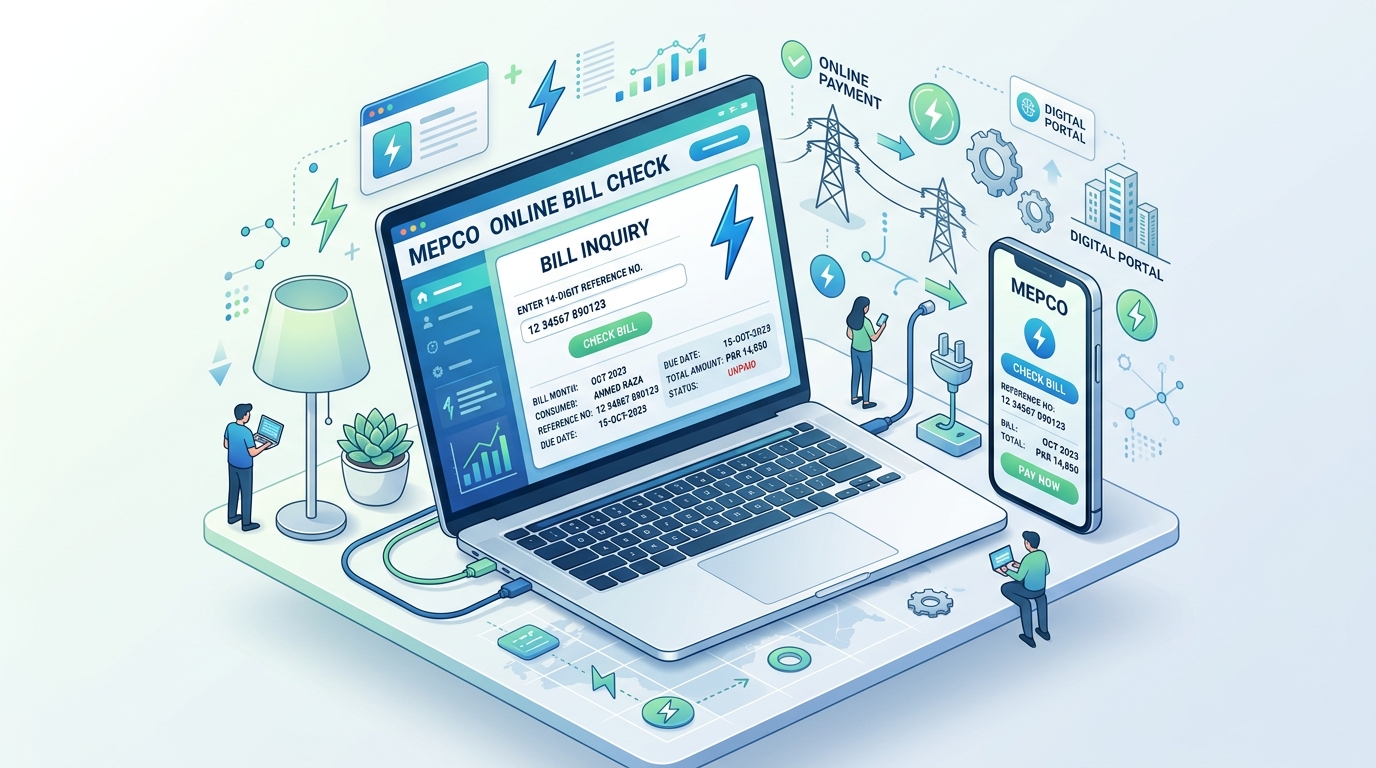
Executive Summary: Operating high-load home appliances such as inverter air conditioners, electric water geysers, or commercial machinery on a low-sanctioned electricity connection is one of the quickest routes to heavy utility fines, frequent terminal burnout, and punitive maximum demand indicator (MDI) surcharges. Multan Electric Power Company (MEPCO) enforces strict load inspection protocols across southern Punjab. This 2026 consumer manual provides the comprehensive regulatory framework, step-by-step ENC portal application procedure, demand notice fee calculation, and legal guidelines to adjust your sanctioned load.
Table of Contents (Jump to Section)
- 1. What is Sanctioned Load vs Connected Load?
- 2. When Should You Apply for Load Extension or Reduction?
- 3. Step-by-Step Procedure to Apply for Load Change via ENC Portal
- 4. Official Demand Notice Fees & Security Deposit Structure (2026 Schedule)
- 5. Technical Site Inspection & Sub-Division Verification
- 6. Frequently Asked Questions (FAQ)
1. What is Sanctioned Load vs Connected Load?
Conversely, your Connected Load is the cumulative wattage of all electrical devices, light bulbs, fans, refrigerators, motors, and air conditioning units physically installed and wired inside your building. If your sanctioned load is 1 kW (the standard default for single-phase domestic connections in Pakistan), but your active appliances draw 5.5 kW simultaneously during hot summer afternoons, your connection is in severe breach of NEPRA Consumer Service Manual (CSM) regulations.
Operating beyond sanctioned limits causes localized distribution transformer burnout, low voltage drop for adjacent neighbors, cable insulation breakdown, and subjects you to unauthorized load extension detection bills under Section 39 of the Electricity Act 1910.
2. When Should You Apply for Load Extension or Reduction?
- Load Extension (Increase): You install new 1.5-ton inverter air conditioners, convert from single-phase to three-phase wiring, install an EV home fast charger, add a tube-well motor, or establish a commercial home bakery or workshop. If your peak consumption regularly approaches 3 kW or higher, applying for an extension to 5 kW or converting to 3-phase is mandatory.
- Load Reduction (Decrease): If a previous industrial or heavy commercial premise is converted to a simple residential storage warehouse, or children move abroad and heavy loads are disconnected, maintaining a high sanctioned load (especially above 5 kW) attracts fixed MDI charges every single month regardless of actual consumption. Reducing sanctioned load saves thousands of rupees in monthly fixed capacity fees.
3. Step-by-Step Procedure to Apply for Load Change via ENC Portal
enc.com.pk). Follow these exact steps:
- Visit the official portal at
www.enc.com.pk. - In the top navigation menu, select "Apply for Change of Name / Tariff / Load".
- Select your distribution company as MEPCO.
- Enter your 14-digit Reference Number and select category "Extension of Load" or "Reduction of Load".
- The system automatically populates your existing registered name, current sanctioned load, sub-division, and feeder name.
- Enter your Requested New Load (in kW) and specify whether a meter phase conversion (Single Phase to Three Phase) is required.
- Upload digital scans of your CNIC, recent paid electricity bill, and a certified Wiring Test Report issued by an authorized licensed electrical wiring contractor.
- Submit the application and record your 8-digit tracking application number.
4. Official Demand Notice Fees & Security Deposit Structure (2026 Schedule)
| Load Category & Transition | Demand Notice Cost (Estimated) | Security Deposit Adjustment | Completion Timeline |
|---|---|---|---|
| Single Phase Load Extension (Up to 4 kW) | Rs. 2,500 – Rs. 4,000 | Rs. 1,220 per additional kW | 7 – 12 Working Days |
| Conversion from 1-Phase to 3-Phase (5 kW to 15 kW) | Rs. 18,500 – Rs. 26,000 (Meter + Cable) | Rs. 1,810 per kW for 3-Phase | 15 – 25 Working Days |
| Commercial Tariff Load Extension (Above 5 kW) | Rs. 4,500 per kW + Equipment costs | Rs. 2,450 per kW | 15 – 30 Working Days |
| Load Reduction (Lowering kW capacity) | Rs. 1,000 (Testing/Admin Fee only) | Surplus security credited to bill | 10 – 15 Working Days |
5. Technical Site Inspection & Sub-Division Verification
- Service Cable Capacity: Whether the existing twin-core PVC service cable from the pole can handle the upgraded amperage, or if a 4-core 16mm/25mm armored aluminum drop wire is required.
- Distribution Transformer Headroom: Whether the local 50kVA, 100kVA, or 200kVA transformer has adequate kVA reserve capacity. If the transformer is already operating at 95% capacity, MEPCO may issue an estimate for transformer augmentation.
- Earthing and Neutral Integrity: Proper copper grounding to prevent reverse current faults and surge tripping.
6. Frequently Asked Questions (FAQ)
Q1: Can MEPCO charge me detection bills if my connected load exceeds sanctioned load?
Yes. Under NEPRA CSM Clause 9.1, if field inspectors discover that your actual load substantially exceeds your sanctioned load, they can issue an official notice requiring load regularization and charge temporary penalties until regularized.
Q2: How do I know what my current sanctioned load is?
Look at the top-left box of your printed or online MEPCO duplicate bill. Below the Reference Number, look for the field labeled 'Sanctioned Load' or 'S.Load' (e.g., 1.00 kW or 5.00 kW).
Q3: Does increasing sanctioned load increase the per-unit electricity rate?
For domestic consumers below 5 kW, the per-unit tariff slab remains identical according to national NEPRA slabs. However, connections of 5 kW and above are placed on Time-of-Use (TOU) tariffs with separate Peak and Off-Peak unit rates.
Q4: How long does the entire load extension process take?
Under official NEPRA Performance Standards, simple single-phase load extensions take 10 to 15 days, while three-phase conversions with meter replacement take 20 to 30 calendar days from the date of demand notice payment.
Need to check or calculate your current utility bill?
Verify your electricity, gas, or water duplicate bill online or calculate unit slabs with accurate real-time formulas.