NEPRA Net Metering Surplus Units Rollover & Cash-Out Rules in Pakistan 2026 | BillsOnlinePk
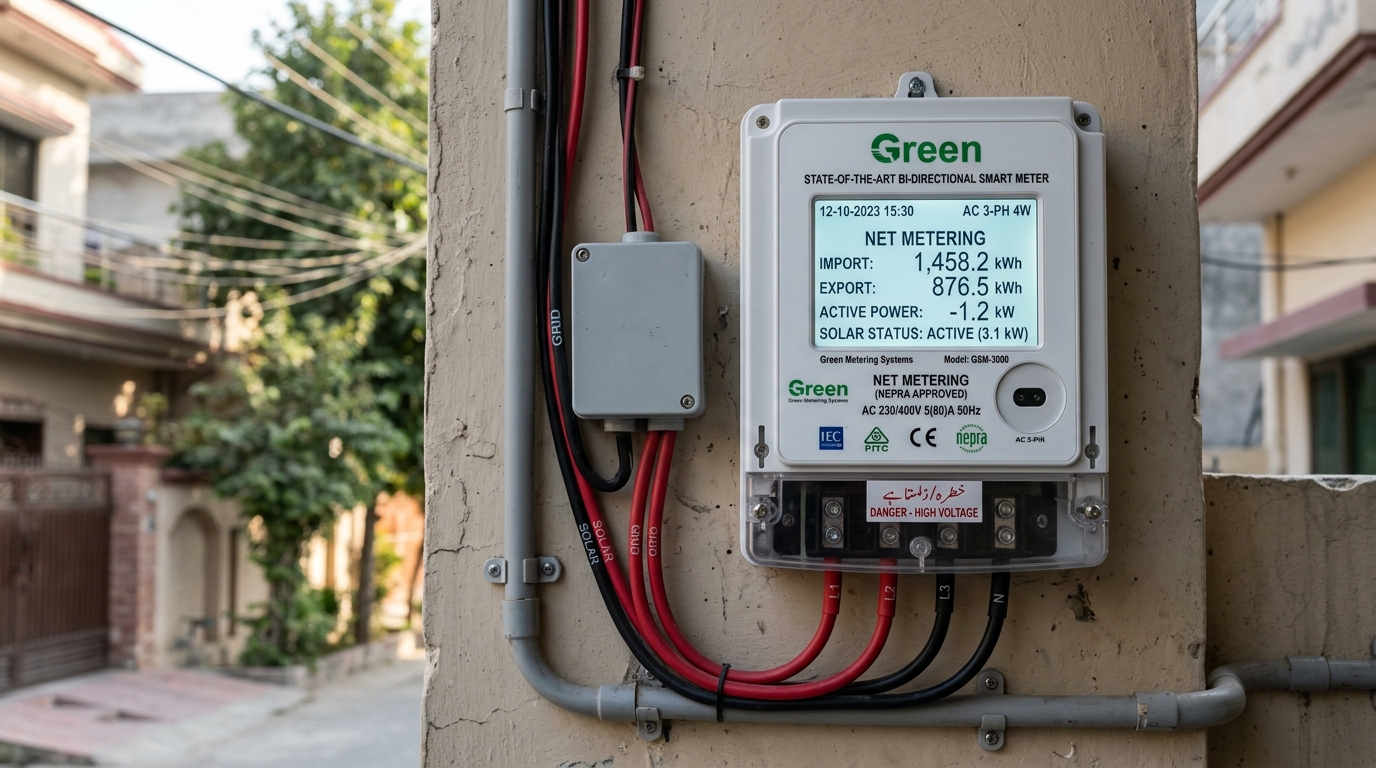
Executive Summary: For hundreds of thousands of Pakistani homeowners and commercial enterprises who have invested in rooftop solar net metering, the monthly electricity bill has transformed from a dreaded expense into an asset statement. Under the National Electric Power Regulatory Authority (NEPRA) Net Metering Regulations 2015 (and subsequent 2024–2026 statutory amendments), consumers who generate more solar electricity than they consume can export surplus units to their local power distribution company (MEPCO, LESCO, IESCO, FESCO, GEPCO, K-Electric). In exchange, consumers receive financial billing credits. But how exactly does unit rollover work across monthly billing cycles? What happens to accumulated surplus credits at the end of the financial quarter? Can consumers receive direct bank cash transfers for surplus energy? What is the official NEPRA National Average Power Purchase Price (NAPPP) buyback rate? This definitive 2026 guide explains the exact accounting mechanics, cash-out application procedures, and dispute resolution workflows.
Table of Contents (Jump to Section)
- 1. Net Metering Billing Mechanics: Peak vs Off-Peak Slabs & 4-Quadrant Registers
- 2. The Monthly Rollover Cycle: How Unused Energy Credits Accumulate
- 3. Quarterly Cash-Out Settlements: NEPRA Regulation 14 Mandate
- 4. Step-by-Step Cash-Out Application Roadmap across MEPCO, LESCO & IESCO
- 5. Surcharges & Taxes on Net Metering Bills: Understanding FPA & FC Surcharges
- 6. Common DISCO Net Metering Billing Errors & SDO Dispute Resolution
- 7. The "Gross Metering" Myth vs 2026 Net Metering Regulatory Certainty
- 8. Frequently Asked Questions (FAQ)
1. Net Metering Billing Mechanics: Peak vs Off-Peak Slabs & 4-Quadrant Registers
To understand how surplus solar units are calculated, we must examine the 4-quadrant register architecture of the bi-directional green meter:
- Register 01 (Import Off-Peak kWh): Records electrical energy drawn from the utility grid during off-peak hours (night-time and early morning).
- Register 02 (Import Peak kWh): Records electrical energy drawn from the utility grid during mandatory evening peak hours (typically 5:00 PM to 10:00 PM or 6:00 PM to 11:00 PM depending on season).
- Register 03 (Export Off-Peak kWh): Records daytime solar energy generated by your rooftop panels and exported to the utility grid during daylight hours (all daylight hours fall under Off-Peak tariff timing!).
- Register 04 (Export Peak kWh): Since the sun does not shine during evening peak hours, this register normally reads zero, unless paired with an approved grid-exporting battery energy storage system.
The Peak vs Off-Peak Separation Rule: Under NEPRA regulations, exported solar off-peak units CANNOT directly offset import peak units 1-for-1 on a unit basis! Exported solar units are multiplied by the off-peak tariff rate to establish a monetary rupee credit balance, which is then used to offset peak energy charges, fuel price adjustments (FPA), and government taxes.
2. The Monthly Rollover Cycle: How Unused Energy Credits Accumulate
When your solar system exports more kilowatt-hours in a month than your household consumes, the accounting treatment follows NEPRA Regulation 14:
- Net Negative Consumption: If you import 400 off-peak units but export 900 off-peak units, your net consumption is negative 500 units (-500 kWh).
- Energy Credit Rollover: The net surplus of 500 units is NOT lost. It is converted into a financial credit based on the approved generation tariff and automatically rolled forward to the subsequent month's billing statement as an "Energy Credit Carried Forward."
- Offsetting Future High-Consumption Months: This rollover mechanism allows homeowners to accumulate large surplus credit banks during sunny spring and autumn months (March to May and September to October), which then automatically absorb heavy summer air conditioning bills in July and August!
3. Quarterly Cash-Out Settlements: NEPRA Regulation 14 Mandate
A widespread question among solar owners is what happens when credits accumulate continuously over multiple quarters:
- The 3-Month Reconciliation Cycle: Under NEPRA Net Metering Regulations, the DISCO must perform a formal financial reconciliation at the end of every quarter (March 31, June 30, September 30, and December 31).
- Mandatory Cash-Out Option: If a consumer maintains a net financial credit balance at the end of the quarterly billing cycle, the consumer has the legal right under NEPRA rules to request a direct cash payout from the distribution company.
- The Buyback Tariff Rate: Solar export energy is compensated at the National Average Power Purchase Price (NAPPP) determined by NEPRA (typically ranging between Rs. 19 and Rs. 27 per unit depending on national energy basket generation fuel mix revisions). It is NOT compensated at the retail retail consumer tariff rate (Rs. 60+), because retail rates include grid transmission overheads, line losses, and distribution margins.
4. Step-by-Step Cash-Out Application Roadmap across MEPCO, LESCO & IESCO
To convert accumulated net metering billing credits into actual bank account cash deposits, follow this official administrative roadmap:
- Step 1: Obtain a Certified Statement of Account: Visit your DISCO Sub-Divisional Revenue Office (Customer Services Center). Request a certified 12-month billing ledger statement confirming your net negative credit balance.
- Step 2: Submit Formal Cash-Out Application: Draft a formal application addressed to the Executive Engineer (XEN) and Deputy Commercial Manager: "Application for Cash Settlement of Net Metering Surplus Credits on Reference No. XXXX under NEPRA Regulation 14."
- Step 3: Provide Banking Credentials: Attach a verified crossed bank cheque or IBAN certificate showing your active Pakistani bank account title (which must strictly match the registered electricity connection name) along with a verified CNIC photocopy.
- Step 4: Audit & Cheque / Direct Transfer Issuance: Once audited by the Divisional Revenue Officer and Finance Division, the DISCO issues an account payee cross cheque or initiates an automated Inter-Bank Fund Transfer (IBFT) directly into your bank account.

5. Surcharges & Taxes on Net Metering Bills: Understanding FPA & FC Surcharges
Many solar consumers are bewildered to find positive tax charges on their bills despite generating substantial net surplus solar energy:
- Financing Cost (FC) & Debt Service Surcharges: Certain government surcharges are levied per kilowatt-hour of gross imported units, regardless of how many units you exported. Even if you exported 1,000 units, if you imported 200 units at night, fixed surcharges are calculated on those 200 imported units.
- General Sales Tax (18% GST) Offsetting: Accumulated solar rupee credits are applied against total gross invoice amounts, absorbing GST, TV fees, and Fuel Price Adjustments (FPA), often reducing the final payable amount to exactly Rs. 0.00!
6. Common DISCO Net Metering Billing Errors & SDO Dispute Resolution
Billing errors on net metering accounts are frequent due to manual billing software entry errors at the sub-division level:
- Omission of Export Register (Single-Register Billing): Meter readers occasionally record only the import register, forgetting to enter the export reading. The consumer receives a massive bill as if they had zero solar generation!
- Dispute Resolution Roadmap: Immediately submit a copy of both import and export meter photos to the SDO office. Under Section 10 of the NEPRA Consumer Service Manual, the SDO must issue an amended bill within 3 working days. If the SDO delays, escalate to the NEPRA Consumer Affairs Division (CAD) online portal.
7. The "Gross Metering" Myth vs 2026 Net Metering Regulatory Certainty
In recent years, media rumors regarding transitioning existing net metering consumers to "gross metering" or slashing buyback rates have created widespread market anxiety:
- Grandfathering Protections: NEPRA has repeatedly reaffirmed that existing licensed net metering consumers operate under formal 3-year renewable bi-lateral agreements (Agreement Form-II). Existing consumer contracts are legally grandfathered under vested regulatory rights, protecting installed solar investments from arbitrary retroactive tariff penalties.
8. Commercial Net Metering: Corporate Tax Benefits & Accelerated Depreciation
For corporate entities, private limited companies, and industrial manufacturing plants in Pakistan, solar net metering offers profound federal tax incentives under the Income Tax Ordinance 2001. Capital investments in rooftop solar installations qualify for 100% First-Year Accelerated Depreciation.
This allows commercial enterprises to write off the entire capital cost of their multi-million rupee solar power plant against taxable annual profits in Year 1, slashing corporate income tax liabilities by up to 29%. Combined with monthly net metering electricity credits, commercial solar projects in Pakistan achieve extraordinary full payback periods of just 2.2 to 2.8 years.
8. Frequently Asked Questions (FAQ)
Do surplus net metering units expire at the end of the month in Pakistan?
No! Surplus solar units do not expire. They are converted into financial billing credits and rolled forward indefinitely to offset high-consumption bills in future summer months.
Can I get cash payout from MEPCO or LESCO for surplus solar units?
Yes. Under NEPRA Net Metering Regulation 14, consumers maintaining a net credit balance at the end of a quarterly billing cycle can submit a formal application for direct cash reimbursement or bank transfer.
What is the buyback rate for exported solar units in Pakistan?
Exported solar units are credited at the National Average Power Purchase Price (NAPPP) determined by NEPRA, which typically ranges between Rs. 19 and Rs. 27 per unit.
Can exported daytime solar units directly cancel evening peak hour units?
Not on a 1-for-1 unit basis. Exported off-peak solar units are converted into monetary rupee credits, which are then used to offset peak electricity unit costs and government taxes on your monthly bill.
Q5: What happens to my net metering billing credits if I sell my house?
Accumulated net metering billing credits remain attached to the 14-digit electricity reference number and property premises. During property sale conveyance, surplus credits are transferred to the new buyer or settled financially between parties during sale closing.
Q6: Can I transfer surplus net metering units from my home to my commercial office?
Currently, NEPRA regulations do not permit inter-connection energy wheeling between different physical consumer reference accounts for residential consumers. Credits can only offset bills on the specific meter where the solar array is physically installed.
Need to check or calculate your current utility bill?
Verify your electricity duplicate bill with instant photo-reading verification or calculate slab costs accurately.