Electricity Sanctioned Load Extension Procedure in Pakistan 2026: Security Deposit & Rules | BillsOnlinePk
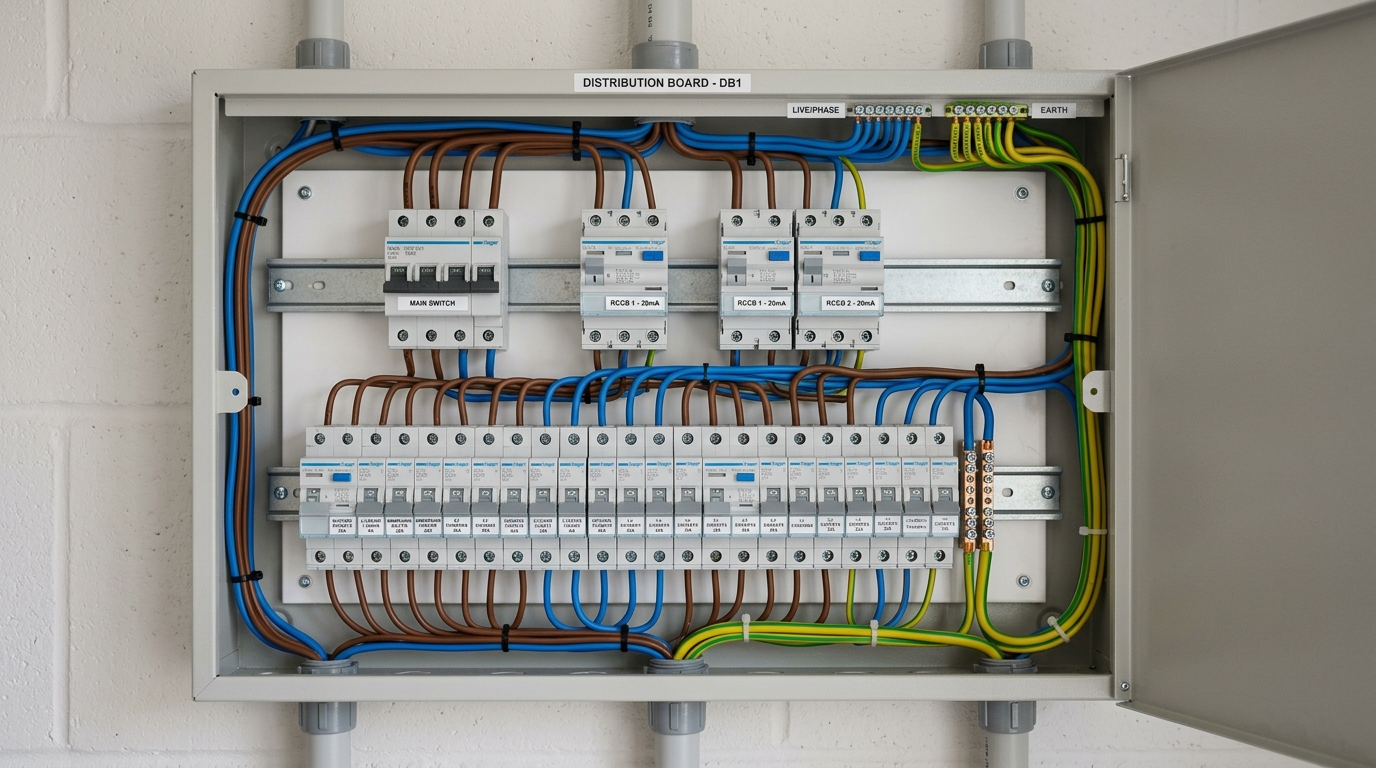
Executive Summary: When most Pakistani residential and commercial electricity connections were originally energized 10, 15, or 25 years ago, the official Sanctioned Load recorded on the utility account was typically a modest 1 Kilowatt (1 kW) or 2 kW—reflecting a basic household with a few filament bulbs and ceiling fans. Fast-forward to 2026: that same household now operates three 1.5-ton inverter air conditioners, a 1.5HP water pumping motor, a chest deep freezer, an automatic washing machine, and multiple televisions, pushing actual peak electrical demand to 6kW to 9kW! In modern Advanced Metering Infrastructure (AMI) smart meters and Time of Use (TOU) digital meters, the Maximum Demand Indicator (MDI) register continuously records your highest 30-minute peak kilowatt draw. If your actual demand exceeds your sanctioned load, the utility automatically slaps severe over-demand penalties on your monthly bill. Furthermore, failing to extend your sanctioned load blocks solar net metering approvals. This 2026 technical manual details the official load extension application roadmap, security deposit schedules, and transformer capacity vetting.
Table of Contents (Jump to Section)
- 1. What is Sanctioned Load and Why Does It Matter in Pakistan?
- 2. The Net Metering Gatekeeper: Mandatory Sanctioned Load Thresholds
- 3. Step-by-Step Load Extension Application Roadmap (ENC Portal)
- 4. Security Deposit & Fee Schedules in Pakistan (2026 Cost Matrix)
- 5. Upgrading Service Drop Cables: Why the Old 7/0.052 Wire Must Be Replaced
- 6. When Is a Dedicated Private Transformer Required? (Above 15kW - 20kW)
- 7. Reclaiming Unused Security Deposits & Name Change Integration
- 8. Frequently Asked Questions (FAQ)
1. What is Sanctioned Load and Why Does It Matter in Pakistan?
In electrical utility engineering, the Sanctioned Load represents the maximum continuous electrical power (measured in Kilowatts - kW) that the utility company has legally authorized your connection to draw from the local distribution transformer:
- Grid Capacity Planning: DISCO planning engineers size pole-mounted distribution transformers (e.g. 100kVA or 200kVA) and low-voltage Aerial Bundled Cables based entirely on the cumulative sanctioned load of all registered consumers on that feeder. If 80 consumers registered with 1kW sanctioned load actually draw 5kW each, the transformer is subjected to 400kW of demand—causing catastrophic coil burnout and neighborhood blackouts!
- Maximum Demand Indicator (MDI) Penalties: For connections with sanctioned loads of 5kW or higher, digital meters record the highest continuous power drawn during any 30-minute window in the billing cycle. If your actual MDI reading exceeds your sanctioned load limit (e.g. recording 8.5kW on a 5kW sanctioned meter), DISCOs levy heavy over-demand surcharges on every excess kilowatt!

2. The Net Metering Gatekeeper: Mandatory Sanctioned Load Thresholds
Under NEPRA Alternative and Renewable Energy Regulations, a homeowner cannot install a solar system with inverter capacity exceeding their officially sanctioned utility load:
- The Inverter Sizing Constraint: If your electricity bill shows a sanctioned load of 3 kW, the DISCO will legally reject any net metering application for a 5kW, 10kW, or 15kW solar system! Your approved solar generation capacity is strictly capped at or below your sanctioned load rating.
- Pre-Requisite Load Extension: Before submitting your Form-1 solar net metering dossier to MEPCO, LESCO, or IESCO, you must first apply for and complete a formal Sanctioned Load Extension to match your planned solar inverter nameplate capacity.
3. Step-by-Step Load Extension Application Roadmap (ENC Portal)
Extending your sanctioned load in Pakistan has been fully digitized through the central Electricity New Connection (ENC) portal:
- Step 1: Access the ENC System: Navigate to
enc.com.pk. Select the "Extension / Reduction of Load" module. - Step 2: Enter Account Credentials: Select your respective DISCO (e.g. MEPCO, LESCO, IESCO, FESCO, GEPCO, PESCO, etc.), and enter your 14-digit consumer reference number. The system retrieves your existing consumer profile, current sanctioned load, and feeder name.
- Step 3: Declare Requested Load & Appliance Matrix: Enter your requested new load in Kilowatts (e.g. increasing from 2kW to 8kW). Fill out the automated connected load assessment schedule detailing the number of air conditioners, refrigerators, water motors, and lighting circuits.
- Step 4: Upload Required Documentation:
- Scanned high-resolution copy of property owner's CNIC.
- Proof of property ownership (Registry, Fard, Allotment Letter, or Sale Deed).
- Wiring Test Contractor Form (prepared by a licensed electrical inspector confirming internal wiring can safely carry the extended load).
- Latest paid electricity bill showing zero outstanding arrears.
- Step 5: Field Inspection by Line Superintendent (LS): The local sub-division LS inspects your incoming service drop wire and verifies that the local pole transformer has sufficient capacity margin.
- Step 6: Payment of Demand Notice: Upon SDO and XEN administrative approval, an official Demand Notice is issued for payment at an authorized National Bank of Pakistan (NBP) or Bank of Punjab (BOP) branch.
4. Security Deposit & Fee Schedules in Pakistan (2026 Cost Matrix)
Extending your sanctioned load requires paying additional security deposits to match your higher power consumption bracket:
| Consumer Category | Differential Security Deposit Rate per kW | Service Connection / Infrastructure Charges | Sample Cost: Extending from 2kW to 7kW (+5kW) |
|---|---|---|---|
| Domestic Residential (Tariff A-1) | Rs. 1,500 - Rs. 2,500 per kW extended | Rs. 2,000 - Rs. 4,000 flat processing | Rs. 9,500 - Rs. 16,500 Total |
| Commercial (Tariff A-2) | Rs. 3,000 - Rs. 4,500 per kW extended | Rs. 4,000 - Rs. 8,000 | Rs. 19,000 - Rs. 30,500 Total |
| Industrial Small (Tariff B-1) | Rs. 4,000 - Rs. 6,000 per kW extended | Subject to line and transformer sharing estimate | Rs. 35,000+ |
Note: If extending your load pushes your total demand above 5kW on an old single-phase connection, the DISCO will simultaneously require you to convert to a 3-phase meter, adding the 3-phase meter cost to the Demand Notice.
5. Upgrading Service Drop Cables: Why the Old 7/0.052 Wire Must Be Replaced
Extending your sanctioned load on paper is useless if the physical copper service drop wire connecting your roof to the utility pole cannot carry the increased current:
- The Thermal Ampacity Limit: Standard legacy single-phase service drop wires (7/0.052 PVC copper) have a safe continuous rating of approximately 28 to 35 Amperes. Extending your load to 8kW or 10kW increases current demand to 40A - 50A, causing the thin wire to overheat, drop voltage below 170V, melt insulation, and spark during summer peaks.
- Mandatory 16mm² Service Cable: When extending load beyond 5kW, always replace the service drop wire with a heavy 4-core 16mm² (7/0.064) copper cable or 25mm² XLPE insulated aluminum service bundle, eliminating voltage drops and line fire hazards.
6. When Is a Dedicated Private Transformer Required? (Above 15kW - 20kW)
For large residences (such as 1-Kanal or 2-Kanal luxury homes in DHA, Bahria Town, or Wapda Town) or commercial buildings requesting sanctioned loads exceeding 15kW to 20kW:
- Transformer Capacity Exhaustion: If the local sub-division transformer is already operating at 100% capacity, the utility company will reject simple service line tapping. Under NEPRA regulations, the consumer must either wait for utility transformer augmentation or pay for a dedicated 25kVA, 50kVA, or 100kVA pole-mounted transformer under a Capital Contribution Scheme.
7. Reclaiming Unused Security Deposits & Name Change Integration
When completing a load extension, homeowners should simultaneously verify ownership records:
- Integrated Name Change (Tabdeeli-e-Naam): If the electricity connection is still registered in the name of a deceased parent or former property seller, execute the Name Change simultaneously on the ENC portal. This consolidates security deposits under your name and establishes lawful ownership for solar net metering contracts.
8. Factory & Commercial Plazas: Power Transformer HT Connection Sizing
For industrial processing plants, commercial cold storage warehouses, and large banquet halls requesting sanctioned loads exceeding 50 Kilowatts up to 500 kW, low-voltage (400V LT) supply is no longer permitted by utility regulations. Under NEPRA Interconnection Codes, high-demand commercial consumers must transition to an 11kV High-Tension (HT) Dedicated Connection.
This requires the installation of a private outdoor step-down substation equipped with an 11kV Vacuum Circuit Breaker (VCB), high-accuracy CT/PT metering units, and a dedicated 100kVA to 630kVA oil-immersed distribution transformer. While the initial capital expenditure ranges between Rs. 1.5 million and Rs. 4 million, industrial HT consumers benefit from lower B-2/B-3 bulk tariff rates, eliminating low-voltage distribution losses and guaranteeing uninterrupted voltage stability for heavy manufacturing machinery.
8. Frequently Asked Questions (FAQ)
Why should I extend my sanctioned electricity load in Pakistan?
You should extend your sanctioned load to prevent MDI over-demand penalties, avoid burnt service wires, prevent transformer tripping, and qualify for solar net metering installation.
How long does the sanctioned load extension process take?
From online ENC application submission to site inspection, Demand Notice payment, and database update, the process typically takes 10 to 20 working days.
Do I need to change my meter if I extend my load above 5kW?
Yes. If your current connection is single-phase and your extended load exceeds 5kW, NEPRA regulations require upgrading to a three-phase Time of Use (TOU) digital meter.
Can I apply for load extension online from home?
Yes! The entire application is submitted online through the central Electricity New Connection portal at enc.com.pk without visiting the SDO office.
Q5: Can I voluntarily reduce my sanctioned load if my electricity consumption decreases?
Yes. Under the NEPRA Consumer Service Manual, consumers can apply for "Reduction of Sanctioned Load" on the ENC portal. The utility conducts a site audit of removed appliances, after which your sanctioned load and fixed monthly charges are officially lowered.
Q6: Does extending my sanctioned load require rewiring my entire house?
Not the entire house. However, the incoming service drop wire from the utility pole to the meter, and the primary feeder cable from the meter to the main distribution board, must be upgraded to appropriately rated copper conductors.
Need to check or calculate your current utility bill?
Verify your electricity duplicate bill with instant photo-reading verification or calculate slab costs accurately.