Solar Inverter Fault Codes & Error Solutions 2026: Growatt, Inverex, MaxPower, Fronus Troubleshooting & Protection Guide
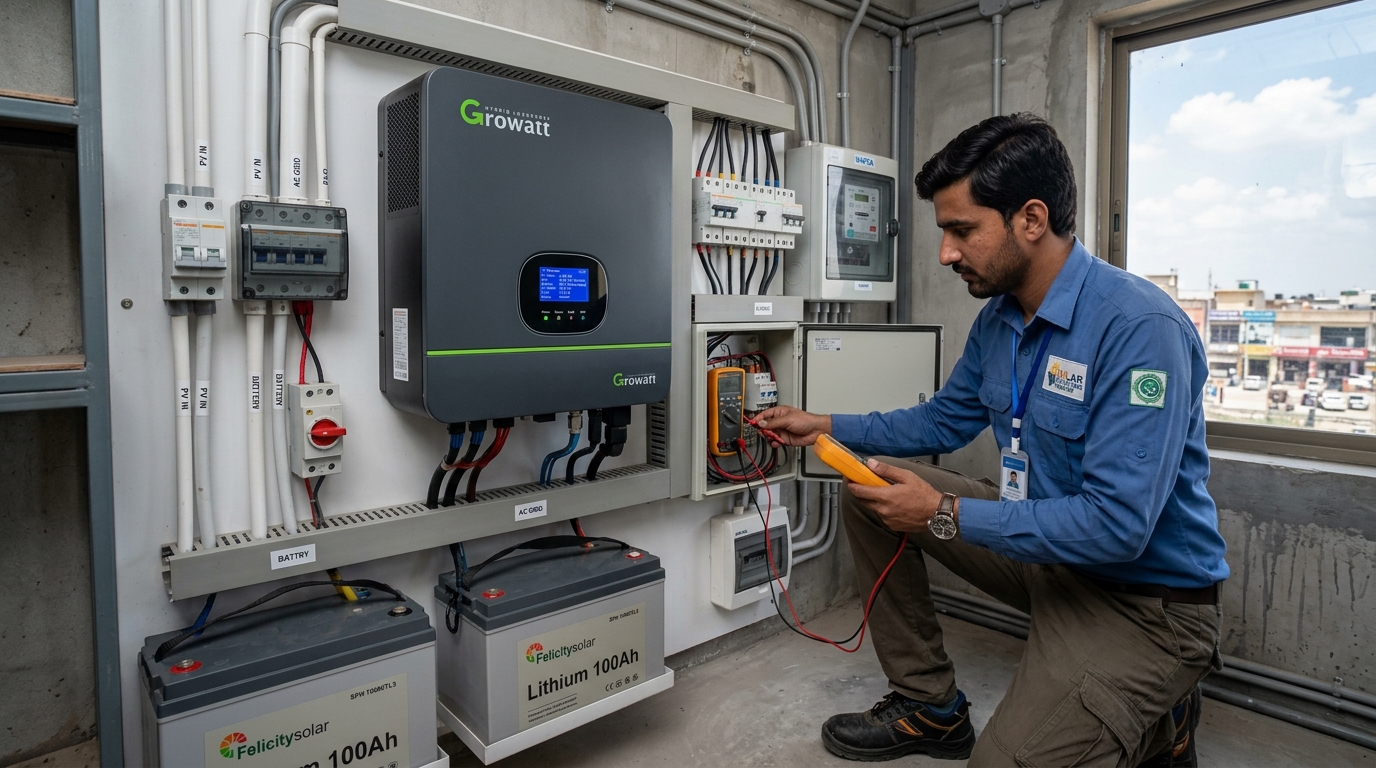
Executive Summary: Nothing is more frustrating than walking up to your solar setup during peak afternoon sunshine only to find your hybrid or on-grid solar inverter beeping continuously with a flashing red warning light and a cryptic numeric fault code on the LCD display. In Pakistan, high ambient heat, erratic utility grid voltage, lightning surges, and improper string sizing cause frequent inverter tripping across leading brands like Inverex (Nitrox/Yukon/Aerox), Growatt, MaxPower, Fronus, Crown, and Huawei. This definitive diagnostic handbook decodes the top 15 solar inverter error codes and provides step-by-step troubleshooting procedures.
Table of Contents (Jump to Section)
- 1. Understanding Inverter Warning Codes vs Fatal Fault Codes
- 2. Comprehensive Troubleshooting Guide: Top 10 Common Inverter Fault Codes
- 3. Troubleshooting Grid Connection Faults (Net Metering Disconnects)
- 4. The Correct 5-Step Inverter Hard Reset Procedure
- 5. Essential Protection Hardware to Prevent Hardware Burnout
- 6. Frequently Asked Questions (FAQ)
1. Understanding Inverter Warning Codes vs Fatal Fault Codes
- Warning Codes (Icon Flashing, Yellow LED): Non-critical alerts indicating sub-optimal conditions (e.g., Warning 04 low battery, Warning 15 PV energy weak, or fan speed abnormal). The inverter continues operating in bypass or limited mode.
- Fault Codes (Alarm Beeping, Red LED, Power Cut): Critical hardware or electrical safety shutdowns designed to protect internal IGBT power transistors and capacitors from exploding. When a fault code occurs, the AC output relays trip instantly.
2. Comprehensive Troubleshooting Guide: Top 10 Common Inverter Fault Codes
| Fault Code | Technical Meaning | Root Cause in Pakistan | Immediate Action & Solution |
|---|---|---|---|
| Error 04 / F04 | Battery Low Voltage / Discharge Cutoff | Deep discharge during nighttime loads or failing tubular/lithium cell. | Check battery terminal voltage with multimeter. Allow solar PV to charge or reduce heavy night loads. |
| Error 08 / F08 | DC Bus High Over-Voltage | PV string open-circuit voltage (Voc) exceeding maximum MPPT voltage limit during cold winter mornings. | Measure PV string voltage. Reconfigure series-parallel panel strings to stay under inverter max VOC limit. |
| Error 09 / F09 | Bus Soft Start Failed | Internal pre-charging circuit or relay damaged by utility voltage spike. | Turn off all DC and AC breakers for 10 minutes. If error persists on restart, internal hardware repair is required. |
| Error 51 / F51 | Over-Current Inverter / Surge Trip | Heavy motor inrush current (e.g., 2HP water pump starting while AC is running). | Install a motor soft-starter or sequential timer. Ensure load does not exceed surge wattage rating. |
| Error 58 / F58 | Inverter Output Voltage Low | Extreme overloading causing output AC voltage to collapse below 180V. | Disconnect non-essential loads immediately and reset inverter. |
| Error 52 / F52 | Bus Voltage Low | Sudden heavy load dumped on weak battery bank. | Inspect battery cable connections for loose lugs and verify battery health. |
| Error 13 / F13 | Inverter Over-Temperature | Dust-choked cooling fans, inadequate ventilation, or outdoor installation under direct sun. | Clean fan filters with compressed air. Ensure at least 12 inches clearance around the inverter heatsink. |
3. Troubleshooting Grid Connection Faults (Net Metering Disconnects)
Grid Voltage Fault, Grid Frequency Out of Range, or No Utility Grid.
- Grid Voltage High (Above 255V): When neighborhood solar installations export heavy power simultaneously on the same distribution transformer, local grid voltage rises above the statutory 253V limit, triggering the inverter's safety anti-islanding relay. Solution: Request MEPCO SDO to adjust transformer tap changer settings.
- Grid Voltage Low (Below 180V): In rural feeders suffering from line sag, the inverter refuses to sync with the grid. Certified solar technicians can expand the grid voltage threshold in regional parameters if approved by local safety norms.
4. The Correct 5-Step Inverter Hard Reset Procedure
- Switch OFF the AC Output breaker (home load).
- Switch OFF the AC Grid Input breaker (WAPDA).
- Switch OFF the DC Solar PV breaker (solar panels).
- Switch OFF the DC Battery breaker or battery management system (BMS).
- Wait for at least 5 to 7 full minutes until all LCD lights, capacitors, and internal microcontrollers fully discharge.
- Turn back on in strict sequence: Battery first → PV Panels second → AC Grid third → AC Load last.
5. Essential Protection Hardware to Prevent Hardware Burnout
- DC Surge Protective Devices (Type-2 SPD): Install 600V or 1000V DC SPDs on each solar string before the inverter MPPT input to clamp atmospheric lightning surges.
- AC Surge Protective Devices: Install 275V/400V AC SPDs on the grid incoming line.
- Independent Earth Grounding Pit: Ensure an earthing resistance of less than 5 Ohms connected to inverter casing and solar structure.
6. Frequently Asked Questions (FAQ)
Q1: Why does my solar inverter trip with Error 08 only on cold sunny mornings?
Solar panels exhibit a negative temperature coefficient: as ambient temperature drops, their open-circuit voltage (Voc) increases. On a 10°C winter morning, panel voltage can rise 12% higher than standard ratings, exceeding the inverter max input voltage limit.
Q2: Can I run an inverter without batteries?
Yes, modern battery-less hybrid inverters (e.g., Inverex Aerox, Growatt SPF series) can power loads directly from solar PV and grid power without battery storage.
Q3: What causes burnt smell from inverter terminals?
Loose terminal screws or substandard undersized DC battery cables (less than 25mm or 35mm copper) create severe electrical contact resistance under 80-100A current draws, melting plastic housings.
Need to check or calculate your current utility bill?
Verify your electricity, gas, or water duplicate bill online or calculate unit slabs with accurate real-time formulas.