Solar Water Pump for Agricultural Tube Wells 2026: 5HP, 10HP, 15HP Submersible Motor Sizing, VFD Inverter & Cost Breakdown
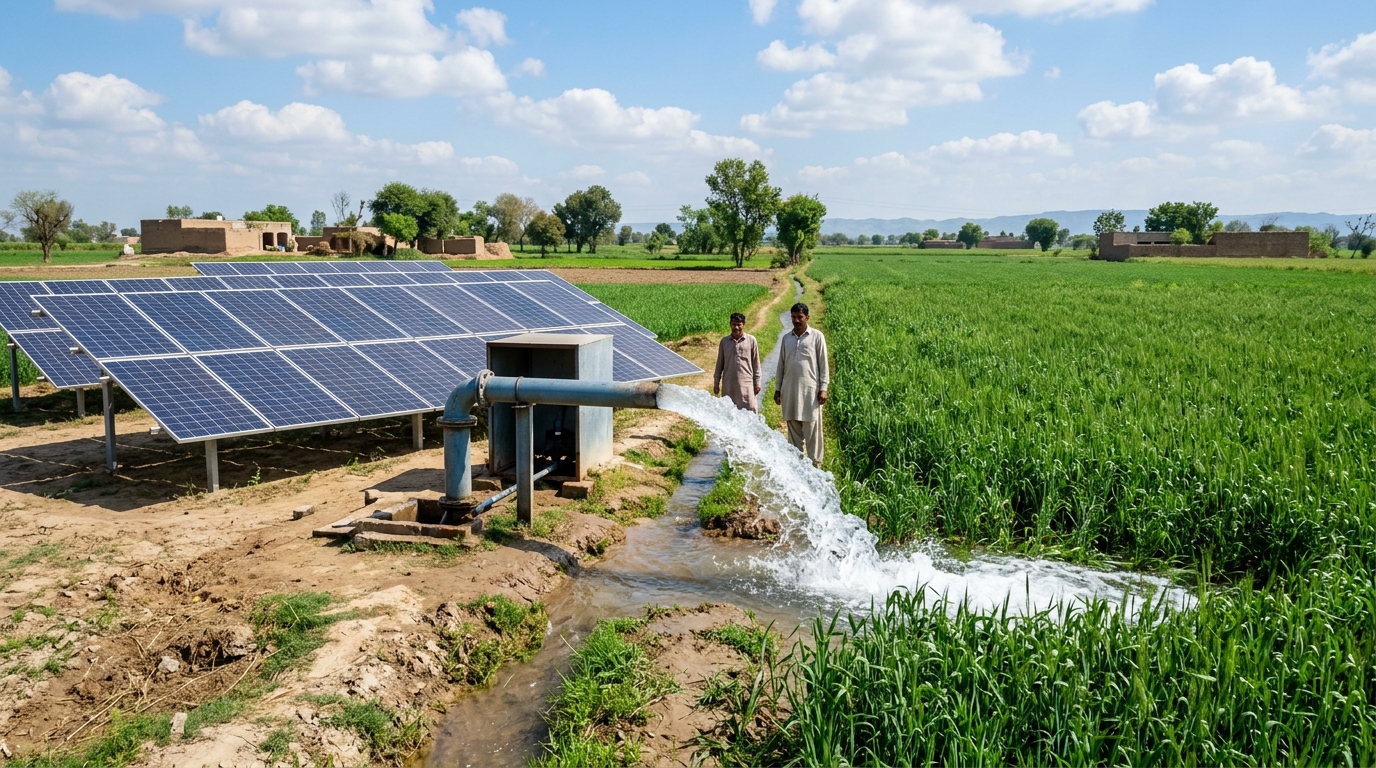
Executive Summary: Soaring agricultural electricity tariffs (exceeding Rs. 40/unit even with subsidies) and skyrocketing diesel fuel prices (over Rs. 280/liter) have made conventional tube well irrigation financially ruinous for Pakistani farmers. Powering a 15HP tube well with a diesel engine costs between Rs. 150,000 to Rs. 250,000 every single month during wheat, rice, sugarcane, and cotton seasons. Solar-powered agricultural tube wells have emerged as the ultimate financial savior for farmers across Punjab, Sindh, Khyber Pakhtunkhwa, and Balochistan. This 2026 technical and economic sizing handbook provides precise formulas, water discharge calculators, Variable Frequency Drive (VFD) setups, and complete turnkey cost breakdowns for 5HP to 25HP tube wells.
Table of Contents (Jump to Section)
- 1. How Does a Solar Agricultural Tube Well Work?
- 2. The 3 Golden Parameters: Depth, Delivery Size & Water Head
- 3. Horsepower Sizing Matrix & Water Discharge Rates
- 4. Critical VFD Pump Inverter Features & Safety Protections
- 5. Complete Turnkey Cost Breakdown (2026 Budget Estimates)
- 6. Agricultural Wellhead Design: Sand Mitigation, Dynamic Drawdown & VFD Enclosures
- 7. Frequently Asked Questions (FAQ)
1. How Does a Solar Agricultural Tube Well Work?
- Solar PV Ground Array: Converts intense daytime solar irradiance into high-voltage direct current (DC).
- Solar Pump VFD Inverter (Variable Frequency Drive): The core technological breakthrough. A specialized agricultural VFD converts DC solar electricity directly into variable 3-phase 380V AC power. It features built-in Maximum Power Point Tracking (MPPT) that automatically adjusts the AC frequency between 20Hz and 50Hz depending on sunlight intensity. Early in the morning or during light cloud cover, the pump continues discharging water at reduced RPM rather than shutting down.
- Submersible Bore Pump or Surface Centrifugal Pump: Multi-stage centrifugal impellers submerged deep into the underground aquifer lift water through a delivery pipe directly into agricultural watercourses (khal).
2. The 3 Golden Parameters: Depth, Delivery Size & Water Head
- Static Water Table Depth (H1): The depth in feet from the ground surface to the standing water level in the bore hole.
- Dynamic Drawdown Head (H2): How many feet the water level drops when the pump operates continuously for 4 hours.
- Delivery Pipe Diameter & Friction Losses (H3): Standard Pakistani tube wells use 3-inch, 4-inch, 5-inch, or 6-inch delivery pipes. Smaller pipes restrict flow and create severe friction drag.
- Total Dynamic Head (TDH): $\text{TDH} = \text{Static Depth} + \text{Drawdown} + \text{Pipe Friction Losses} + \text{Elevation}$.
3. Horsepower Sizing Matrix & Water Discharge Rates
| Motor Rating (Horsepower / kW) | Water Table Depth (Bore Depth) | Delivery Pipe Size | Solar Array Size Required | Water Discharge Flow Rate |
|---|---|---|---|---|
| 5 HP (3.7 kW) | 30 to 70 Feet (Canal areas) | 3 Inch Delivery | 7 kW – 8 kW Solar PV (12-14 Panels) | 180 – 250 Gallons / Min |
| 10 HP (7.5 kW) | 60 to 120 Feet (Central Punjab) | 4 Inch Delivery | 13 kW – 15 kW Solar PV (22-26 Panels) | 380 – 520 Gallons / Min |
| 15 HP (11.0 kW) | 100 to 180 Feet (Deep aquifers) | 5 Inch Delivery | 18 kW – 22 kW Solar PV (32-38 Panels) | 600 – 800 Gallons / Min |
| 25 HP (18.5 kW) | 150 to 280 Feet (Balochistan / Cholistan) | 6 Inch Delivery | 32 kW – 36 kW Solar PV (55-62 Panels) | 900 – 1,300 Gallons / Min |
4. Critical VFD Pump Inverter Features & Safety Protections
- Dry-Run Sensor Protection (Well Probe): Automatically shuts down the VFD if the underground aquifer water level drops below the pump suction strainer, preventing water-lubricated motor bearings from burning out.
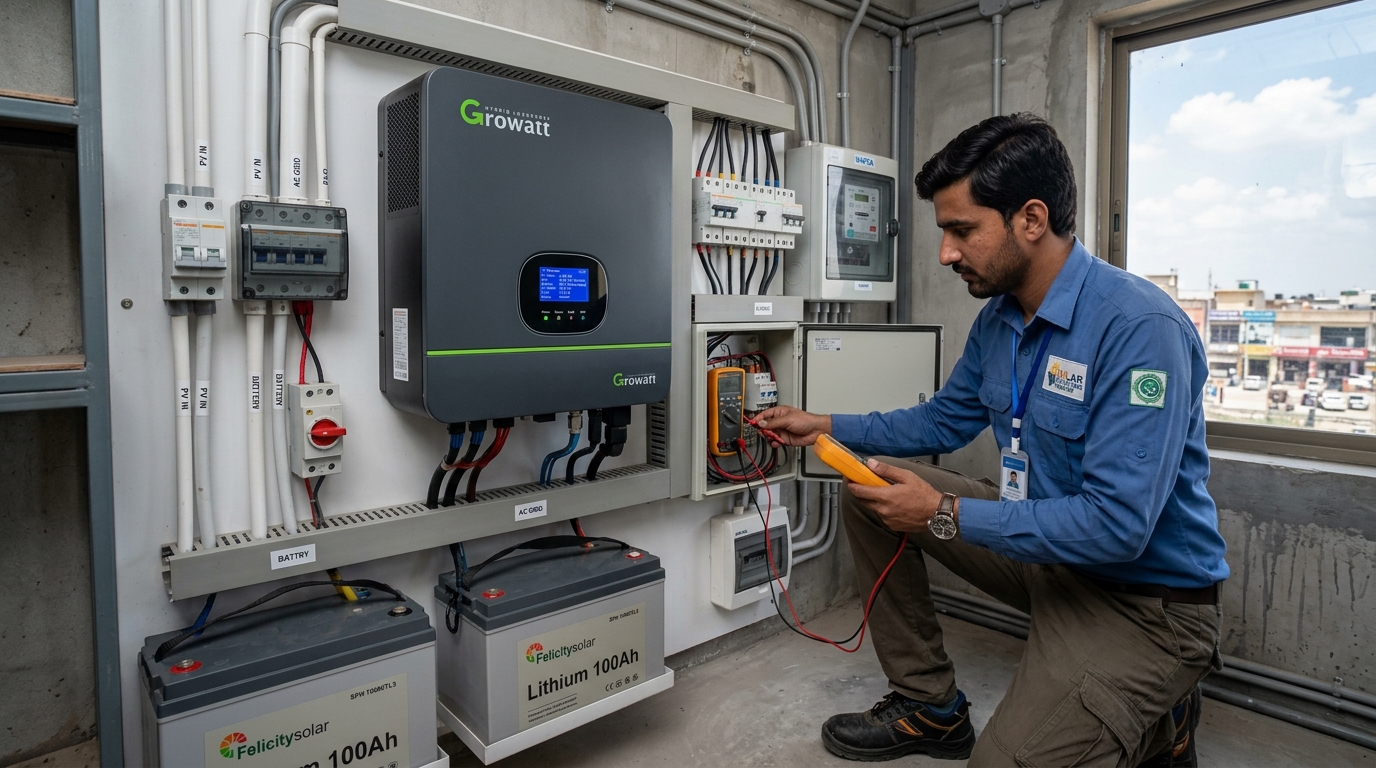
- Dual Supply Hybrid Function (Solar + Grid / Generator): Advanced agricultural VFDs feature integrated AC and DC inputs, allowing farmers to blend solar energy with WAPDA or a generator during emergency night irrigation.
- Lightning & Surge Arresters (Class B+C): Open agricultural fields are prime targets for lightning strikes. Heavy-duty lightning arresters and copper earth pits (sub-5 Ohm) are mandatory.
5. Complete Turnkey Cost Breakdown (2026 Budget Estimates)
| System Capacity | Solar Panels + Heavy GI Structure | Solar VFD Controller Box | Submersible Motor & Cable | Total Turnkey Investment |
|---|---|---|---|---|
| 5 HP Solar Tube Well | Rs. 420,000 – Rs. 490,000 | Rs. 65,000 – Rs. 85,000 | Rs. 130,000 – Rs. 165,000 | Rs. 615,000 – Rs. 740,000 |
| 10 HP Solar Tube Well | Rs. 750,000 – Rs. 880,000 | Rs. 95,000 – Rs. 125,000 | Rs. 190,000 – Rs. 240,000 | Rs. 1,035,000 – Rs. 1,245,000 |
| 15 HP Solar Tube Well | Rs. 1,100,000 – Rs. 1,280,000 | Rs. 130,000 – Rs. 165,000 | Rs. 260,000 – Rs. 320,000 | Rs. 1,490,000 – Rs. 1,765,000 |
Diesel Comparison Payback: A 10HP diesel tube well consumes approximately 3.5 liters of diesel per hour. Running 8 hours daily for 120 irrigation days burns over Rs. 940,000 in diesel every single year! A 10HP solar system pays for itself in just 13 to 15 months, delivering free irrigation water for the next 25 years.
6. Agricultural Wellhead Design: Sand Mitigation, Dynamic Drawdown & VFD Enclosures
Deploying solar-powered tube wells in agricultural districts across Southern Punjab, Sindh, and Balochistan requires addressing severe hydrological and climatic challenges. High ground salinity, abrasive river sand, and seasonal groundwater drawdown will quickly damage submersible pumps if site engineering is neglected.
Integrate the following vital engineering safeguards into every solar irrigation project:
- Hydrocyclone Sand Separators & Gravel Envelopes: In sandy river basins along the Indus and Chenab, suspended quartz particles cause rapid cavitation wear on pump impellers and diffuser bowls. Install high-efficiency well strainers with calibrated gravel packing at the borehole bottom, coupled with an above-ground hydrocyclone sand filter to protect pressurized drip and sprinkler drip lines.
- Dynamic Groundwater Drawdown Factoring: Never calculate total dynamic head (TDH) using static post-monsoon water tables. In arid regions like Bahawalpur, Lodhran, or Chagai, agricultural pumping can lower local water tables by 15 to 30 feet (dynamic drawdown) during peak cotton and wheat seasons. Always lower the pump intake at least 25 feet below the anticipated peak drawdown depth with dual water level sensor electrodes wired to the VFD dry-run terminals.
- IP65 Double-Door VFD Cabinets with Forced Cooling: In open fields without brick pumphouses, solar VFD drives must be enclosed in double-door galvanized steel weather cabinets rated IP65 with louvered dust filters and twin 24V DC brushless cooling fans. VFD internal heatsinks operating at 46°C ambient summer temperatures require continuous airflow to avoid thermal tripping during prime 11:00 AM to 2:00 PM pumping hours.
- Class I Lightning & Grounding Rods: Extensive 15kW to 40kW solar panel arrays set in flat rural landscapes act as natural lightning collectors during pre-monsoon thunderstorms. Mount a Franklin air terminal lightning rod elevated 3 meters above the highest array edge, bonded to a dedicated copper ground pit measuring under 3.0 ohms, kept completely separate from the electrical motor grounding line.
Proper hydrological planning, sand protection, and weather-hardened enclosures ensure your agricultural solar tube well operates reliably for 15+ years of fuel-free, profitable irrigation.
7. Frequently Asked Questions (FAQ)
Q1: Can a solar tube well run during cloudy or foggy weather?
The VFD automatically modulates motor speed to match available solar power. Under light clouds, the motor continues pumping at 30Hz or 40Hz with reduced water discharge. On dense foggy winter days, hybrid VFDs can draw top-up power from a small generator or WAPDA line.
Q2: How do I protect solar panels from theft in open agricultural fields?
Install high-security one-way shear nuts on panel mounting bolts, anchor structure footings in reinforced concrete, install an infrared beam solar alarm fence, and mount panels at an elevated clearance of at least 8 to 10 feet above ground level.
Need to check or calculate your current utility bill?
Verify your electricity duplicate bill with instant photo-reading verification or calculate slab costs accurately.