TOPCon vs Mono PERC Solar Panels in Pakistan 2026: Heat Degradation, Price per Watt, Generation Comparison & Efficiency
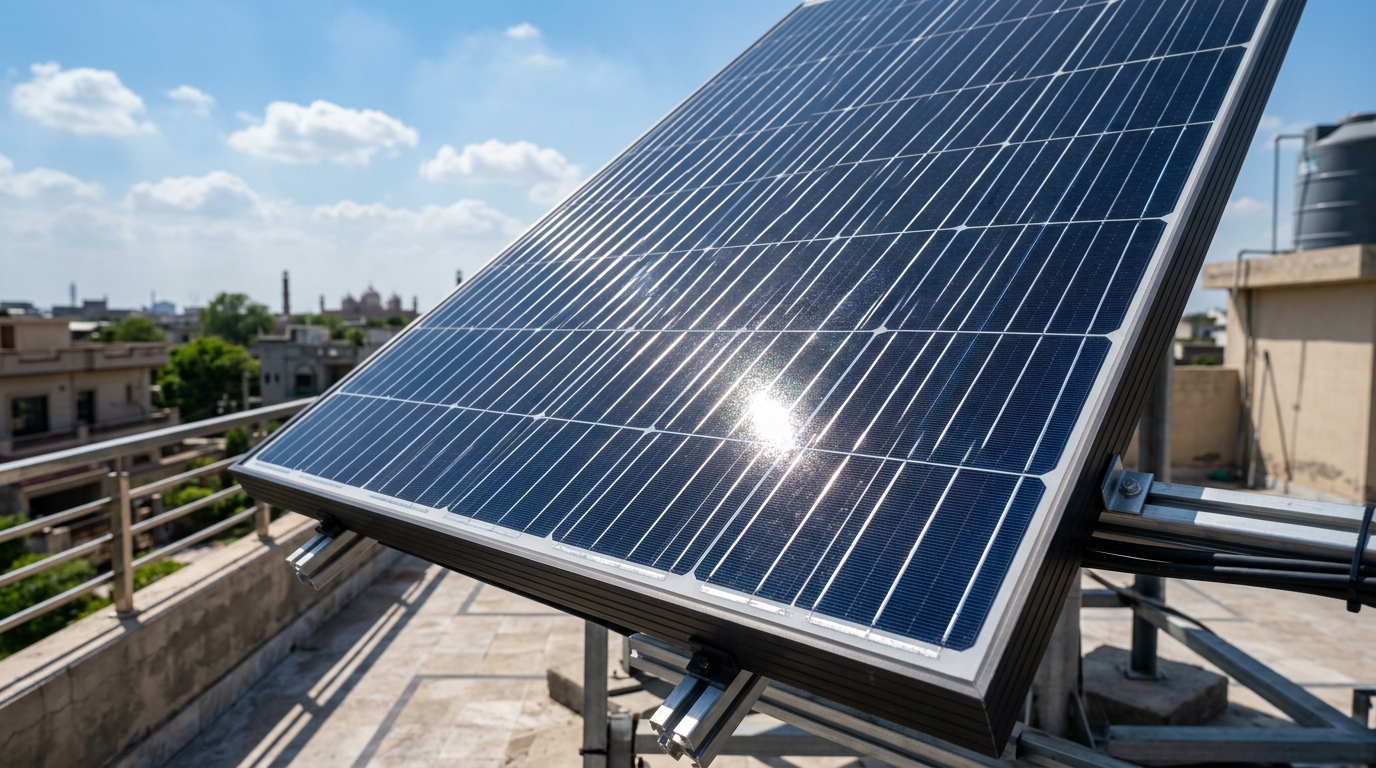
Executive Summary: The Pakistani solar market is experiencing a massive technological shift. For over five years, P-Type Mono PERC (Passivated Emitter and Rear Cell) panels dominated residential and commercial rooftop installations across Lahore, Karachi, Islamabad, and Multan. However, with the rapid commercialization of N-Type TOPCon (Tunnel Oxide Passivated Contact) and HJT (Heterojunction) technologies, consumers and solar installers face a critical decision. In climates where summer rooftop temperatures exceed 65°C, does the higher upfront cost of TOPCon translate into higher return on investment (ROI)? This rigorous 2026 engineering manual provides real-world generation comparisons, temperature coefficient degradation metrics, bifacial albedo gains, and price-per-watt economics tailored for Pakistan.
Table of Contents (Jump to Section)
- 1. What is the Fundamental Difference Between N-Type TOPCon and P-Type Mono PERC?
- 2. High Heat Performance: Temperature Coefficient Breakdown
- 3. Bifaciality Factor & Rear-Side Albedo Reflection Gains
- 4. Degradation Rates & 30-Year Warranty Economics
- 5. Price-per-Watt in Pakistan (2026 Market Analysis)
- 6. Tier-1 Flash Test Reports, DISCO Compliance & Maintenance Protocols
- 7. Frequently Asked Questions (FAQ)
1. What is the Fundamental Difference Between N-Type TOPCon and P-Type Mono PERC?
- P-Type Mono PERC (Boron-Doped Silicon): The silicon base wafer is doped with Boron atoms, creating positive electron holes. A passivated dielectric layer on the rear surface reflects unabsorbed light back into the cell for a second absorption chance. However, boron atoms react with oxygen impurities under sunlight, causing Light-Induced Degradation (LID) during the first 48 hours of operation.
- N-Type TOPCon (Phosphorus-Doped Silicon): The silicon wafer is doped with Phosphorus, introducing surplus free electrons. TOPCon integrates an ultra-thin 1.5-nanometer Tunnel Oxide layer capped with doped polycrystalline silicon. This tunnel oxide allows electrons to pass with near-zero electrical resistance while completely blocking electron-hole recombination losses. Furthermore, because phosphorus contains zero boron, TOPCon suffers 0.00% Boron-Oxygen Light-Induced Degradation.
2. High Heat Performance: Temperature Coefficient Breakdown
The Temperature Coefficient of Maximum Power (Pmax) determines how many fractions of a percent of power output are lost for every single degree Celsius above 25°C:
| Panel Technology | Pmax Temperature Coefficient | Efficiency Loss at 65°C Cell Temp (+40°C delta) | Actual Summer Power from 580W Panel |
|---|---|---|---|
| P-Type Mono PERC | -0.35% / °C to -0.38% / °C | -14.0% to -15.2% Power Loss | ~492 Watts (-88W loss) |
| N-Type TOPCon | -0.30% / °C to -0.29% / °C | -11.6% to -12.0% Power Loss | ~513 Watts (-67W loss) |
| Net TOPCon Advantage | +0.06% / °C superior heat stability | +2.5% to +3.2% more power in summer | +21 Watts more per panel every hour |
3. Bifaciality Factor & Rear-Side Albedo Reflection Gains
The Bifaciality Coefficient represents the efficiency of the rear surface compared to the front:
- P-Type Mono PERC Bifaciality: 70% ± 5%. The rear generates a maximum of 70% of front-face power.
- N-Type TOPCon Bifaciality: 80% to 85% ± 5%. TOPCon's symmetrical cell structure allows the rear side to convert reflected ambient light into nearly 85% of front-rated wattage!
4. Degradation Rates & 30-Year Warranty Economics
| Warranty & Lifetime Parameter | P-Type Mono PERC | N-Type TOPCon |
|---|---|---|
| Year 1 Degradation (LID + LeTID) | 2.0% to 2.5% loss | ≤ 1.0% loss |
| Annual Degradation (Years 2 to 30) | 0.55% per year | 0.40% per year |
| Guaranteed Output at Year 25 | 84.8% of original capacity | 89.4% of original capacity |
| Guaranteed Output at Year 30 | Not covered (25-year limit standard) | 87.4% output guaranteed (30 Years) |
| Product Materials Warranty | 12 Years | 15 to 25 Years (Dual Glass) |
5. Price-per-Watt in Pakistan (2026 Market Analysis)
On a 10 kW system (approx. 10,000 Watts), choosing TOPCon represents an additional upfront expenditure of only Rs. 25,000 to Rs. 35,000. Because TOPCon generates approximately 850 to 1,200 additional electricity units over its lifetime compared to Mono PERC, the entire price difference is fully recovered within 6 to 8 months of summer net metering.
6. Tier-1 Flash Test Reports, DISCO Compliance & Maintenance Protocols
When procuring TOPCon or Mono PERC modules across Pakistan's wholesale renewable hubs—including Lahore Hall Road, Rawalpindi College Road, and Karachi Regal Chowk—consumers must exercise extreme diligence to avoid counterfeit modules, factory grade-B surplus, or relabeled seconds. Tier-1 global manufacturers (such as Jinko Solar, Longi, Canadian Solar, Trina, and JA Solar) provide verifiable digital flash test reports paired to every individual panel's laser-engraved barcode.
Before releasing milestone payments to your solar engineering and installation contractor, demand full transparency across the following parameters:
- Individual STC Flash Test Curve: Verifies that the panel's actual factory-tested peak wattage meets or exceeds its nameplate label with positive power tolerance (+0 to +5 Watts). A 585W TOPCon module should flash at 586W to 589W under laboratory STC conditions.
- Electroluminescence (EL) Crack Inspection: High-resolution optical EL scans detect internal microscopic silicon fractures, severed silver busbars, or soldering bridge defects sustained during trans-oceanic freight from China or road transport along the Indus Highway.
- DISCO Net Metering Equipment Vetting: All Pakistani power distribution utilities—including MEPCO, LESCO, IESCO, FESCO, GEPCO, PESCO, and K-Electric—strictly enforce NEPRA's certified equipment whitelist. Ensure your EPC submits certified manufacturer datasheets and IEC 61215 / IEC 61730 international certifications along with the initial Form-1 net metering application.
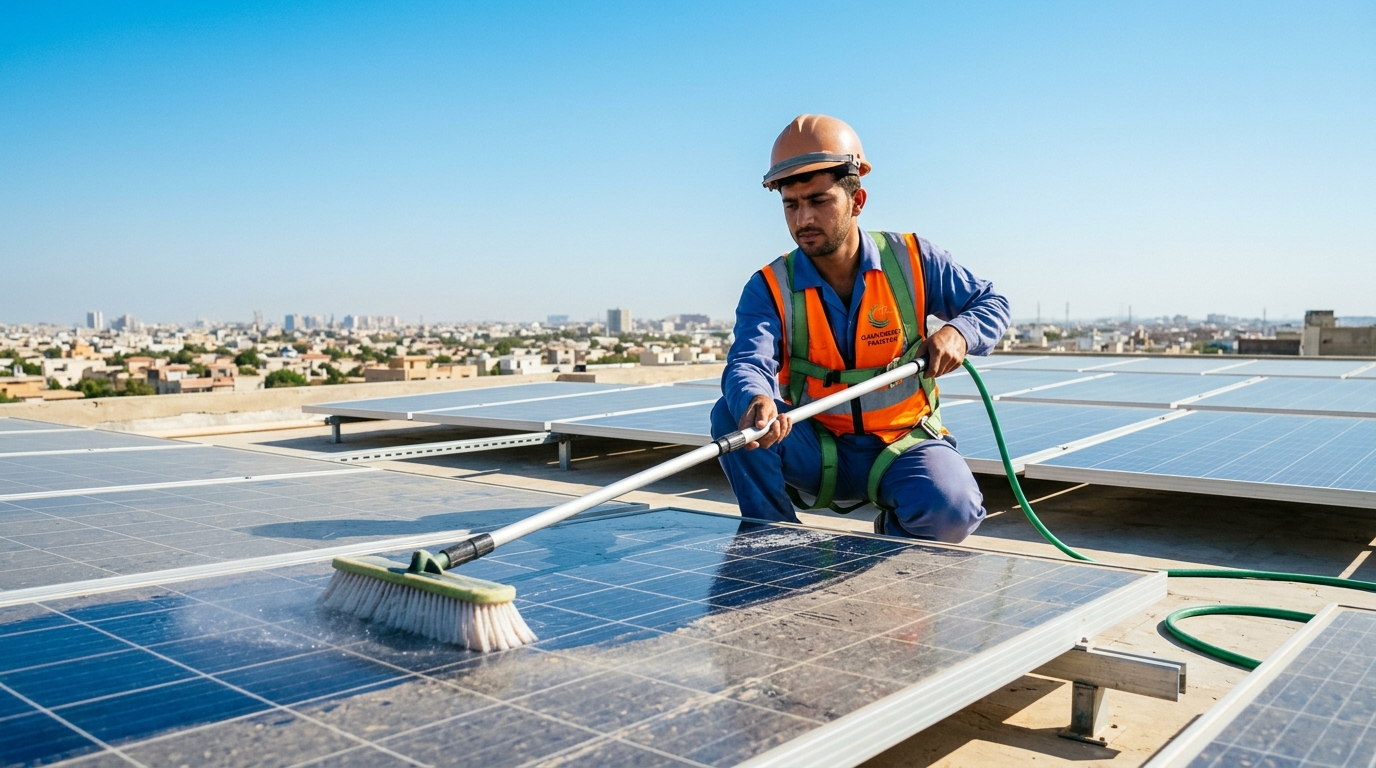
- Dust Soiling & Monsoon Washing Cycle: In central Punjab and Sindh where dust and seasonal smog reduce photon penetration by 12% to 22%, clean panels every 10 to 14 days early in the morning before 8:00 AM using demineralized water and soft micro-fiber squeegees. Never wash hot glass at noon to avoid catastrophic thermal glass fracture.
By securing genuine Tier-1 modules backed by manufacturer warranty certificates and following systematic solar hygiene routines, your TOPCon solar array will consistently deliver maximum kilowatt-hour generation across its full 30-year operational lifecycle.
7. Frequently Asked Questions (FAQ)
Q1: Can I mix TOPCon panels and Mono PERC panels in the same solar string?
No. Never mix TOPCon and Mono PERC panels on the same MPPT string. TOPCon modules typically operate at slightly higher voltage (Vmp) and lower current (Imp). Mixing causes severe current mismatch losses, dragging the entire string down to the lowest performing panel.
Q2: How do I visually identify a genuine TOPCon panel?
Check the back-sheet barcode label and flash test report for the cell technology designation "N-Type TOPCon". Visually, TOPCon cells feature ultra-thin 16BB (16 busbars) or rectangular 210R wafers with uniform deep navy/black color and zero visible rear aluminum paste patterns.
Q3: Is HJT (Heterojunction) better than TOPCon?
HJT offers an even better temperature coefficient (-0.26%/°C), but it currently costs 25% to 30% more in Pakistan. TOPCon represents the optimal sweet spot between maximum efficiency and affordable market pricing.
Need to check or calculate your current utility bill?
Verify your electricity duplicate bill with instant photo-reading verification or calculate slab costs accurately.