Servo Motor Voltage Stabilizer vs Digital Relay Stabilizer for Refrigerator & AC in Pakistan 2026 | BillsOnlinePk
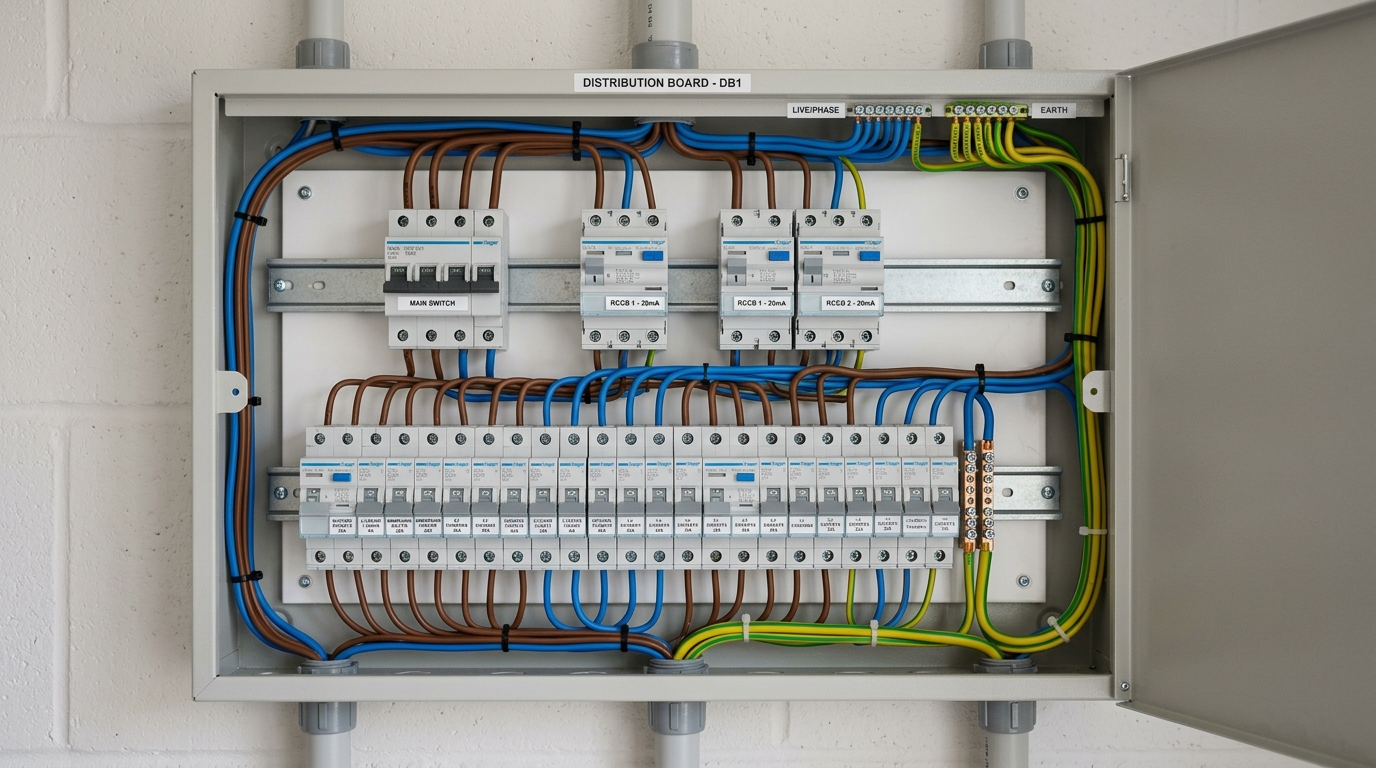
Executive Summary: In thousands of residential neighborhoods across Pakistan—especially tail-end areas of rural feeders, congested inner-city bazaars in Lahore and Rawalpindi, and industrial peripheries in Karachi and Gujranwala—the utility electricity grid delivers notoriously unstable voltage. During hot summer afternoons when thousands of air conditioners strain the local distribution transformer, mains grid voltage frequently plunges from nominal 230V down to a catastrophic 130V to 160V. Conversely, during sudden midnight load shedding cut-overs, voltage can spike dangerously to 270V - 290V. These violent fluctuations destroy expensive inverter air conditioner PCB motherboards, burn out refrigerator compressors, and trip electronic appliances. To survive, Pakistani homeowners turn to voltage stabilizers. But which technology is superior: a traditional Digital Relay Stabilizer or a precision Servo Motor Stabilizer? Does modern "Inverter Low Voltage Operation (down to 150V)" eliminate the need for stabilizers entirely? This 2026 engineering manual provides exact transformer loss metrics, response speed comparisons, sizing formulas, and real-world appliance protection strategies.
Table of Contents (Jump to Section)
- 1. Engineering Architecture: Relay-Switched Autotransformer vs Servo-Driven Variac
- 2. Technical Parameter Face-Off: Relay vs Servo Motor Comparison
- 3. Do Modern Inverter Air Conditioners Really Need a Stabilizer?
- 4. Sizing Matrix: How to Size KVA Ratings for Refrigerator and 1.5 Ton AC
- 5. The Mandatory 3-Minute Delay Timer: Why Skipping It Destroys Compressors
- 6. Internal Copper Losses: How Much Electricity Does a Stabilizer Waste?
- 7. Frequently Asked Questions (FAQ)
1. Engineering Architecture: Relay-Switched Autotransformer vs Servo-Driven Variac
To choose the correct stabilizer, we must analyze how each technology regulates erratic alternating current:
- Digital Relay Voltage Stabilizers (Step-Switching Autotransformer): Relay stabilizers feature an iron-core autotransformer with multiple discrete voltage taps (e.g. 140V, 170V, 200V, 230V, 260V) connected to electromagnetic relays. An electronic comparator IC senses incoming line voltage. When voltage drops, the circuit de-energizes one relay and snaps another shut to switch transformer taps. This creates stepped, discontinuous voltage jumps of 15V to 25V, accompanied by an audible clicking sound. While cheap and lightweight, every relay transition causes a momentary micro-second voltage notch (sparking contact arc) that stresses sensitive inverter electronics.
- Servo Motor Voltage Stabilizers (Continuously Variable Toroidal Variac): A servo stabilizer uses a heavy circular toroidal transformer (variac) wound with high-conductivity copper wire. A high-torque DC servo motor, governed by a closed-loop microcontroller, drives a carbon roller brush smoothly across the polished copper winding tracks. When utility voltage drifts by even 1 Volt, the servo motor physically rotates the brush to maintain output voltage locked at precisely 220V ± 1% with a completely smooth, continuous sine wave. There are zero voltage steps, zero contact arcing, and zero harmonic distortion.
2. Technical Parameter Face-Off: Relay vs Servo Motor Comparison
Here is an empirical engineering comparison of the two stabilization technologies:
| Performance Parameter | Digital Relay Voltage Stabilizer | Servo Motor Voltage Stabilizer | Impact on Domestic Appliances |
|---|---|---|---|
| Output Voltage Precision | ± 8% to ± 10% (Wide fluctuation: 200V to 240V) | ± 1% (Ultra-precise: 218V to 222V) | Servo provides perfectly stable power for sensitive medical and inverter gear |
| Correction Speed | Instantaneous step (~15 to 25 milliseconds) | Continuous sweep (30V to 50V per second) | Relay reacts faster to sudden jumps; Servo provides smoother tracking |
| Waveform Continuity | Discontinuous stepped voltage cuts during switching | 100% Pure Continuous Smooth Sine Wave | Eliminates electrical switching noise that damages inverter PCB microchips |
| Low Voltage Boosting Capability | Typically operates down to 140V (Special models: 110V) | Robust operation down to 120V or 90V with deep autotransformer | Essential for rural agricultural feeders suffering extreme sags |
| Internal Power Consumption | 15W - 25W idle autotransformer losses | 25W - 45W (toroidal core + servo drive circuit) | Servo consumes slightly more idle electricity per month |
| Equipment Purchase Price in Pakistan | Rs. 6,500 - Rs. 12,000 (Affordable) | Rs. 18,000 - Rs. 35,000 (Premium investment) | Relay is budget-friendly; Servo is heavy-duty industrial grade |
3. Do Modern Inverter Air Conditioners Really Need a Stabilizer?
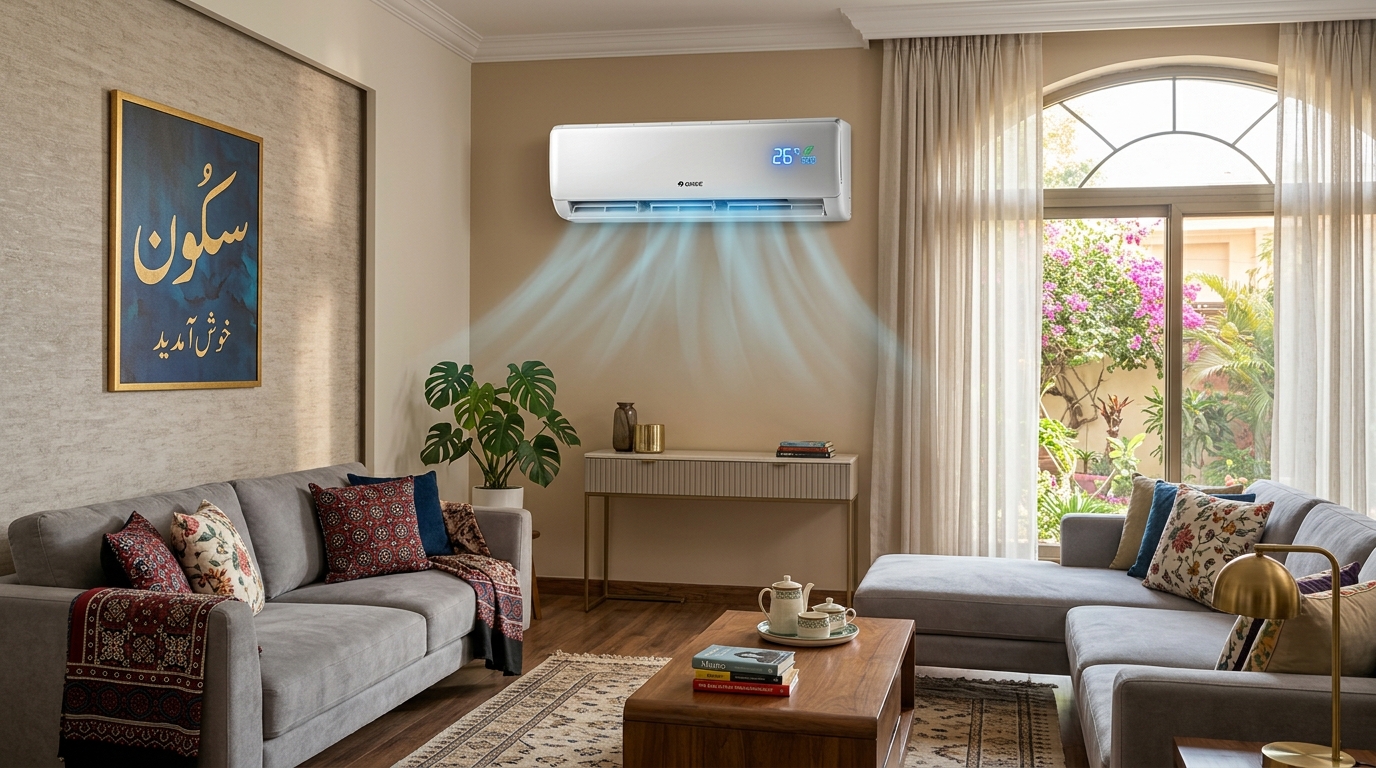
A widespread marketing claim by AC manufacturers (Haier, Dawlance, Gree, Kenwood, Pel) is: "Our Inverter AC operates without stabilizer from 150V to 260V." While technically accurate under controlled laboratory conditions, relying on this claim in extreme Pakistani climates carries severe risks:
- The Amperage Multiplier Law: Electrical power equals Voltage multiplied by Current (P = V x I). If your 1.5-ton inverter air conditioner compressor requires 1,800 Watts to cool a room on a 45°C afternoon:
- At healthy 230V grid supply, the outdoor unit draws 7.8 Amperes.
- When voltage collapses to 150V, the internal electronic boost converter must pull 12.0 Amperes to deliver that same 1,800 Watts!
- Overheating PCB Inverter Modules (IPM): Drawing 12 Amps through the outdoor PCB creates massive resistive heating (I²R losses) in the bridge rectifiers and Intelligent Power Modules (IPM). During intense summer heatwaves, this thermal stress causes premature solder degradation, thermal throttling (AC compressor slows down and stops cooling), and expensive PCB blowouts costing Rs. 20,000 to Rs. 35,000 to replace!
- Verdict: If your neighborhood voltage routinely drops below 180V in summer, installing a dedicated stabilizer or whole-house servo regulator is essential insurance to protect your multi-thousand-dollar inverter AC hardware.
4. Sizing Matrix: How to Size KVA Ratings for Refrigerator and 1.5 Ton AC
Sizing a voltage stabilizer requires accounting for compressor inductive inrush startup surges:
| Appliance Type | Continuous Running Load | Startup Inrush Surge Factor | Recommended Stabilizer Capacity |
|---|---|---|---|
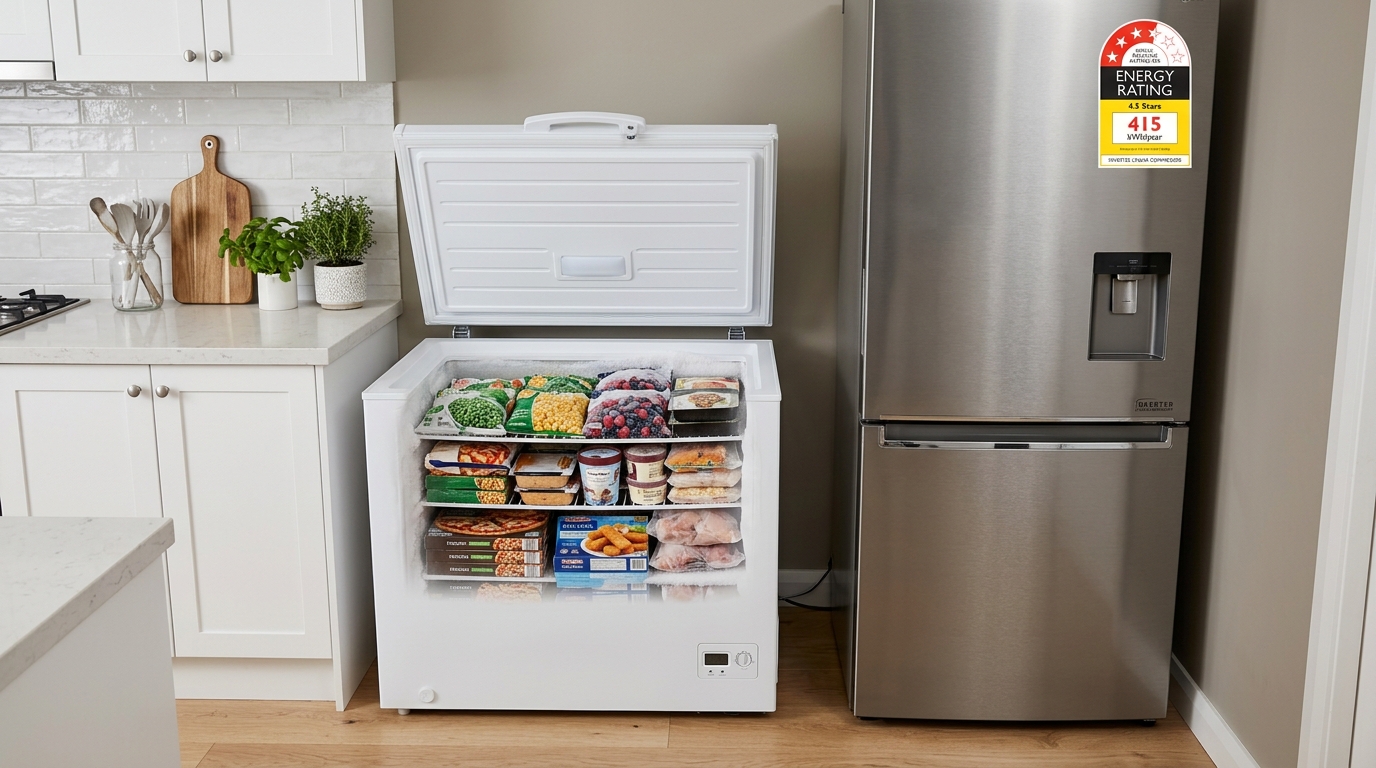
| Standard Non-Inverter Refrigerator (14 cu ft) | 180W - 220W | 5x to 7x inductive spike (~1,200W) | 1,500 VA (1.5 kVA) with 3-minute delay |
| BLDC Inverter Refrigerator (14 cu ft) | 60W - 100W | Near-zero surge (soft-start) | 1,000 VA (1.0 kVA) or Digital Protector |
| 1.0 Ton Inverter Air Conditioner | 900W - 1,200W | Controlled ramp-up (~1,400W peak) | 3,000 VA (3.0 kVA) wide-range stabilizer |
| 1.5 Ton Inverter Air Conditioner | 1,400W - 1,900W | Controlled ramp-up (~2,200W peak) | 4,000 VA to 5,000 VA (4kVA - 5kVA) |
| Whole-House Central Protection (Single-Phase) | 5,000W - 8,000W total load | Diversified simultaneous appliances | 10 kVA to 15 kVA Servo Stabilizer |

5. The Mandatory 3-Minute Delay Timer: Why Skipping It Destroys Compressors
The single most vital feature on any refrigeration or AC voltage stabilizer is the Automatic Time Delay Relay (3-Minute Timer):
- Refrigerant Equalization Physics: When a compressor motor is running, refrigerant gas is compressed to high pressure (250 to 350 PSI) on the discharge side, while the suction side operates at low pressure (60 to 120 PSI). If utility power flickers off and returns within 5 seconds, high residual head pressure remains trapped against the compressor piston.
- Locked-Rotor Current Burnout: If voltage is reapplied instantly, the electric motor lacks sufficient starting torque to turn against this high head pressure. The motor enters a "Locked-Rotor" state, drawing massive short-circuit amperage (over 30 Amps). Within 10 to 15 seconds, motor winding insulation melts, destroying the compressor permanently.
- The 3-Minute Rule: The delay timer withholds power output for 180 seconds after grid restoration, allowing high-pressure gas to equalize through the capillary expansion tube. When the compressor finally restarts, it starts against zero pressure head with complete mechanical safety.
6. Internal Copper Losses: How Much Electricity Does a Stabilizer Waste?
A stabilizer is not an energy generator; it is an electromagnetic transformer that dissipates power continuously:
- Continuous Parasitic Power Consumption: A standard 4kVA to 5kVA air conditioner stabilizer consumes between 20 Watts and 40 Watts of continuous idle power purely as core magnetization and coil resistance heating (I²R losses). Running 24 hours a day, a stabilizer consumes approximately 15 to 25 electricity units (kWh) per month (costing Rs. 850 to Rs. 1,450 monthly).
- Copper vs Aluminum Winding Efficiency: Always choose stabilizers wound with 100% pure electrolytic copper wire rather than cheaper aluminum windings. Copper features substantially lower electrical resistance, runs 15°C cooler, and cuts monthly transformer electricity waste by over 40%.
7. Whole-House Central Servo Stabilizer Installation: 10kVA to 20kVA Sizing
Rather than cluttering every room with individual small stabilizers for each refrigerator and air conditioner, upscale residences across Lahore DHA, Islamabad Bahria Town, and Karachi Clifton increasingly deploy central whole-house Servo Motor Voltage Regulators installed directly alongside the main utility meter.
A central 15kVA or 20kVA single-phase servo stabilizer regulates the entire incoming electrical supply of the house, delivering clean 220V power to every single light, fan, socket, and compressor simultaneously. When designing a central stabilizer installation, always wire a heavy-duty industrial 63A 4-pole manual bypass changeover switch. This allows the stabilizer to be isolated for routine carbon roller brush servicing or maintenance without cutting power to the house.
7. Frequently Asked Questions (FAQ)
Which stabilizer is better for an inverter AC: servo motor or relay?
A Servo Motor Stabilizer is vastly superior because it provides a smooth, continuous sine wave with ±1% voltage accuracy without the damaging spark arcs and voltage steps of relay switchers.
Does an inverter AC really need a voltage stabilizer in Pakistan?
If your neighborhood grid voltage regularly drops below 180V or spikes above 260V during summer, a stabilizer is essential. Low voltage forces the AC inverter PCB to draw excessive current, causing overheating and costly PCB failures.
How many KVA stabilizer do I need for a 1.5 ton inverter AC?
A 1.5-ton inverter air conditioner requires at least a 4kVA (4,000 VA) or 5kVA (5,000 VA) stabilizer with a wide input voltage range (e.g. 130V to 260V) and an automatic 3-minute time delay.
Why is the 3-minute delay timer so important on a refrigerator stabilizer?
The 3-minute delay allows high-pressure refrigerant gas to equalize after a power flicker. Without the delay, the compressor motor attempts to start against high head pressure, causing locked-rotor overload and motor winding burnout.
Need to check or calculate your current utility bill?
Verify your electricity duplicate bill with instant photo-reading verification or calculate slab costs accurately.