Net Billing Has Been Enabled: Pakistan’s solar energy landscape has entered a new phase with the introduction of Net Billing, replacing the traditional net metering model for many new applicants. Consumers who generate electricity through solar panels can now apply online through the newly launched digital system, making the process significantly easier and more transparent.
Net Billing Has Been Enabled
The government and electricity distribution companies have shifted applications to online platforms, allowing users to register, upload documents, and track progress without visiting offices repeatedly. According to recent announcements, distribution companies have moved new applications to dedicated online portals where registration numbers and application receipts are generated automatically after submission. Net Billing Has Been Enabled
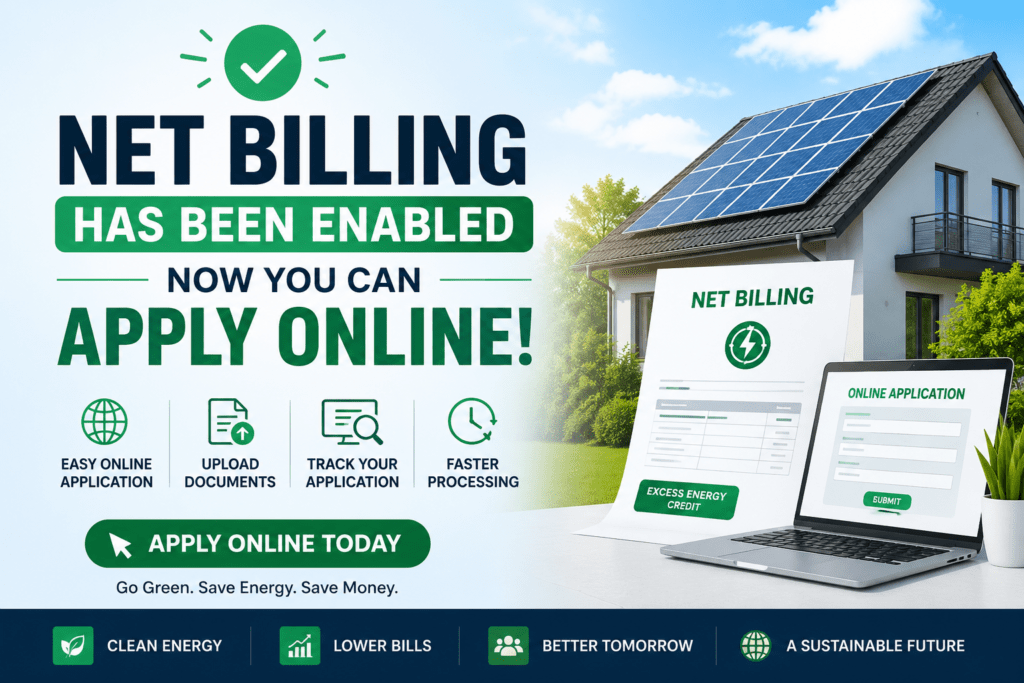
The transition represents a major modernization effort. Instead of relying on paper-based applications and lengthy office visits, consumers can now handle most administrative tasks digitally. This change aligns with Pakistan’s broader push toward digital public services and renewable energy adoption. For homeowners investing in solar systems, the ability to apply online saves time and provides greater visibility into the approval process. It also creates a centralized system for managing applications across various distribution companies including LESCO, FESCO, IESCO, GEPCO, MEPCO, PESCO, HESCO, SEPCO, QESCO, and TESCO.
What Is Net Billing?
Net Billing is a billing mechanism under which electricity exported from a consumer’s solar system to the national grid is compensated at a specified monetary rate rather than being exchanged unit-for-unit against imported electricity. Under this model, consumers purchase electricity from the grid at standard retail rates while receiving separate compensation for excess electricity exported to the network. This differs fundamentally from the previous arrangement where exported units could directly offset imported units. Net Billing Has Been Enabled
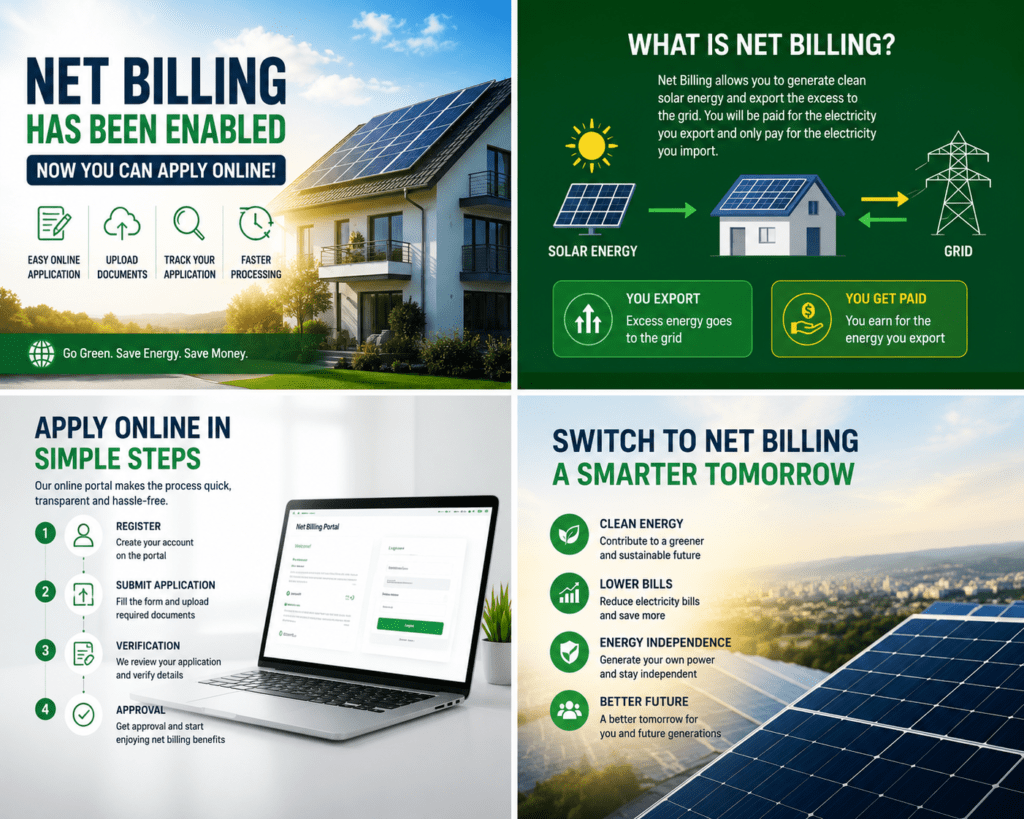
Think of it like selling fruit to a market instead of swapping fruit for groceries. Under net metering, you could exchange your produce directly. Under net billing, you sell the fruit at a set price and then buy groceries separately. The electricity grid now functions in a similar way. Your solar system becomes a small power producer, and the electricity you export is purchased at a designated rate. Net Billing Has Been Enabled
How Net Billing Differs from Net Metering
The biggest difference between Net Billing and Net Metering lies in how exported electricity is valued. Under the previous system, a unit exported to the grid could effectively offset a unit consumed later. Under the new framework, exported electricity receives a fixed payment while imported electricity continues to be billed according to regular tariffs. Recent policy updates indicate that exported electricity under the new framework may receive compensation around Rs11 per unit, whereas imported electricity is charged according to standard consumer tariff structures. Net Billing Has Been Enabled
| Feature | Net Metering | Net Billing |
|---|---|---|
| Unit Adjustment | One-to-one offset | Separate buying and selling |
| Export Compensation | Equal to retail value | Fixed monetary rate |
| Consumer Bill | Reduced through offsetting | Separate import/export calculations |
| New Applications | Largely replaced | Current system |
| Online Application | Limited previously | Fully supported |
This distinction significantly affects financial planning for new solar installations. Consumers now need to carefully calculate expected exports and imports when evaluating project payback periods.
Why Pakistan Introduced Net Billing
Pakistan’s energy sector has undergone substantial changes due to rapid growth in rooftop solar installations. Policymakers faced challenges balancing renewable energy incentives with grid management requirements and utility financial sustainability. The introduction of net billing emerged as part of broader regulatory reforms intended to address these concerns. NEPRA’s updated regulations replaced the previous framework with a new prosumer model designed to modernize energy transactions between consumers and the grid. Net Billing Has Been Enabled
The growing number of solar installations demonstrated public enthusiasm for renewable energy. Households increasingly sought independence from rising electricity costs, and businesses viewed solar power as a strategic investment. As adoption accelerated, regulators needed a framework capable of accommodating higher volumes of distributed generation while maintaining operational stability. Net billing became the chosen mechanism to achieve this balance.
Changes in NEPRA Regulations
The regulatory changes introduced by NEPRA significantly reshaped the economics of rooftop solar. Applications submitted before specified cutoff dates were allowed to proceed under earlier rules, while new applicants became subject to the updated framework. Government announcements emphasized that previously submitted applications would continue to be processed according to the regulations in effect at the time of submission. Net Billing Has Been Enabled
These regulatory updates also introduced new compliance requirements, standardized application procedures, and clearer oversight mechanisms. The result is a more structured environment where both consumers and distribution companies operate under a consistent set of expectations.
Impact on Solar Energy Consumers
For consumers, the impact varies depending on energy consumption patterns. Households that primarily consume their own solar generation during daylight hours may still realize substantial savings. The economics become different for consumers whose systems generate large surpluses intended for export. Because exported electricity is compensated separately from imported electricity, system sizing now requires more strategic planning. Net Billing Has Been Enabled
Despite these changes, solar energy remains attractive for many users. Electricity prices continue to encourage investment in self-generation, and technological improvements have made solar systems increasingly efficient. The new framework simply shifts attention toward maximizing self-consumption rather than maximizing exports. Net Billing Has Been Enabled
Online Net Billing Application Process
One of the most significant improvements is the launch of the online application system. Consumers can now access dedicated portals designed specifically for net billing applications. The online platform enables registration, document uploads, application tracking, and communication with relevant authorities. This digital transformation eliminates much of the paperwork that previously slowed processing times.
The online system also improves transparency. Applicants receive tracking references and can monitor application status throughout the approval journey. Instead of wondering whether paperwork has been misplaced, users can log in and review progress directly.
Official Online Portal
The primary online platform for many Pakistani distribution companies is the PITC Net Billing Portal.
Official Portal:
PITC Net Billing Portal
The portal supports multiple DISCOs and provides dedicated sections for both consumers and installers. Users can create accounts, submit applications, and access guidelines relevant to their distribution company.
Eligibility Requirements
Applicants generally need an eligible electricity connection and a compliant distributed generation system. Requirements may vary slightly among distribution companies, but applicants typically must be registered consumers with valid account information. Solar installations must also comply with technical standards and approved equipment specifications. Net Billing Has Been Enabled
The eligibility review helps ensure grid safety and technical compatibility. Distribution companies evaluate system capacity, network conditions, and compliance documentation before granting approval. Net Billing Has Been Enabled
Required Documents
Personal Documents
Applicants commonly need:
- CNIC copy
- Latest electricity bill
- Ownership or occupancy documentation
- Contact information
- Email address and mobile number
These documents verify identity and establish a connection between the applicant and the property receiving service.
Technical Documents
Technical documentation often includes:
- Inverter specifications
- Vendor certifications
- Equipment datasheets
- Installer approvals
- Load flow studies for larger systems
These requirements ensure that installed systems meet safety and performance standards established by regulators and utilities.
Step-by-Step Guide to Apply Online
Applying online is straightforward when approached systematically. The process begins with creating an account and gathering all required documents before starting the application. Having everything ready in advance can significantly reduce delays and minimize the risk of rejection due to incomplete submissions.
Registration Process
The first step involves visiting the official portal and creating a user account. Applicants enter personal information, verify contact details, and establish login credentials. Once registered, they gain access to application forms and portal services. The platform is designed to accommodate both individual consumers and authorized installers.
Account registration serves as the foundation for all future interactions with the system. Every application, update, and approval notice is tied to the user’s account profile.
Application Submission
After registration, applicants complete digital forms and upload supporting documents. Accuracy is crucial at this stage. Small errors in consumer numbers, addresses, or technical specifications can lead to delays. The portal typically validates information before allowing final submission, helping reduce mistakes.
Once submitted, the system generates an acknowledgment and tracking reference. This reference becomes the applicant’s primary tool for monitoring progress.
Verification and Approval
Following submission, utility personnel review the application and supporting documentation. Technical evaluations may include equipment verification, network impact assessments, and compliance checks. Additional information may be requested if documents are incomplete or inconsistent. After successful verification, approval procedures continue toward meter installation and operational authorization.
The duration varies depending on application complexity, workload, and regional conditions. Applicants should regularly monitor portal updates and respond promptly to requests for clarification.
Benefits of Applying Through the Online Portal
The online system offers advantages that extend beyond convenience. Digital processing improves efficiency, transparency, and accountability. Applicants gain greater control over their submissions while utilities benefit from standardized workflows and reduced paperwork.
Faster Processing
Online submissions eliminate many manual handling steps. Documents are uploaded directly, reducing the need for physical transportation and repeated office visits. Automated tracking and digital workflows allow staff to process applications more efficiently. This can shorten turnaround times and improve overall service quality.
Consumers benefit because they spend less time navigating administrative procedures and more time focusing on system installation and energy management.
Application Tracking
One of the most appreciated features is real-time tracking. Applicants can log into the portal and check progress whenever they wish. Instead of making phone calls or visiting offices, status information becomes available online. This visibility reduces uncertainty and helps users anticipate next steps.
Transparency also promotes accountability because each stage of the process is documented within the system.
Costs and Financial Considerations
Every solar investment should be evaluated carefully from a financial perspective. Net billing changes revenue expectations compared with earlier frameworks, making accurate calculations more important than ever. Consumers should consider installation costs, financing expenses, export compensation rates, and anticipated electricity consumption patterns.
Export Energy Rates
Current reports indicate that exported electricity under the new net billing framework may receive compensation around Rs11 per unit, though regulatory updates and utility-specific implementation details should always be verified before making investment decisions. Imported electricity continues to be billed at prevailing consumer tariffs.
This pricing structure encourages maximizing direct self-consumption. Electricity used immediately within the property often delivers greater economic value than electricity exported to the grid.
Expected Return on Investment
Return on investment depends on multiple factors, including system size, installation quality, local solar irradiation, electricity consumption habits, and financing costs. Households with high daytime electricity use may continue to achieve attractive payback periods because they directly offset expensive grid consumption. Consumers should work with qualified installers to develop realistic financial projections tailored to their circumstances.
A well-designed system remains a long-term asset capable of generating savings for many years.
Common Challenges and Solutions
Like any regulatory process, net billing applications can encounter obstacles. Understanding common issues in advance helps applicants avoid delays and improve approval chances.
Application Rejections
Rejections frequently result from incomplete documentation, inconsistent information, or missing technical certifications. Double-checking every document before submission can prevent many problems. Applicants should ensure that names, addresses, and consumer account details match across all records.
Professional installers often assist with document preparation, reducing the likelihood of administrative errors.
Technical Compliance Issues
Technical compliance represents another common challenge. Equipment must satisfy utility requirements and regulatory standards. Inverters, protection systems, and installation practices must align with approved specifications. Choosing experienced vendors with proper certifications can significantly improve application success rates.
Compliance should never be viewed as a bureaucratic obstacle. These standards protect both consumers and the broader electricity network.
Future of Net Billing in Pakistan
Pakistan’s renewable energy sector continues to evolve rapidly. The transition to net billing reflects broader efforts to modernize energy markets and integrate distributed generation more effectively. As technology advances and solar adoption expands, additional refinements to policies and procedures may emerge. Digital application platforms are likely to become even more sophisticated, offering enhanced user experiences and faster processing capabilities.
The future will probably involve greater integration of smart meters, advanced monitoring systems, and data-driven energy management tools. Consumers who embrace these developments can position themselves to benefit from ongoing innovation in the energy sector. While policy frameworks may continue evolving, the long-term trend toward renewable energy remains strong.
Conclusion
Net Billing has officially opened a new chapter for solar energy consumers in Pakistan. The ability to apply online simplifies the process dramatically, making it easier than ever for eligible consumers to participate in distributed energy generation. Through dedicated digital portals, applicants can register, upload documents, monitor progress, and interact with utilities more efficiently than under traditional paper-based systems.
Although the financial structure differs from the earlier net metering framework, solar energy remains an important investment for households and businesses seeking greater energy independence. Success under the new model depends on careful planning, proper system sizing, compliance with technical requirements, and a clear understanding of export compensation mechanisms. By leveraging the online application system and staying informed about regulatory developments, consumers can navigate the transition confidently and make informed energy decisions for the future.
FAQs
1. Can I apply for Net Billing completely online?
Yes. Eligible consumers can submit applications, upload documents, and track progress through the official online portal.
2. Is Net Metering still available for new applicants?
Recent regulations have largely shifted new applicants toward the Net Billing framework instead of traditional Net Metering.
3. What documents are required for Net Billing applications?
Common requirements include CNIC copies, electricity bills, inverter specifications, vendor certifications, and related technical documentation.
4. How do I track my application status?
After submission, the online portal provides a tracking reference that allows applicants to monitor progress digitally.
5. Is solar still worthwhile under Net Billing?
For many consumers, yes. Systems designed to maximize self-consumption can continue to generate substantial savings despite changes in export compensation rates.