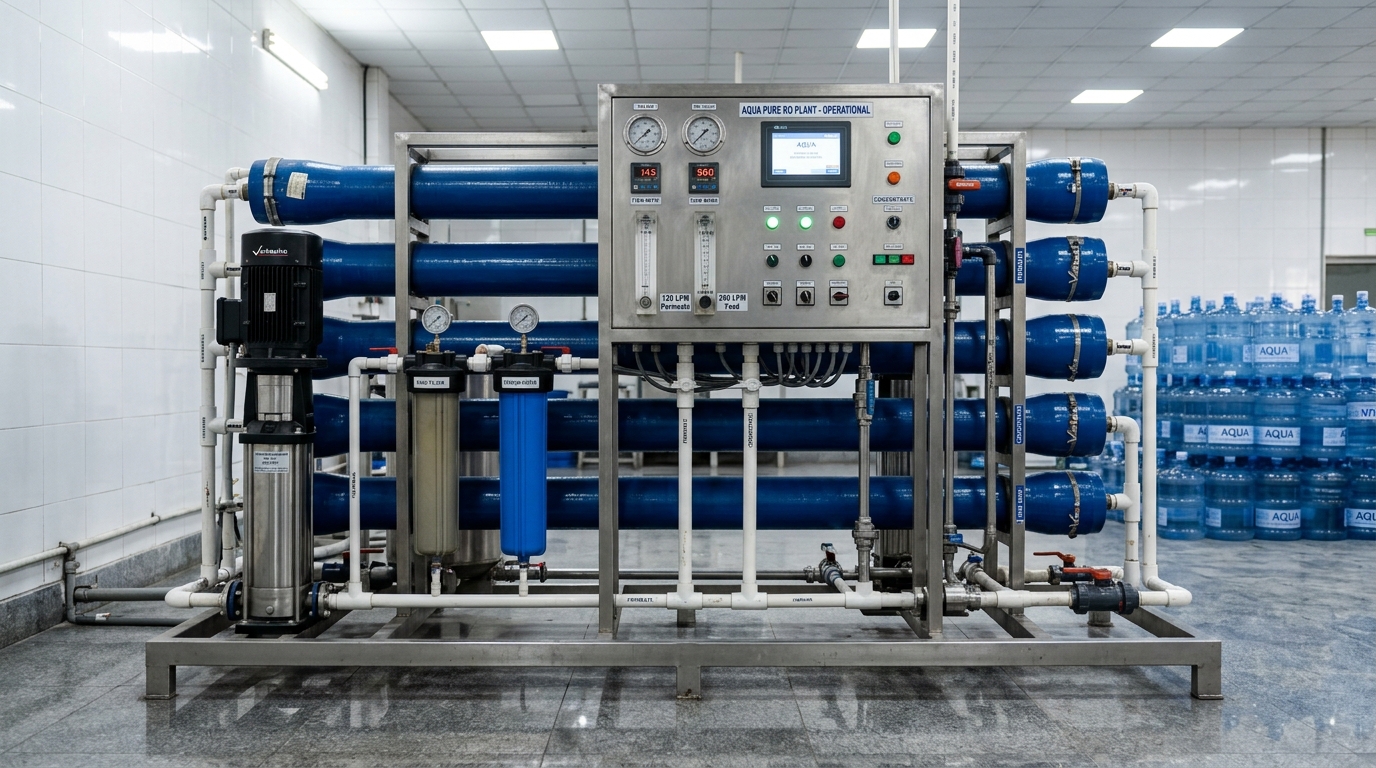
1. The Drinking Water Quality Crisis in Pakistan: The Massive Growth of Reverse Osmosis
Access to pure, pathogen-free drinking water has become one of the most pressing public health challenges in modern Pakistan. Groundwater aquifers across major metropolitan centers—including Lahore, Faisalabad, Karachi, Rawalpindi, Multan, and Hyderabad—suffer from severe chemical and biological contamination. Industrial effluent seepage, crumbling municipal sewerage lines cross-contaminating drinking water pipes, agricultural pesticide runoff, and dangerous concentrations of heavy metals (such as arsenic, fluoride, and lead) have rendered municipal tap water unfit for direct human consumption. Furthermore, Total Dissolved Solids (TDS) in subsoil water regularly measure between 800 ppm and over 3,000 ppm, far exceeding the World Health Organization (WHO) maximum recommended drinking limit of 300 to 500 ppm.
In response, Pakistani society has adopted Reverse Osmosis (RO) Membrane Filtration on an unprecedented scale. From compact multi-stage under-sink 75 Gallons Per Day (GPD) RO units installed in residential kitchens to large-scale commercial 500 GPD to 2,000 GPD community filtration plants operating in commercial markets, mosques, residential housing societies, and private water bottling businesses, RO technology has become indispensable. Unlike simple passive gravity filters or hollow-fiber ultrafiltration (UF), Reverse Osmosis relies on semi-permeable polyamide thin-film composite (TFC) membranes with microscopic pore sizes of 0.0001 microns—small enough to reject 99 percent of dissolved mineral salts, bacteria, viruses, and toxic chemicals.
However, forcing water molecules through microscopic membrane pores against natural osmotic pressure requires substantial hydraulic pressure generated by continuous electric pumps. In an era of record-high electricity tariffs, understanding the exact power consumption of RO plants is critical for both domestic homeowners and commercial operators. In this comprehensive technical guide, BillsOnlinePk calculates the exact electricity unit usage, pump duty cycles, wastewater ratios, and solar integration economics for RO water purification in Pakistan.
Technical Principle: Reverse Osmosis requires hydraulic pressure exceeding the natural osmotic pressure of the feed water ($P_{ ext{osmotic}} approx 0.01 ext{ psi per ppm of TDS}$). Purifying brackish water with 2,000 ppm TDS requires at least 80 to 120 PSI of sustained pump pressure, necessitating high-draw electric diaphragm or multi-stage centrifugal pumps.
2. Domestic Under-Sink 75 GPD / 100 GPD RO System Electrical Breakdown (Pump, UV, Valves)
A standard 5-stage or 6-stage domestic under-sink RO water purifier consists of several coordinated electrical components:
- 24V / 36V DC Diaphragm Booster Pump: The primary power-consuming component. Operating on 24V or 36V direct current delivered by a switched-mode power supply (SMPS adapter), the pump generates 80 to 100 PSI of hydraulic pressure across the membrane. Continuous power draw during active water filtration ranges between 28 Watts and 38 Watts.
- Electronic Inlet Solenoid Valve (24V DC): Draws approximately 4.5 Watts to hold the valve open while filtering, shutting off immediately when the tank is full to prevent unpressurized water leakage.
- Ultraviolet (UV) Sterilization Chamber: An 11-Watt or 16-Watt low-pressure mercury vapor UV lamp that irradiates bacteria and viruses. Continuous power draw is approximately 12 Watts to 18 Watts (including electronic ballast losses).
- Automatic Flush Solenoid Valve: Activates for 18 seconds at startup to blast high-velocity water across the membrane surface, clearing accumulated scale; power draw is negligible (5W for 18 seconds).
- SMPS Power Adapter Standby Loss: When the pressurized storage tank is full and the high-pressure switch shuts off the pump, the wall adapter draws approximately 1.5 Watts of continuous standby power.
| Operating State | Active Electrical Components | Total Instantaneous Power (Watts) | Average Daily Runtime (Family of 6) | Daily Energy (kWh) |
|---|---|---|---|---|
| Active Filtration Mode (Purifying 30 Liters/Day) | Booster Pump (32W) + Solenoid Valve (4.5W) + UV Lamp (14W) | 50.5 Watts | 2.5 Hours Daily | 0.126 kWh |
| Standby Mode (Tank Full & Idle) | SMPS Wall Adapter Idle + Low-Voltage Logic Circuit | 1.5 Watts | 21.5 Hours Daily | 0.032 kWh |
| Total Daily Domestic Consumption | - | - | 24 Hours | 0.158 kWh / Day |
| Total Monthly Domestic Units (30 Days) | - | - | - | 4.75 kWh / Month! |
Verdict for Homeowners: A domestic under-sink RO plant is extraordinarily energy-efficient! Consuming less than 5 units of electricity per month (costing approximately PKR 280 to PKR 320 monthly under residential tariffs), an RO system costs far less to run than boiling water on an electric kettle or continuous LPG stove.
3. Commercial 500 GPD to 2,000 GPD Community RO Plant High-Pressure Power Dynamics
While domestic units consume negligible power, commercial water filtration plants deployed across commercial shops, factories, housing colonies, and commercial water refilling stations operate on an entirely different scale:
A typical commercial 1,000 GPD (Gallons Per Day, producing approx. 3,800 liters of pure water daily) or 2,000 GPD RO plant incorporates heavy three-phase or heavy single-phase electrical machinery:
- Raw Water Feed Pump (0.75 kW / 1.0 HP): Draws water from an underground storage reservoir and pushes it through preliminary dual media filters (sand and activated carbon vessels). Operating power draw = 850 Watts to 1,100 Watts.
- Vertical Multi-Stage High-Pressure Stainless Steel Pump (1.5 kW to 2.2 kW / 2 to 3 HP): High-pressure vertical multistage centrifugal pumps (such as CNP, Grundfos, or Leo) generating 150 to 220 PSI across heavy-duty 4040 industrial membranes. Operating power draw = 1,800 Watts to 2,500 Watts.
- High-Intensity Commercial UV Disinfection System: Rated at 40 Watts to 55 Watts.
- Ozone Generator (for commercial bottling): Draws 60 Watts to 120 Watts to inject ozone gas for shelf-life preservation.
| Commercial RO Plant Capacity | Combined Pump & Auxiliary Motor Rating | Actual Running Power Draw (kW) | Daily Operational Run (10 Hours) | Monthly Electricity Units (30 Days) |
|---|---|---|---|---|
| 500 GPD Commercial Plant (1,900 Liters/Day) | 1.0 HP Raw + 1.5 HP High-Pressure Pump | 2.10 kW | 21.0 kWh / Day | 630 kWh / Month |
| 1,000 GPD Commercial Plant (3,800 Liters/Day) | 1.0 HP Raw + 2.0 HP High-Pressure Pump | 2.85 kW | 28.5 kWh / Day | 855 kWh / Month |
| 2,000 GPD Commercial Plant (7,600 Liters/Day) | 1.5 HP Raw + 3.0 HP High-Pressure Pump | 4.10 kW | 41.0 kWh / Day | 1,230 kWh / Month |
4. Membrane Recovery Ratio & Power: Permeate Clean Water vs Reject Wastewater Economics
In Reverse Osmosis engineering, the Recovery Ratio ($Y$) represents the percentage of feed water that passes through the membrane as pure clean product (permeate) versus water discarded as concentrated brine (reject):
$$ ext{Recovery Ratio } (Y) = left( rac{ ext{Permeate Flow Rate } Q_p}{ ext{Feed Flow Rate } Q_f} ight) imes 100%$$
In Pakistan, domestic under-sink RO units typically operate at a recovery ratio of 25% to 30% (meaning for every 1 liter of pure drinking water produced, approximately 2.5 to 3 liters of wastewater are discharged). Commercial plants engineered with brine recirculation loops achieve recovery ratios of 50% to 65%.
Why does recovery ratio directly impact electricity bills? If an RO plant is improperly calibrated and operates at a poor recovery ratio of only 20%, the pumps must run five times longer and pump 5,000 liters of feed water to harvest 1,000 liters of pure water, consuming 2.5 times more electricity per pure liter!
5. Mathematical Formulas: Calculating Daily & Monthly Electricity Units under Domestic & Commercial Tariffs
Let us calculate the authentic commercial electricity expenses for a community water filtration plant in Lahore operating under MEPCO/LESCO Commercial Tariff A-2:

- Plant Specifications: 1,000 GPD commercial RO plant. Total electrical running draw = 2.85 kW.
- Operating Hours: 10 hours daily (operating outside the expensive 5:00 PM to 11:00 PM peak window).
- Daily Electricity Units:
$$ ext{Daily kWh} = 2.85 ext{ kW} imes 10 ext{ Hours} = mathbf{28.5 ext{ kWh (Units) per day}}$$ - Monthly Electricity Units (30 Days):
$$ ext{Monthly kWh} = 28.5 imes 30 = mathbf{855 ext{ kWh (Units) per month}}$$ - Commercial A-2 Tariff Expense: Under 2026 Commercial Tariff A-2 (assumed all-inclusive rate of PKR 72.00 per unit):
$$ ext{Monthly Electricity Bill} = 855 ext{ Units} imes 72 ext{ PKR} = mathbf{PKR 61,560.00 ext{ per month!}}$$ - Electricity Cost Per 19-Liter Water Bottle (Cane): Producing 3,800 liters daily yields 200 standard 19-liter commercial water bottles per day (6,000 bottles per month).
$$ ext{Electricity Cost Per Bottle} = rac{ ext{PKR } 61,560}{6,000 ext{ Bottles}} = mathbf{PKR 10.26 ext{ per 19-liter bottle!}}$$
6. Mitigating Operating Costs: Pre-Filtration Sediment Defense & Solar System Integration
Commercial RO plant operators can slash their massive electricity bills by implementing two high-impact engineering optimizations:
- High-Efficiency Pre-Filtration: In Pakistani groundwater, fine suspended silt, clay, and iron oxidize rapidly, clogging membrane pores within months. As membranes clog (scaling and bio-fouling), hydraulic resistance increases, forcing high-pressure pumps to work against extreme backpressure, increasing electrical power draw by up to 25 percent. Installing automated backwashing sand-carbon media vessels and replacing 5-micron PP sediment pre-filters monthly maintains baseline pump operating pressures and cuts wasted kilowatt-hours.
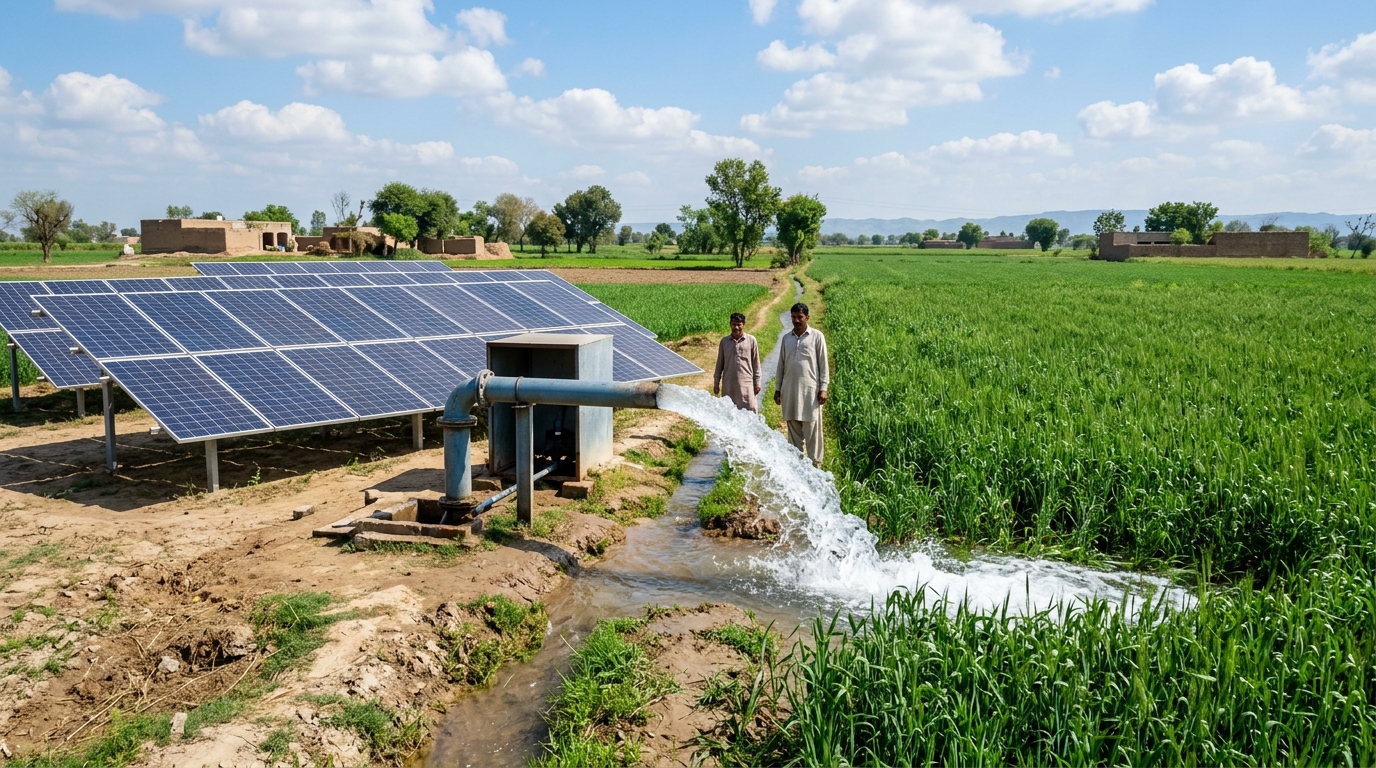
- Solar Photovoltaic Grid-Tied Pairing: Because commercial RO plants operate primarily during daylight hours (9:00 AM to 5:00 PM), they represent the ideal daytime load for On-Grid Solar Net-Metering Systems. Installing a 5 kW or 10 kW rooftop solar array on the filtration building completely covers the plant’s daytime electrical draw, reducing commercial grid electricity bills from PKR 60,000+ down to near zero, with a full capital payback period of less than 14 months!
7. Raw Water Quality Impact: How High TDS Increases Booster Pump Runtime & Electrical Stress
The electrical energy consumed by any RO system is directly proportional to the Total Dissolved Solids (TDS) of the input raw water:

| Raw Water TDS Level | Required Hydraulic Pressure | Recommended Membrane Type | Pump Runtime to Produce 100L | Relative Electrical Cost |
|---|---|---|---|---|
| Low TDS (< 400 ppm, e.g. Islamabad/Peshawar) | 60 - 75 PSI | Ultra-Low Energy (XLE / ULP) | 3.2 Hours | Baseline (Lowest Cost) |
| Moderate TDS (600 - 1,200 ppm, e.g. Lahore/Faisalabad) | 85 - 110 PSI | Standard High-Rejection Polyamide | 4.0 Hours | + 25% Energy Consumption |
| High Brackish TDS (1,800 - 3,500 ppm, e.g. Multan/Karachi) | 140 - 190 PSI | Brackish Water High-Pressure (BW-30) | 5.5 Hours | + 72% Energy Consumption! |
In high-TDS regions, operating with standard low-pressure membranes results in sluggish water flow, forcing pumps to run 70 percent longer to fill storage tanks. Upgrading to specialized high-flux brackish water membranes restores rapid flow and dramatically reduces motor operational hours.
8. Operational Best Practices & Preventative Maintenance Protocol for Pakistani Plants
To preserve maximum energy efficiency and extend pump motor lifespan across Pakistani water filtration facilities, execute the following operational protocol:
- Never Run Pumps During Peak Hours: In commercial plants, strictly avoid running 2.2 kW high-pressure pumps during evening peak hours (5:00 PM to 11:00 PM). Schedule water production between 8:00 AM and 4:30 PM to avoid punitive commercial peak-hour surcharges.
- Quarterly Chemical Cleaning (CIP - Clean-In-Place): When feed pressure increases by 15 percent or permeate production drops by 10 percent, perform an acid/alkaline CIP flush using specialized citric acid and EDTA solutions to dissolve carbonate scale and organic slime, restoring original low-energy membrane permeability.
- Inspect Motor Starting Capacitors: On single-phase high-pressure pumps, weakening electrolytic run capacitors (dropping from 45uF to 25uF) cause excessive motor winding heating, increasing current draw by 20 to 30 percent. Test motor running amperes with a clamp meter every quarter.