billsonlinepk.com

Bijli Bill — Check Electricity Bills Online Pakistan
ALL 11 DISCOS · FREE · NO LOGIN NEEDED

Check Electricity Bills Online Pakistan

Instantly check duplicate electricity bills for MEPCO, LESCO, FESCO, IESCO, GEPCO, HESCO, PESCO, QESCO, SEPCO, TESCO, HAZECO, and K-Electric (KE). View, download, and print your bill using your reference number or customer ID.

MEPCOLESCOFESCOIESCOGEPCO HESCOPESCOQESCOSEPCOTESCO HAZECOK-ELECTRIC
Official billing data
100% free
📱 Mobile friendly
🔒 No account required
Check Your Bill Now
Select your distribution company to begin
Distribution Company
Reference Number
Printed on top of your physical bill 0 / 14 digits entered
Please enter a valid reference number to continue.

Opens your DISCO's official PITC bill portal in a new tab.

                                                                                                MEPCO Service Coverage: A Detailed Overview

The Multan Electric Power Company, widely known by its acronym MEPCO, stands as the largest electricity distribution company (DISCO) in Pakistan in terms of geographical coverage. Headquartered in the city of Multan, MEPCO supplies electricity to thirteen administrative districts across South Punjab, a region that includes Multan, Bahawalpur, Bahawalnagar, Rahim Yar Khan, Dera Ghazi Khan, Rajanpur, Muzaffargarh, Layyah, Vehari, Khanewal, Sahiwal, Pakpattan, and Lodhran. Multan itself serves not only as the company’s administrative headquarters but also as the commercial and logistical hub of the entire South Punjab region.

Historical Background

MEPCO’s roots trace back to 1922, when it operated under British colonial rule as the Multan Power Supply Company. Following independence, the company underwent nationalization in 1972 and came under the direct control of the Government of Pakistan. Interestingly, the company was once publicly listed on the Karachi Stock Exchange, though it was delisted in 1985. The modern incarnation of MEPCO came into existence on 14 May 1998, when the Government of Pakistan initiated the corporatization of the national energy sector. As part of this restructuring, MEPCO was established to take over all properties, rights, assets, obligations, and liabilities of the former Multan Area Electricity Board, along with its grid stations and transmission infrastructure.

Scale and Reach

Today, MEPCO serves somewhere between 7 and 7.5 million registered consumers, with the broader population benefiting from its services estimated at around 34 to 35 million people. In terms of sheer geography, MEPCO’s operational territory spans approximately 97,358 square kilometers, making it the single largest distribution company in the country by area covered. This vast territory is far larger than that of most other DISCOs operating in Pakistan, which is a direct consequence of South Punjab’s expansive and largely rural landscape.

To manage a network of this scale, MEPCO has organized its operations into a hierarchical structure consisting of 9 operational circles, 38 divisions, and 181 subdivisions. Each circle oversees a cluster of divisions, and each division in turn manages several subdivisions, allowing the company to maintain localized oversight of grid stations, feeders, and consumer services across such a wide and diverse territory. This layered administrative model helps MEPCO handle everything from routine maintenance to fault reporting and new connection requests at a manageable, localized level.

Infrastructure

MEPCO’s physical infrastructure reflects the scale of its coverage area. The company operates more than 150 grid stations, with a combined transformation capacity of roughly 7,500 MVA (megavolt-amperes). Its transmission and distribution network extends across tens of thousands of kilometers of lines — estimates place the figure between 66,000 and 82,000 kilometers depending on the source and year of measurement — supported by over 2,000 feeders that carry electricity from grid stations to the doorsteps of consumers. This extensive network is a continual work in progress, with MEPCO periodically adding new grid stations, transformers, and feeders to reduce voltage drops, tripping complaints, and unplanned outages, particularly in high-demand agricultural belts.

A Unique Geographic Position

One of the most distinctive aspects of MEPCO’s service territory is that it is the only Pakistani DISCO whose boundaries touch three different provinces and border five other distribution companies. Near Sadiqabad, MEPCO’s territory meets HESCO, which serves Sindh province. Close to Vahova, it borders PESCO, the distribution company for Khyber Pakhtunkhwa. Near Fort Munro, MEPCO’s territory touches QESCO’s jurisdiction in Balochistan. It also shares boundaries with FESCO near Bhakkar and with LESCO near Sahiwal. Adding to this geographic significance, MEPCO’s territory in the Minchinabad area of Bahawalnagar district actually extends to the international border with India. This combination of provincial and international boundary contact is unmatched by any other DISCO in the country.

Consumer Profile

Because MEPCO’s coverage area is predominantly rural and agricultural in character, its consumer base skews heavily toward domestic and lifeline (low-consumption) users, along with a substantial number of agricultural tube-well connections. Unlike more urbanized DISCOs such as LESCO or IESCO, which serve dense city populations with a higher proportion of commercial and industrial connections, MEPCO’s network must accommodate scattered rural feeders spread across vast farmland, which presents unique challenges in terms of line losses, maintenance costs, and outage management. The company categorizes its consumers into four broad groups — domestic, commercial, industrial, and agricultural — each billed according to tariff structures set by the National Electric Power Regulatory Authority (NEPRA).

Consumer Services

To make life easier for its millions of consumers, MEPCO has invested in a range of digital and remote-access services. These include online bill checking through the official PITC (Power Information Technology Company) portal, duplicate bill downloads, SMS-based bill inquiries, and an online complaint registration system. Complaints related to billing errors, low voltage, tripping, or unscheduled load shedding can be tracked through the Customer Complaint Management System (CCMS), which is shared across multiple DISCOs including MEPCO. The company also supports net metering for consumers who have installed solar panels, allowing surplus electricity generated at home to be fed back into the grid in exchange for billing credits — a service that has grown increasingly popular given Pakistan’s rising interest in renewable energy and rising conventional electricity costs.

Conclusion

In summary, MEPCO occupies a singular position within Pakistan’s power distribution landscape. It is not only the largest DISCO by geographical area but also one of the most administratively complex, given its nine circles, dozens of divisions, and nearly two hundred subdivisions spread across thirteen districts of South Punjab. Its unique position bordering three provinces and one foreign country, combined with a predominantly rural and agricultural consumer base, sets it apart from the more urban-focused distribution companies elsewhere in the country. For millions of residents across South Punjab, MEPCO is not just a utility provider but a critical piece of infrastructure underpinning agriculture, industry, and daily life across one of Pakistan’s largest and most populous regions.

             All Discos

                                                MEPCO-LESCO-FESCO IESCO-GEPCO-HESCO
PESCO-QESCO-SEPCO
TESCO-HAZECO
K-Electric.

                                                                                                     Trust & Transparency
                                                                                   Clear, honest, and easy to understand

                                           We give you access to the same official bill data used by millions of consumers, while making it clear who manages your electricity account (your DISCO) and who operates this website (us).


    Official Bill Information
Every duplicate bill is fetched from the official centralized billing platform. We never generate or alter bill amounts, tariff calculations, or due dates—only the official data is shown for your reference.

Simple Access, No Hassle
Forget passwords and paid subscriptions. With your printed reference number, you can retrieve your bill in just a few seconds from any internet connection.

Learn While You Check
Helpful guides on FPAs, tariff slabs, and payment processes are available alongside the bill checker, making it easier to understand your bill—not just view it.

Yahan MEPCO ke peak hours ki general table hai. Note: yeh timings season ke hisab se thori vary ho sakti hain, aur exact timing sirf official MEPCO/NEPRA notification ya aapke TOU meter tariff se confirm honi chahiye.

SeasonPeak HoursOff-Peak Hours
Summer (June–August)6:00 PM – 10:00 PM (kahin kahin 7 PM – 11 PM bhi report hui hai)Raat 11 PM se subah tak
Winter (December–February)5:00 PM – 9:00 PMDin/raat ke baqi hours
General/All-week6 PM – 10 PM (sabse zyada quoted window)Baaki poora din

Extra points jo useful hain:

  • Yeh peak hours har din (Monday se Sunday tak, including holidays) apply hoti hain.
  • Peak hours mein per-unit rate off-peak se kaafi zyada hota hai (kuch sources ke mutabiq roughly double).
  • Yeh schedule sirf TOU (Time of Use) ya TOD meter walon ke liye directly relevant hai — agar aapka simple meter hai to slab-based tariff apply hoga, peak/off-peak nahi.

Chunke yeh sab third-party/blog sources se hai (official MEPCO announcement nahi mila mujhe search mein), best hoga ke aap apna exact bill ya MEPCO ka official portal/customer service (118 helpline) check kar lein confirm timing ke liye.

MEPCO Net Metering Policy & Net Billing (2026 Update)

A complete guide for MEPCO (Multan Electric Power Company) solar consumers on the new NEPRA regulations, eligibility, application process, and rates.


What Changed in 2026?

On February 9, 2026, NEPRA officially notified the Prosumer Regulations 2026, replacing the older Net Metering Regulations 2015. This introduced a new Net Billing mechanism for new solar applicants, while existing net metering consumers retain their old terms until contract expiry.

Aspect Old System (Net Metering 2015) New System (Net Billing 2026)
Billing Mechanism 1:1 unit-for-unit exchange Two separate rates for import & export
Export (Sell) Rate Same as retail purchase rate (~Rs. 22–27/unit) National Average Energy Purchase Price (NAEPP) — approx. Rs. 10–11/unit
Import (Buy) Rate Standard MEPCO tariff Standard MEPCO tariff (Rs. 45–60/unit depending on slab)
Settlement Adjusted monthly against bill Surplus units settled/paid quarterly
Contract Duration Long-term (up to 7 years under later revisions) Capped at 5 years, renewable for another 5-year term
Applicability Existing contracts largely protected/honoured till expiry Applies to new applications only

Note: Following intervention at the federal level, NEPRA confirmed on February 16, 2026 that existing net metering agreements remain valid until their original expiry date and continue under the old unit-for-unit basis — only new connections fall under Net Billing.


Why the Policy Changed

  • Rooftop solar capacity in Pakistan crossed 6,000 MW, growing rapidly under the old 1:1 model.
  • DISCOs (including MEPCO) reported rising financial losses from buying back solar units at full retail rates.
  • Grid stability concerns emerged during peak solar generation hours.
  • NEPRA introduced Net Billing to make buyback rates reflect the actual average cost of power generation, rather than the retail tariff.

MEPCO Net Metering — Eligibility Criteria

Requirement Detail
Connection Type Residential, commercial, industrial, or agricultural (tube well) with active MEPCO connection
Phase Requirement Three-phase connection generally required
System Size Minimum 1 kW; must not exceed 1.5x sanctioned load
Sanctioned Load Must be equal to or greater than solar system capacity
Dues All previous MEPCO electricity dues must be cleared
Metering Hardware NEPRA/PEPCO-approved bi-directional (smart) meter
Installer AEDB-certified solar installer recommended/required
Safety Standard Inverter must have anti-islanding protection (UL 1741 / IEC 62116)

Rate Comparison (Approximate, 2026)

Item Old Net Metering New Net Billing
Buy-back (export) rate Rs. 22–27 / unit Rs. 10–11 / unit
Purchase (import) rate Rs. 37–55 / unit (slab-based) Rs. 45–60 / unit (slab-based)
Net Effect Oversized systems remained financially attractive Oversizing is less beneficial — best to size system close to actual consumption

Rates vary by consumer category and slab; always confirm current tariff via MEPCO or NEPRA’s official notification.


MEPCO Net Metering Application Process

  1. Submit Application — Apply through MEPCO’s online portal or your local sub-division office with CNIC, electricity bill, and property documents.
  2. Technical Feasibility Study — MEPCO reviews sanctioned load, wiring, and grid capacity.
  3. Demand Notice & Payment — Pay applicable fee for the bi-directional meter and connection charges.
  4. Solar System Installation — Installed by an AEDB-certified installer as per NEPRA technical standards.
  5. Inspection — MEPCO inspects the installation for safety and compliance.
  6. NOC (No Objection Certificate) — Issued after Punjab Energy Department clearance confirming compliance with SRO 892(I)/2015 and related regulations.
  7. Power Purchase Agreement (PPA) — Signed between the consumer (now a “prosumer”) and MEPCO.
  8. Bi-Directional Meter Installation — Final step; meter starts recording imported vs exported units.

Common Issues Faced by MEPCO Net Metering Consumers

  • Application processing delays
  • Bi-directional meter installation backlog
  • Billing mismatches between imported/exported units
  • Confusion between old vs new contract terms after the 2026 policy shift

Quick FAQs

Is net metering with MEPCO legal? Yes — it is fully regulated by NEPRA, and MEPCO operates under NEPRA’s official framework.

Will my existing net metering agreement change? No — contracts signed under the 2015 regulations remain valid on their original 1:1 terms until expiry.

What is the minimum/maximum system size for MEPCO net metering? Minimum 1 kW; maximum limited by sanctioned load (MEPCO processes up to 1 MW under the NEPRA Generation Licence Exemption framework).

How is surplus electricity paid under Net Billing? On a quarterly basis, at the National Average Energy Purchase Price, rather than monthly bill adjustment.

Where can I apply or get more information? Through your nearest MEPCO sub-division office or the MEPCO online portal; helpline for general queries is available via MEPCO customer service.


Disclaimer: Rates, timelines, and procedures are subject to change per NEPRA notifications. Always verify current details with your local MEPCO office or NEPRA’s official website before making investment decisions.

MEPCO Electricity Bills: Complete Guide 2026

Everything MEPCO (Multan Electric Power Company) consumers need to know — tariff slabs, bill components, how to check and pay your bill, and tips to reduce your monthly cost.


About MEPCO

MEPCO (Multan Electric Power Company) is the electricity distribution company serving South Punjab, including Multan, Bahawalpur, Sahiwal, DG Khan, Vehari, Khanewal, Lodhran, Muzaffargarh, Layyah, Rajanpur, and Bahawalnagar. Electricity rates for MEPCO are set by NEPRA (National Electric Power Regulatory Authority) under the Government of Pakistan.


MEPCO Residential Tariff Slabs (2026)

Consumer CategoryMonthly UsageApprox. Rate per Unit
Protected ConsumerUp to 200 units/monthRs. 5 – 14 / unit
Non-Protected ConsumerAbove 200 units/monthRs. 23 – 68 / unit (slab-based)

Important: If a “Protected” consumer crosses 200 units even once in a billing month, MEPCO reclassifies the entire month’s consumption under Non-Protected slab rates — not just the extra units. This is one of the most common reasons for a suddenly high bill.

Commercial, industrial, and agricultural (tube well) consumers have separate tariff categories (e.g., A-1, B, C, E series) with their own minimum monthly charges — some categories carry a minimum bill even with zero consumption.


What’s Included in a MEPCO Bill

A typical MEPCO bill has around 9–11 line items:

ComponentDescription
Energy ChargesUnits consumed × applicable slab rate
Fixed/Customer ChargesFlat monthly charge, applies regardless of usage in some categories
FPA (Fuel Price Adjustment)Variable monthly charge reflecting fuel cost used for generation; can be positive or negative
QTA (Quarterly Tariff Adjustment)Periodic adjustment reviewed by NEPRA every quarter
GST17% General Sales Tax
Electricity Duty1.5%, collected by the provincial government
NJ SurchargeAdditional regulatory surcharge (~10%)
TV License Fee (PTV Fee)Fixed Rs. 35/month
Meter RentSmall fixed charge for meter maintenance
Arrears / Deferred AmountAny unpaid previous balance or postponed installment

How to Check Your MEPCO Bill Online

You’ll need either your 14-digit Reference Number or 10-digit Customer ID, both printed on any previous bill.

  1. Visit MEPCO’s online bill portal (or an authorized bill-checking service).
  2. Enter your Reference Number or Customer ID.
  3. View your bill amount, due date, consumer name, address, and consumption details.
  4. Download or print the PDF — it’s accepted as a legally valid duplicate copy.

Check via SMS (no internet needed): Send PITC <space> <14-digit reference number> to 8334. You’ll receive the bill amount and due date within seconds.

SMS reminders: Register the same way to get an automatic alert ~10 days before your due date.


How to Pay Your MEPCO Bill

MethodHow
Mobile Wallets (Easypaisa, JazzCash, NayaPay, SadaPay)Open app → Bill Payment → Electricity → MEPCO → enter reference number → confirm
Mobile/Internet Banking (HBL, UBL, MCB, Meezan, Allied, etc.)Log in → Bill Payments/Utility → select MEPCO → enter reference number → pay
ATMInsert card → Bill Payments → MEPCO → enter reference number → follow prompts
Bank Branch / Post OfficePresent original or duplicate bill at the counter and pay in cash

Tip: Always save your transaction ID/screenshot. If a payment shows “pending” for more than 24 hours, contact your bank with this reference for follow-up.


Due Date Extensions

  • Bill amount under Rs. 100,000 → can request a 3-day extension
  • Bill amount over Rs. 100,000 → can request a 5-day extension

Extensions are typically requested through your nearest MEPCO sub-divisional office.


Peak Hours & Their Effect on Your Bill

Bills are higher when consumption happens during peak hours (typically 6 PM–10 PM, shifting to 5 PM–9 PM in winter for TOU/TOD meter consumers). See our detailed [MEPCO Peak Hours guide] for the full seasonal breakdown and rate comparison.


Common Reasons for a High MEPCO Bill

  • Crossing 200 units and losing “Protected” status for the whole month
  • Running heavy appliances (AC, iron, water heater) during peak hours
  • FPA/QTA increases passed on by NEPRA that particular quarter
  • Meter reading errors or estimated (not actual) readings
  • Unpaid arrears carried forward from a previous bill

Tips to Reduce Your MEPCO Bill

  1. Track usage regularly and try to stay within the 200-unit protected slab if you’re close to the line.
  2. Shift heavy appliance use (AC, washing machine, iron) outside peak hours.
  3. Use energy-efficient LED bulbs and inverter appliances.
  4. Consider net metering/solar if usage is consistently high (see our MEPCO Net Metering guide).
  5. Check your bill every month for reading errors or incorrect slab classification.

Quick FAQs

What is the 200-unit rule? Residential consumers using 200 units or less per month qualify as “Protected” and get lower slab rates. Exceeding 200 units in any month shifts the entire month’s bill to Non-Protected rates.

What is FPA on my bill? Fuel Price Adjustment — a variable monthly charge based on the fuel cost of electricity generation that month, set by NEPRA.

Can I check my bill without the internet? Yes, via SMS: send PITC <reference number> to 8334.

How do I get a duplicate bill copy? Enter your 14-digit reference number on MEPCO’s online portal and download the PDF — it’s valid for official use.

Does MEPCO use the same tariff as other DISCOs (LESCO, FESCO, etc.)? Yes, residential tariff slabs are set nationally by NEPRA, so base rates are generally consistent across DISCOs, though local surcharges can vary slightly.


Disclaimer: Tariff rates, taxes, and charges are set and periodically revised by NEPRA and are subject to change. Figures in this guide are approximate and for informational purposes — always confirm exact rates and charges via your official MEPCO bill or NEPRA’s website.

MEPCO Electricity Bills — FAQs (2026)

Q1: What is the 200-unit “Protected Consumer” rule? Residential consumers who use 200 units or less in a month are classified as “Protected” and billed at lower, subsidized slab rates. If usage crosses 200 units even once, the entire month’s consumption is billed at the higher Non-Protected rates — not just the extra units.

Q2: Why is my MEPCO bill suddenly so high this month? Common reasons include: crossing the 200-unit threshold and losing Protected status, running heavy appliances (AC, iron, water heater) during peak hours, a NEPRA-approved FPA or quarterly tariff increase, an estimated (not actual) meter reading, or arrears carried over from a previous unpaid bill.

Q3: What is FPA on my MEPCO bill? FPA stands for Fuel Price Adjustment — a variable monthly charge that reflects the actual cost of fuel used to generate electricity that month. It’s set by NEPRA and can increase or decrease your bill depending on the energy mix.

Q4: What is QTA (Quarterly Tariff Adjustment)? QTA is a periodic adjustment NEPRA applies every quarter to account for changes in the overall cost of electricity generation and distribution across the country.

Q5: What taxes and surcharges appear on a MEPCO bill? Typically: 17% GST, 1.5% Electricity Duty, an NJ Surcharge (~10%), and a fixed Rs. 35 TV License (PTV) fee, in addition to energy charges, fixed/customer charges, FPA, and QTA.

Q6: How can I check my MEPCO bill online? Enter your 14-digit Reference Number or 10-digit Customer ID on MEPCO’s online bill portal to view your bill amount, due date, and consumption details, and download a PDF copy.

Q7: Can I check my bill without internet access? Yes. Send PITC <space> <your 14-digit reference number> as an SMS to 8334 to get your bill amount and due date instantly.

Q8: How do I get a duplicate copy of my MEPCO bill? Enter your reference number on the MEPCO online portal and download the PDF — it’s accepted as a legally valid duplicate, identical to the original printed bill.

Q9: What are the easiest ways to pay my MEPCO bill? Mobile wallets (Easypaisa, JazzCash, NayaPay, SadaPay), mobile/internet banking apps (HBL, UBL, MCB, Meezan, Allied, etc.), ATMs, or in person at any bank branch or post office.

Q10: Can I get an extension on my due date? Yes. Bills under Rs. 100,000 are generally eligible for a 3-day extension, and bills over Rs. 100,000 for a 5-day extension. Extensions are requested through your nearest MEPCO sub-divisional office.

Q11: Do peak hours affect my MEPCO bill? Yes. Electricity used during peak hours (typically 6 PM–10 PM, or 5 PM–9 PM in winter) is billed at a significantly higher rate for TOU/TOD meter consumers. Shifting heavy appliance use to off-peak hours can noticeably lower your bill.

Q12: Does MEPCO charge the same tariff as LESCO, FESCO, or other DISCOs? Residential tariff slabs are set nationally by NEPRA, so base rates are broadly the same across DISCOs, though small differences in local surcharges may apply.

Q13: What happens if I don’t pay my MEPCO bill on time? A late payment surcharge is added, and your unpaid amount carries forward as arrears on the next bill. Continued non-payment can eventually lead to disconnection.

Q14: How can I reduce my monthly MEPCO bill? Stay within the 200-unit protected slab where possible, avoid heavy appliance use during peak hours, switch to energy-efficient LED lighting and inverter appliances, check your bill monthly for errors, and consider net metering/solar if your usage is consistently high.

Q15: Who regulates MEPCO’s electricity rates? NEPRA (National Electric Power Regulatory Authority), under the Government of Pakistan, approves and revises all MEPCO tariff rates, slabs, and periodic adjustments.


Disclaimer: Rates, charges, and procedures mentioned above are subject to change per NEPRA notifications. Always verify current details via your official MEPCO bill or NEPRA’s website.

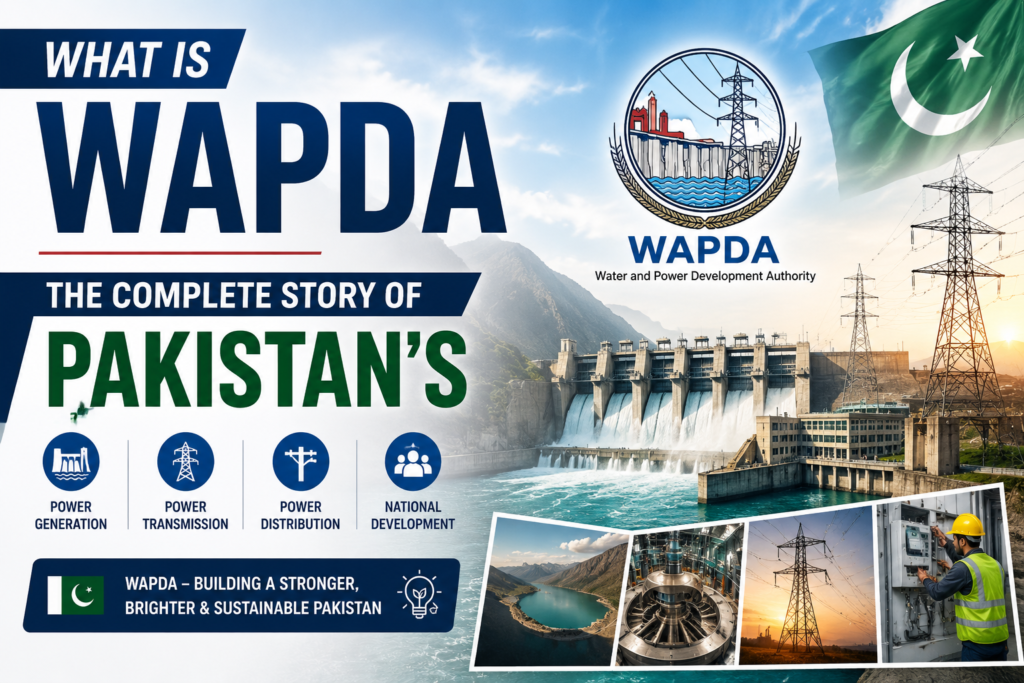
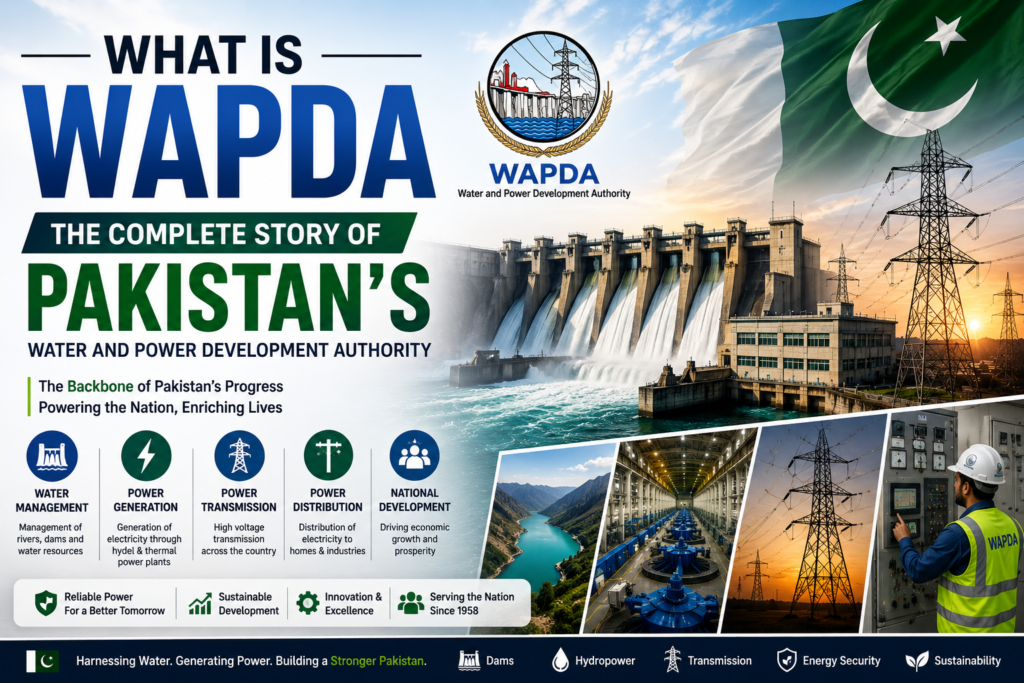
What Is WAPDA The Complete Story of Pakistan’s Largest Power and Water Authority

What Is WAPDA The Complete Story of Pakistan’s: If you live in Pakistan, chances are you’ve come across the name WAPDA at some point in your life — whether while reading an electricity bill, sitting through a load shedding outage, or hearing news about a new dam being built. But what exactly is WAPDA, how does it function, and why does it matter so much to the everyday lives of ordinary Pakistanis? This article breaks down everything you need to know about this crucial national institution, from its founding decades ago to the challenges it faces today.

What Is WAPDA The Complete Story of Pakistan’s

What Does WAPDA Stand For?

WAPDA stands for the Water and Power Development Authority. It is a government-owned public utility organization responsible for overseeing the development and management of Pakistan’s water and hydroelectric power resources.

The authority was established through an act of parliament in February 1958, at a time when Pakistan urgently needed a centralized body to coordinate the development of its water and energy infrastructure, tasks that had previously been handled separately by provincial irrigation and electricity departments. What Is WAPDA The Complete Story of Pakistan’s

In simple terms, WAPDA’s core responsibilities include: What Is WAPDA The Complete Story of Pakistan’s

  • Constructing and maintaining dams, barrages, and canals
  • Generating electricity, primarily through hydropower (hydel power)
  • Managing large-scale water storage and irrigation systems
  • Distributing water for agricultural purposes
  • Planning and executing new water and power development projects
  • Controlling soil salinity and waterlogging to protect agricultural land

WAPDA is headquartered in Lahore and operates as an autonomous, statutory body under the administrative control of the federal government. It is led by a chairman along with members overseeing finance, power, and water functions. What Is WAPDA The Complete Story of Pakistan’s

The History of WAPDA — How It All Began

Before WAPDA existed, Pakistan’s water and electricity infrastructure was managed in a fragmented way by separate provincial irrigation and electricity departments. This decentralized approach made it difficult to plan large, ambitious projects or respond effectively to the country’s growing agricultural and energy needs. To solve this, the government created WAPDA in 1958 as a semi-autonomous body with a single, unified mandate: to give coordinated direction to the development of Pakistan’s water and power sectors. What Is WAPDA The Complete Story of Pakistan’s

A year later, in 1959, WAPDA took on the responsibility of investigating, planning, and executing irrigation and integrated water-power development schemes across the country. Its role expanded significantly in 1960, when it was entrusted with implementing the Indus Basin Settlement Plan — an agreement that followed the Indus Waters Treaty signed between India and Pakistan that same year.

This treaty divided the rivers of the Indus basin between the two countries and required Pakistan to build new infrastructure to replace water sources it had lost under the agreement. WAPDA became the organization responsible for building this replacement infrastructure, which included some of the country’s largest dams.

Over the following decades, WAPDA transformed Pakistan’s landscape by constructing massive irrigation and hydropower projects. Its efforts helped expand the area of irrigated farmland, dramatically increased electricity generation capacity, and brought power to remote parts of the country that previously had none.

In 2007, WAPDA underwent a major restructuring. Its power wing — the part responsible for electricity generation, transmission, and distribution — was separated out, initially becoming the Pakistan Electric Power Company (PEPCO), which was later broken down further into multiple independent companies. Since this “unbundling,” WAPDA’s primary mandate has been narrowed to focus specifically on hydropower generation and water resource development, while separate companies now handle transmission and the billing/distribution side of the business. What Is WAPDA The Complete Story of Pakistan’s

The Indus Waters Treaty Connection

It’s worth understanding just how closely WAPDA’s early history is tied to the Indus Waters Treaty of 1960. Under that agreement, the waters of the three eastern rivers of the Indus system — the Ravi, Beas, and Sutlej — were allocated to India, while the three western rivers — the Indus, Jhelum, and Chenab — were allocated to Pakistan.

Because Pakistan’s irrigation canals had historically drawn water from all six rivers, the treaty required the construction of massive new “replacement works” so that Pakistan could continue irrigating land that had previously depended on the eastern rivers. This replacement infrastructure — including link canals, barrages, and the two giant reservoirs at Tarbela and Mangla — became WAPDA’s founding mission, and it’s the reason the organization was built with such a large-scale, engineering-heavy mandate right from the start.

From 2,500 MW to Tens of Thousands

When WAPDA was created, Pakistan’s total installed electricity generation capacity stood at only a few thousand megawatts, and large parts of the country, particularly rural areas, had no access to grid electricity at all. Over the following decades, WAPDA’s dam-building program, combined with the broader expansion of the national grid, helped push the country’s generation capacity many times higher and extended transmission lines into increasingly remote regions.

While thermal and other forms of generation have since grown to make up a large share of the national energy mix, hydropower — and by extension WAPDA — remains one of the cheapest and cleanest sources of electricity available to the national grid. What Is WAPDA The Complete Story of Pakistan’s
What Is WAPDA The Complete Story of Pakistan's

WAPDA’s Most Famous Projects

WAPDA is best known for a handful of massive infrastructure projects that reshaped Pakistan’s water and energy landscape. Here are the most significant ones:

Tarbela Dam

Built on the Indus River in Khyber Pakhtunkhwa, Tarbela Dam is the largest earth-and-rock-fill dam in the world by volume. Construction began in 1968 and was completed in 1976. The dam stands roughly 143 meters high and stretches nearly 2,743 meters in length. Its reservoir, Tarbela Lake, originally had a gross storage capacity of around 11.6 million acre-feet, though decades of sediment buildup have significantly reduced its live storage capacity over time.

Tarbela’s power station has an installed generation capacity of 4,888 megawatts, making it Pakistan’s single largest electricity generation facility and accounting for a majority of WAPDA’s total hydropower output. A fifth extension project is underway to further boost the dam’s generating capacity in the years ahead. What Is WAPDA The Complete Story of Pakistan’s
What Is WAPDA The Complete Story of Pakistan's

Mangla Dam

Located on the Jhelum River in the Mirpur district of Azad Jammu and Kashmir, Mangla Dam was completed in 1967 and ranks among the largest dams in the world. It stretches about 3,140 meters in length and stands roughly 147 meters high. Along with Tarbela, Mangla forms the backbone of Pakistan’s water storage system, playing a critical role in irrigation for the country’s agricultural heartland as well as contributing significantly to national hydroelectric generation. What Is WAPDA The Complete Story of Pakistan’s

Ghazi Barotha Hydropower Project

Located on the Indus River downstream of Tarbela Dam in Punjab’s Attock district, the Ghazi Barotha project is a “run-of-the-river” hydropower scheme, meaning it generates electricity from the natural flow of the river rather than a large storage reservoir. Water is diverted from a barrage near Tarbela through a long concrete-lined channel — one of the longest of its kind in the world — before passing through turbines and returning to the Indus. The project has a generation capacity of 1,450 megawatts and was completed in the 2003–2004 fiscal year. Its unique advantage is that it can provide steady peak power generation even during months when Tarbela and Mangla’s output drops due to lower reservoir levels.

Other Notable Projects

Beyond these three flagship projects, WAPDA has been involved in the construction and operation of several other dams and barrages, including the Warsak Dam on the Kabul River and the Chashma Barrage on the Indus. It is also currently overseeing new mega-projects, including the Diamer Bhasha Dam in Gilgit-Baltistan/Khyber Pakhtunkhwa (designed to store over 8 million acre-feet of water and generate around 4,500 MW of power), the Dasu Dam on the Indus River, and the Mohmand Dam on the Swat River — part of a broader national push to expand water storage and clean hydropower generation for the coming decades. What Is WAPDA The Complete Story of Pakistan’s

WAPDA’s Charter of Duties

WAPDA’s original mandate, as laid out when it was formed, covers several interconnected fields of national development:

  • Investigating, planning, and executing schemes for irrigation, water supply, drainage, flood control, and reclamation of land
  • Generating, transmitting, and — historically — distributing electric power
  • Preventing waterlogging and controlling soil salinity to protect farmland
  • Conducting research related to water and power resource development
  • Undertaking projects related to inland navigation, where feasible

Even after the 2007 unbundling separated out most of the electricity distribution and billing functions, WAPDA has continued to play a central role in coordinating reservoir operations, supporting the Indus River System Authority (IRSA) in managing water allocation between provinces, and driving forward major new hydropower projects meant to expand Pakistan’s clean energy capacity. What Is WAPDA The Complete Story of Pakistan’s

How WAPDA Is Organized

As a statutory, autonomous body, WAPDA is governed by an Authority made up of a chairman and several full-time members, each overseeing a specific wing of the organization — most notably finance, power, and water. Below this top level, WAPDA is divided into a number of specialized wings and departments that carry out its day-to-day engineering, planning, and operational work. These include:

  • Water Wing, responsible for planning and executing dam, barrage, and canal projects
  • Power Wing, which now focuses on hydel power generation and the operation and maintenance of powerhouses
  • Finance Wing, which manages accounting, budgeting, and the financing of major projects, often in coordination with international lenders such as the World Bank and Asian Development Bank
  • General Wing, covering administration, human resources, and support services

WAPDA also maintains its own network of employee welfare institutions, including a large teaching hospital in Lahore and a number of smaller hospitals located near its major project sites, reflecting the scale of the workforce needed to operate and maintain such extensive infrastructure across the country. In addition, WAPDA runs a dedicated engineering academy that trains staff in the technical skills needed for large-scale dam and power projects, and it operates research facilities that carry out model studies to guide the design of future water and power schemes.

WAPDA vs. DISCOs — Understanding the Difference

One of the most common points of confusion for ordinary consumers is the relationship between WAPDA and the various regional electricity companies — such as LESCO (Lahore), MEPCO (Multan), PESCO (Peshawar), GEPCO (Gujranwala), IESCO (Islamabad), HESCO (Hyderabad), and others. Many people still refer to their monthly electricity bill as a “WAPDA bill,” even though WAPDA itself is no longer directly responsible for billing or distribution in most parts of the country.

Here’s how the split works today. In the past, WAPDA was a single, vertically integrated organization that handled everything: generating electricity, transmitting it across the national grid, distributing it to homes and businesses, and collecting payment through billing.

As Pakistan’s population and electricity demand grew, this centralized model became difficult to manage efficiently. The government therefore restructured the power sector, splitting WAPDA’s power wing into separate, regionally-focused Distribution Companies (DISCOs), along with dedicated generation companies (GENCOs) and a National Transmission and Despatch Company (NTDC) responsible for the high-voltage transmission network connecting them all.

Today, this is roughly how responsibilities are divided:

  • WAPDA focuses primarily on developing and operating hydropower stations and water infrastructure — dams, barrages, canals, and irrigation systems.
  • GENCOs operate thermal and other power generation plants.
  • NTDC manages the national high-voltage transmission grid that carries electricity across the country.
  • DISCOs handle local distribution, metering, billing, and customer service in their respective regions.

This means that if you have a question about your electricity bill, a power outage in your neighborhood, or you want to file a complaint about supply issues, you generally need to contact your local DISCO rather than WAPDA directly. WAPDA remains involved mainly at the level of large-scale hydropower generation and water resource planning, not day-to-day consumer service.

How to Check Your Electricity Bill Online

Many people search for information on how to check their “WAPDA bill” online, even though the process actually goes through your regional distribution company’s systems. The general process works like this:

  1. Visit the official website of your relevant distribution company (for example, LESCO, MEPCO, PESCO, GEPCO, IESCO, HESCO, or another regional DISCO depending on where you live).
  2. Look for a “Bill Inquiry,” “Duplicate Bill,” or similar option on the homepage.
  3. Enter your reference number or consumer number, which can usually be found on a previous physical bill.
  4. Your current bill details, including the amount due and payment deadline, will be displayed on screen.

Several distribution companies have also launched mobile apps that let customers view their bills, track consumption history, and make payments directly from their smartphones, without needing to visit the website or a physical payment center. Additionally, many bills are now available through mobile banking apps and online payment platforms that partner directly with the DISCOs.

Load Shedding and Its Connection to WAPDA

Load shedding — the scheduled or unscheduled interruption of electricity supply — remains one of the most persistent frustrations for Pakistani households and businesses. While it’s tempting to blame WAPDA directly whenever the lights go out, the causes of load shedding are actually spread across the entire power sector chain. Some of the most common contributing factors include:

  • A mismatch between electricity demand and available generation capacity, particularly during peak summer months
  • Aging and overloaded transmission and distribution infrastructure that struggles to handle current demand
  • Electricity theft and unpaid bills, which reduce the revenue available to maintain and expand the system
  • Seasonal variation in water levels at hydropower dams, which affects how much electricity can be generated from WAPDA-run facilities like Tarbela and Mangla
  • Fuel supply and cost issues affecting thermal power generation

Because generation, transmission, and distribution are now split between WAPDA, NTDC, GENCOs, and the various DISCOs, addressing load shedding requires coordinated effort across all of these organizations rather than action from any single one. WAPDA’s contribution is mainly on the generation side — expanding hydropower capacity through projects like the Tarbela extension and new dams such as Diamer Bhasha and Dasu — while DISCOs and NTDC are responsible for the transmission and distribution improvements needed to actually deliver that power reliably to consumers.

Why WAPDA Matters to Pakistan’s Economy

WAPDA is far more than just another government department — it is one of the foundational pillars of Pakistan’s economy. A few reasons why its work carries such weight:

Agricultural lifeline. Pakistan’s economy remains heavily dependent on agriculture, and the irrigation network built and maintained by WAPDA — anchored by Tarbela and Mangla dams — supplies water to millions of acres of farmland. Without this system, much of the country’s agricultural productivity simply would not be possible.

Affordable, clean energy. Hydroelectric power generated by WAPDA’s dams is significantly cheaper to produce than electricity from imported fuel-based thermal plants. This helps keep national electricity generation costs lower than they would otherwise be, even as the country continues to rely on a mix of energy sources.

Flood control. Beyond irrigation and power, WAPDA’s dams and barrages play an important role in managing seasonal flooding along Pakistan’s major rivers, helping to protect farmland, homes, and infrastructure during the monsoon season.

Long-term water security. With Pakistan facing growing water scarcity due to population growth and climate change, WAPDA’s ongoing dam-building program is central to national efforts to increase water storage capacity and reduce the risk of future shortages.

Challenges Facing WAPDA

Despite its achievements, WAPDA faces a number of ongoing challenges that affect its ability to operate at full efficiency:

  • Sedimentation in reservoirs. Decades of silt buildup have significantly reduced the live storage capacity of major reservoirs like Tarbela, cutting into their long-term water storage potential.
  • Financial constraints. Large infrastructure projects require enormous capital investment, and WAPDA often depends on a mix of domestic funding and loans from international institutions to finance new dams.
  • Aging infrastructure. Some of WAPDA’s oldest facilities are decades old and require ongoing maintenance and modernization to keep operating safely and efficiently.
  • Climate variability. Changing rainfall and glacier melt patterns affect water availability in ways that make long-term planning more difficult.
  • Coordination across a fragmented sector. Since the 2007 unbundling, delivering reliable electricity to consumers requires close coordination between WAPDA, GENCOs, NTDC, and the various DISCOs — a structure that can sometimes slow down decision-making and accountability.
  • Resettlement and social impact. Large dam projects like Tarbela required relocating tens of thousands of people from villages that were submerged by the resulting reservoirs. Managing fair compensation and resettlement for affected communities has remained an ongoing responsibility, and in some cases a source of legal disputes, for decades after a project’s completion.
  • Rising construction costs. Mega-projects like Diamer Bhasha Dam involve multi-billion-dollar budgets, and securing consistent, timely funding for projects that can take a decade or more to complete is a persistent planning challenge.

Looking Ahead

Pakistan’s water and energy needs continue to grow each year, driven by population growth, urbanization, and rising demand for reliable electricity. At the same time, the country faces mounting pressure on its water resources from climate change, glacial melt patterns in the north, and reduced live storage capacity at aging reservoirs due to sediment buildup. In response, WAPDA has continued pushing forward with new mega-projects — most notably Diamer Bhasha Dam and Dasu Dam — aimed at significantly expanding both water storage and clean hydropower generation capacity over the coming years.

Diamer Bhasha Dam alone is designed to add several thousand megawatts of hydropower capacity while also storing millions of acre-feet of additional water, helping offset some of the storage lost to silting at Tarbela. Dasu Dam, further upstream on the Indus, is being developed in phases and is expected to add thousands more megawatts once fully operational. Together with plans to extend generation capacity at existing sites like Tarbela through its fifth extension project, these initiatives represent the next chapter in WAPDA’s decades-long mission to secure Pakistan’s water and energy future.

There is also a growing conversation, both within WAPDA and across Pakistan’s broader energy policy circles, about diversifying beyond traditional large hydropower toward a broader mix of renewable sources, including solar and wind, in order to reduce dependence on both imported fossil fuels and the seasonal variability that affects river-fed hydropower output. How WAPDA adapts to this shifting energy landscape, while continuing to deliver on its core water security mandate, will likely shape the organization’s role in Pakistan for decades to come.

Quick Reference: WAPDA at a Glance

AspectDetails
Full nameWater and Power Development Authority
EstablishedFebruary 1958, by act of parliament
HeadquartersLahore
Core focus todayHydropower generation and water resource development
Major damsTarbela, Mangla, Ghazi Barotha, Warsak, Chashma Barrage
Projects under constructionDiamer Bhasha Dam, Dasu Dam, Mohmand Dam
Handles consumer billing?No — this is done by regional DISCOs
Governing structureChairman plus members for finance, power, and water

Frequently Asked Questions

What is WAPDA currently building?

Some of its largest ongoing projects include the Diamer Bhasha Dam in Gilgit-Baltistan/Khyber Pakhtunkhwa, the Dasu Dam on the Indus River, and the Mohmand Dam on the Swat River, alongside an extension project aimed at increasing the generation capacity of the existing Tarbela Dam.

How can I contact WAPDA or my DISCO with a complaint?

For billing issues, meter problems, or local outages, contact your regional DISCO’s helpline or visit its official website. WAPDA’s own communication channels are generally focused on matters related to its dams, hydropower projects, and water resource management rather than individual consumer complaints.

Does WAPDA cause load shedding?

Not directly. Load shedding results from a combination of factors across the entire power sector — generation shortfalls, transmission and distribution losses, unpaid bills, and electricity theft — that span WAPDA, NTDC, GENCOs, and the various DISCOs together, not any single organization acting alone.

Why do people still call their electricity bill a “WAPDA bill”?

This is largely a holdover from before the 2007 unbundling, when WAPDA handled generation, transmission, and distribution as a single organization. The name has stuck in everyday conversation even though the responsibilities have since been divided among separate companies.

Is WAPDA the same as my local electricity company?

No. WAPDA focuses on generating hydropower and managing water resources, while your local Distribution Company (DISCO) — such as LESCO, MEPCO, PESCO, GEPCO, IESCO, or HESCO — handles billing, metering, and customer service in your area.

Final Thoughts

WAPDA remains one of the institutions most directly connected to the daily lives of ordinary Pakistanis — whether through the electricity that powers homes and businesses, or the water that irrigates the farmland feeding the nation. Understanding its history, structure, and the way it now works alongside separate distribution companies helps consumers know exactly where to turn when they have questions about their bill, a power outage, or broader concerns about the country’s water and energy future.

If you need help with your electricity bill, a load shedding schedule for your area, or want to file a complaint, the most reliable approach is always to reach out to your local distribution company directly through their official website or helpline, rather than WAPDA itself, since WAPDA’s current role is focused primarily on hydropower generation and water resource development rather than day-to-day consumer services.

Leave a Comment

Your email address will not be published. Required fields are marked *

Scroll to Top