Complete Solar System Price in Pakistan 2026: 3kW, 5kW, 7kW, 10kW & 15kW Total Installation Cost Breakdown
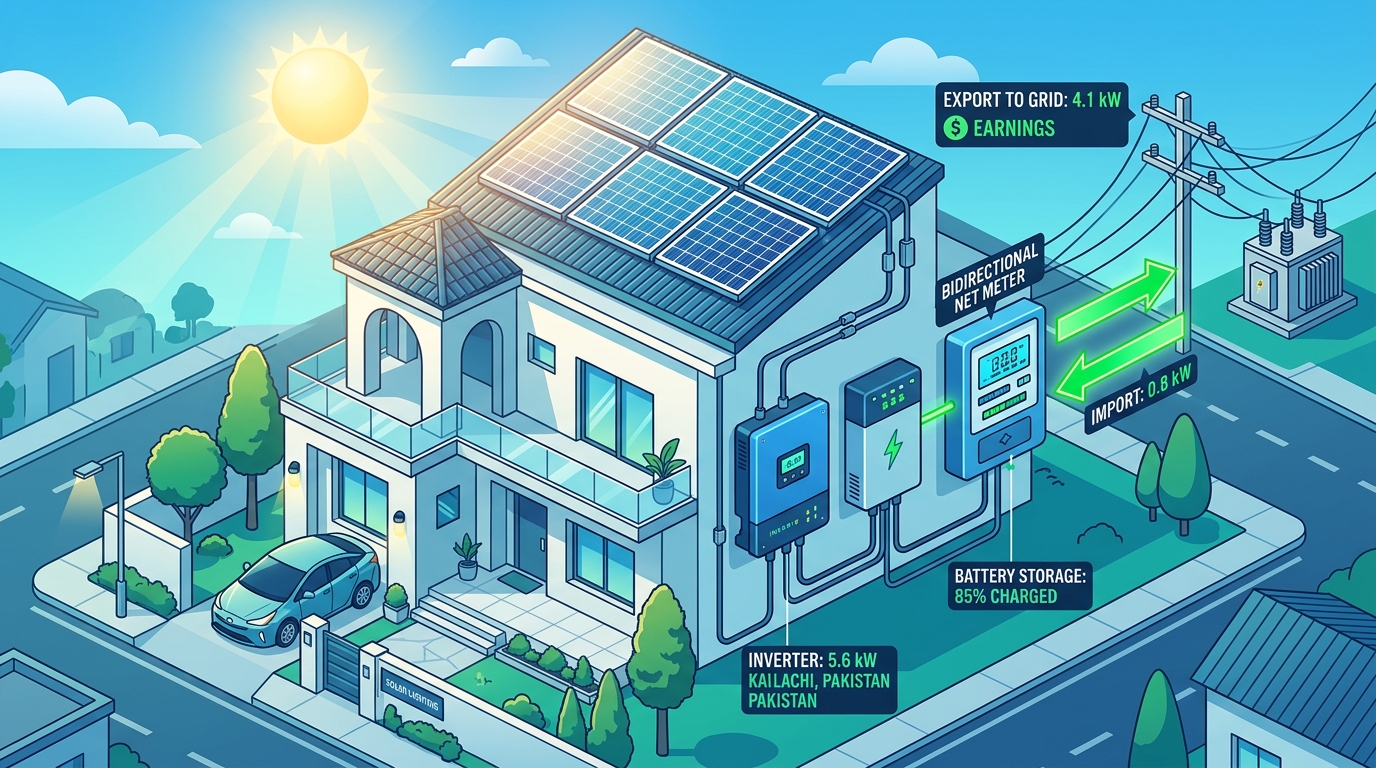
Table of Contents
- 1. The 2026 Solar Market Landscape in Pakistan
- 2. Master Price Comparison Table: 3kW to 15kW Turnkey Costs
- 3. Photovoltaic Panel Prices: Per-Watt Rates for N-Type TOPCon & HJT
- 4. Solar Inverter Prices: On-Grid vs. Hybrid Tier-1 Brands
- 5. Energy Storage: Lithium (LiFePO4) vs. Deep Cycle Tubular Batteries
- 6. Balance of System (BOS): Structures, Cables, SPDs & Earthing
- 7. Net Metering Licensing Costs & DISCO Green Meter Fees
- 8. Financial Payback Period & ROI Calculation (2026 Edition)
1. The 2026 Solar Market Landscape in Pakistan
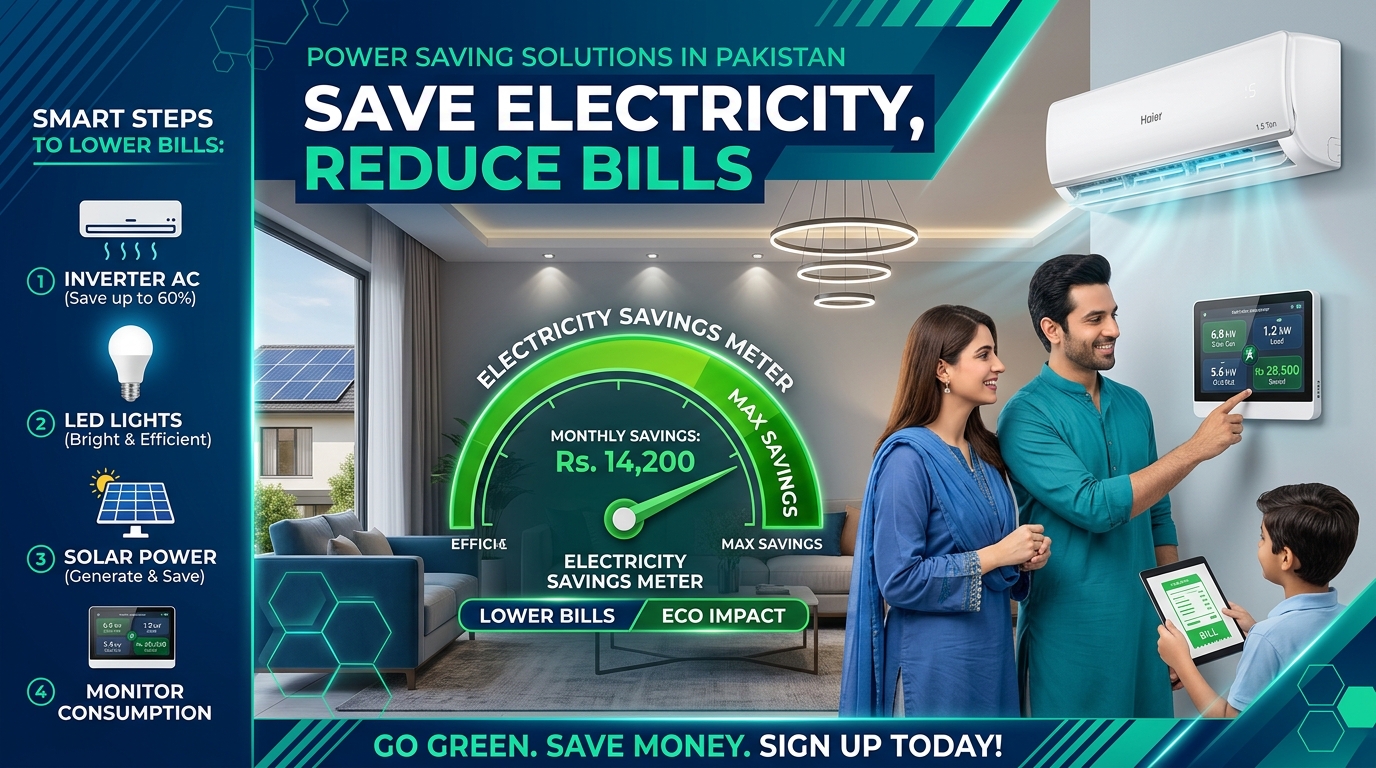
Investing in a residential or commercial rooftop solar system in Pakistan has shifted from an environmental luxury into a vital economic survival strategy. With residential grid electricity tariffs reaching between Rs. 48 and Rs. 68 per unit for unprotected domestic consumers, solar energy offers an unmatched financial return. Simultaneously, global photovoltaic manufacturing surpluses have driven the per-watt price of Tier-1 solar panels to historic lows in Pakistan, making 2026 the most cost-effective year on record to transition to solar.
However, total installation costs are not determined by solar panel prices alone. A turnkey residential setup requires inverters, galvanized mounting structures, copper DC cables, certified electrical distribution switchgear, lightning surge protectors, earthing pits, and—for net-metered installations—official DISCO green meter licensing fees. Below is an exhaustive, market-verified breakdown of realistic installation expenses across Pakistan.
2. Master Price Comparison Table: 3kW to 15kW Turnkey Costs
The table below provides realistic market price ranges across major Pakistani metropolitan cities (Lahore, Karachi, Islamabad, Rawalpindi, Multan, Faisalabad, and Peshawar) for complete, turnkey rooftop installations using Tier-1 N-Type TOPCon bifacial panels:
| System Capacity | Recommended House Size | Monthly Unit Output (Avg) | On-Grid (Net-Metered) Cost | Hybrid (with Lithium Battery) | Estimated Monthly Bill Saving |
|---|---|---|---|---|---|
| 3 kW Setup | 5 Marla (1 Inverter AC + Fans) | 350 – 420 kWh | Rs. 390,000 – Rs. 450,000 | Rs. 620,000 – Rs. 720,000 | Rs. 18,000 – Rs. 24,000 |
| 5 kW Setup | 7–10 Marla (2 Inverter ACs) | 600 – 720 kWh | Rs. 580,000 – Rs. 670,000 | Rs. 890,000 – Rs. 1,050,000 | Rs. 32,000 – Rs. 42,000 |
| 7 kW Setup | 10 Marla (2–3 Inverter ACs + Motor) | 850 – 1,000 kWh | Rs. 760,000 – Rs. 870,000 | Rs. 1,150,000 – Rs. 1,350,000 | Rs. 48,000 – Rs. 62,000 |
| 10 kW Setup | 1 Kanal (3–4 ACs + Commercial Loads) | 1,200 – 1,450 kWh | Rs. 980,000 – Rs. 1,150,000 | Rs. 1,500,000 – Rs. 1,750,000 | Rs. 75,000 – Rs. 95,000 |
| 15 kW Setup | 1–2 Kanal (5+ ACs, Heavy Load) | 1,800 – 2,200 kWh | Rs. 1,420,000 – Rs. 1,650,000 | Rs. 2,150,000 – Rs. 2,550,000 | Rs. 115,000 – Rs. 145,000 |

3. Photovoltaic Panel Prices: Per-Watt Rates for N-Type TOPCon & HJT
In 2026, older P-type Mono PERC technology has been largely phased out by major international tier-1 manufacturers in favor of N-Type TOPCon (Tunnel Oxide Passivated Contact) and Heterojunction (HJT) solar cells. N-Type panels offer a lower temperature coefficient (-0.30%/°C vs -0.38%/°C), meaning they generate significantly more electricity during sweltering 45°C summer heat in Punjab and Sindh.
Current retail per-watt prices for authentic Tier-1 imported panels (Longi Hi-MO 6/7, Jinko Tiger Neo, Canadian Solar TopHiKu6, JA Solar DeepBlue 4.0) range between Rs. 33 and Rs. 38 per watt in wholesale container lots, and Rs. 38 to Rs. 44 per watt in small retail quantities. For example, a single 585-watt bifacial panel costs between Rs. 22,500 and Rs. 25,500. Consumers must verify that panel pallets arrive with original barcodes and flash test certification documents to avoid counterfeit relabeled B-grade glass.
4. Solar Inverter Prices: On-Grid vs. Hybrid Tier-1 Brands
The inverter is the operational brain of your solar installation. Choosing between an on-grid string inverter and a hybrid inverter determines whether your house will have backup power during load shedding:
- On-Grid (Grid-Tied) Inverters: Brands such as Huawei, Sungrow, Solis, GoodWe, and Growatt lead the market. A 10 kW 3-phase on-grid inverter costs between Rs. 185,000 and Rs. 240,000. On-grid inverters achieve 98.6% efficiency and feed power directly to the national grid via net metering, but they automatically shut down during grid outages for lineman safety.
- Hybrid Storage Inverters: Brands including Deye, Inverex, Fronus, and Voltronic dominate this sector. A 6 kW hybrid inverter costs between Rs. 240,000 and Rs. 310,000, while a premium 12 kW Deye Low-Voltage/High-Voltage 3-phase hybrid inverter commands between Rs. 480,000 and Rs. 580,000. Hybrid systems seamlessly switch between solar, battery storage, and the utility grid in under 10 milliseconds during load shedding.
5. Energy Storage: Lithium (LiFePO4) vs. Deep Cycle Tubular Batteries
Battery selection represents the most volatile variable in hybrid solar budgeting. In 2026, the economics have decisively shifted away from traditional lead-acid tubular batteries toward Lithium Iron Phosphate (LiFePO4) chemistry:
| Battery Storage Technology | Usable Depth of Discharge (DoD) | Expected Cycle Life | Average Cost (5 kWh Storage) | Cost per Usable Cycle |
|---|---|---|---|---|
| Lead-Acid Deep Cycle Tubular | 50% – 60% Maximum | 1,000 – 1,200 Cycles (2–3 Years) | Rs. 180,000 (4 × Tall Tubular) | ~Rs. 60.00 / Cycle |
| Lithium LiFePO4 (Wall-Mounted) | 90% – 95% Usable | 4,000 – 6,000 Cycles (10–12 Years) | Rs. 320,000 – Rs. 390,000 (5.12 kWh) | ~Rs. 18.50 / Cycle |
While lithium batteries demand a higher initial cash outlay, their tenfold cycle lifespan, zero distilled water maintenance, and integrated Battery Management System (BMS) make them vastly cheaper over a 5 to 10 year horizon.
6. Balance of System (BOS): Structures, Cables, SPDs & Earthing
Cutting corners on Balance of System (BOS) materials is the leading cause of premature solar failures and rooftop electrical fires in Pakistan. A high-quality installation includes:
- Galvanized Iron Structure: High-rise customized L2/L3 structures fabricated from 14-gauge hot-dip galvanized steel cost between Rs. 45,000 and Rs. 120,000 depending on roof layout and wind bracing requirements.
- Certified Pure Copper DC Cabling: 4mm² or 6mm² cross-linked polyethylene (XLPE) double-insulated solar cables (such as Pakistan Cables or Fast Cables) cost Rs. 380 to Rs. 550 per meter.
- AC/DC Distribution Protection Boxes: Equipped with European or genuine Japanese DC fuses, DC miniature circuit breakers (MCBs), and Type-II DC Surge Protective Devices (SPDs) to shield inverters from grid voltage spikes and lightning. High-spec distribution boxes cost between Rs. 35,000 and Rs. 75,000.
- Chemical Chemical Bore Earthing: Dedicated copper plate or copper-bonded chemical rod earthing with bentonite compound achieving less than 5 ohms resistance costs Rs. 25,000 to Rs. 45,000 per earth pit. Two separate pits are mandatory: one for lightning surge arresters and one for equipment AC/DC grounding.
7. Net Metering Licensing Costs & DISCO Green Meter Fees
To legally sell excess solar energy back to your distribution company (LESCO, MEPCO, IESCO, FESCO, GEPCO, etc.), consumers must obtain NEPRA net-metering clearance. The administrative and hardware costs for net metering in 2026 typically break down as follows:
- NEPRA Application & Processing Fee: Rs. 2,000 – Rs. 5,000
- Authorized Licensed Electrical Engineer Inspection & Form-A Verification: Rs. 15,000 – Rs. 25,000
- DISCO Demand Notice for Bi-Directional 3-Phase Green Meter (including testing): Rs. 75,000 – Rs. 110,000
- Turnkey EPC Consultant Liaison Fee: Rs. 25,000 – Rs. 40,000
- Total Net Metering Regularization Cost: Rs. 120,000 to Rs. 165,000
8. Financial Payback Period & ROI Calculation (2026 Edition)
Let us calculate the financial return on investment for a standard 10 kW On-Grid Net-Metered Solar System installed on a 1-Kanal residence in Lahore or Islamabad:
- Total Upfront Capital Expenditure: Rs. 1,050,000 (Hardware + BOS + Net Metering)
- Annual Power Generation: Approximately 15,500 kWh units per year
- Self-Consumption Savings (9,000 units offset at Rs. 52/unit average): Rs. 468,000
- Grid Export Earnings (6,500 units exported at Rs. 19.32/unit buyback): Rs. 125,580
- Total Annual Financial Benefit: Rs. 593,580 per year
- Simple Payback Period: Rs. 1,050,000 ÷ Rs. 593,580 = 1.76 Years (Approx. 21 Months)
With Tier-1 panels warranted for 25 years and capital payback achieved in under 2 years, rooftop solar in Pakistan provides over 23 years of virtually free, inflation-proof electricity, yielding an annualized internal rate of return (IRR) surpassing 45%—substantially outperforming domestic real estate, bank fixed deposits, or mutual funds.
Frequently Asked Questions (FAQs)
Verify Your Utility Bill Online Now
Want to check your live DISCO electricity bill or calculate your monthly cost based on your latest meter reading? Use our free, real-time tools updated with the latest 2026 NEPRA tariffs: